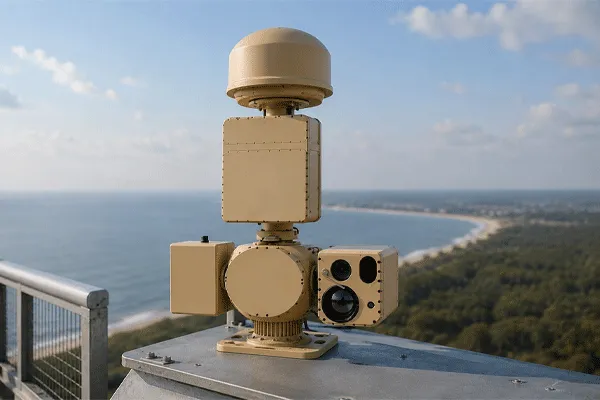
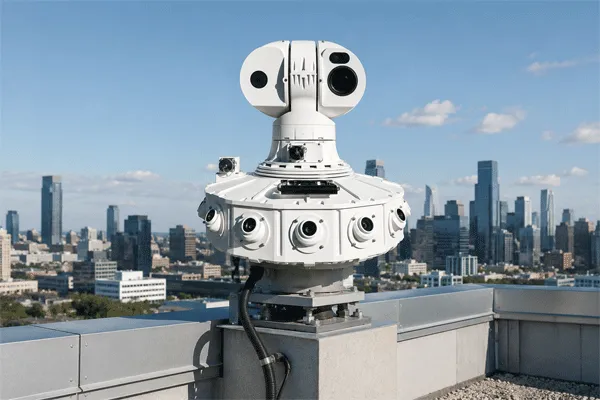
Surveillance radar quotations are rarely directly comparable. Two proposals can use the same headline range while referring to different targets, operating conditions and system boundaries.
The buyer therefore needs to compare the operational requirement, coverage, integration, installation, acceptance and lifecycle responsibility behind the price—not only the radar sensor or maximum range.
The following 15 checks convert different supplier offers into one project-level comparison basis.
Why Radar Quotations Are Difficult to Compare
A radar is not an isolated device in most security projects. Operational capability normally depends on a combination of:
A quotation that omits these conditions may still look complete commercially, but it does not necessarily define a complete operational system. Before comparing prices, the buyer should establish a common comparison baseline.
At minimum, all suppliers should be asked to respond to the same:
Only after these conditions are aligned does price comparison become meaningful.
| Common baseline: Before prices are compared, align the target definition, coverage, environment, integration, installation, acceptance, support, delivery and responsibility matrix. |
Check 1: Is the Detection Range Based on the Same Target?
The first comparison point is not maximum range. It is the target used to define that range.
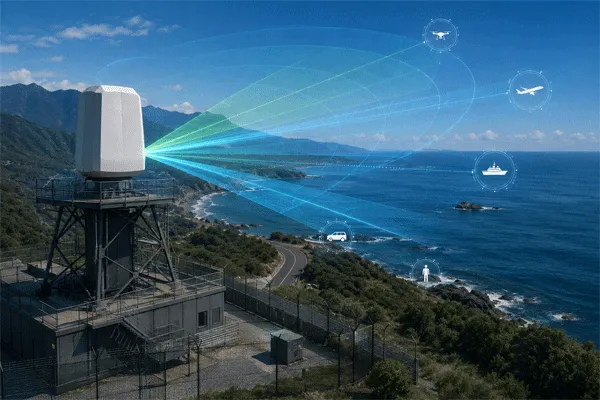
Radar detection performance varies significantly according to the target’s radar cross-section, geometry, material, speed, altitude and aspect angle. A supplier may state “Detection range: 10 km,” but that figure is incomplete unless the quotation also defines the target category, assumed radar cross-section, target altitude, radial velocity, detection probability, false-alarm condition, environmental condition, and whether the figure represents detection, track initiation or stable tracking.
A 10 km range against a large vehicle cannot be treated as equivalent to a 10 km range against a small multirotor UAV.
What the buyer should request
| Target |
Reference condition |
Detection range |
Stable tracking range |
| Person |
Defined RCS or field target |
Supplier response |
Supplier response |
| Vehicle |
Defined vehicle class |
Supplier response |
Supplier response |
| Small multirotor UAV |
Defined RCS |
Supplier response |
Supplier response |
| Fixed-wing UAV |
Defined RCS |
Supplier response |
Supplier response |
| Small vessel |
Defined size or RCS |
Supplier response |
Supplier response |
How to Compare Surveillance Radar Quotations: 15 Checks Before You Choose a Supplier
Check 2: Does the Quotation Distinguish Detection From Tracking?
Detection, track initiation and continuous tracking are not the same performance stage.
A radar may detect a weak return briefly but fail to establish a stable track. A track may also be initiated at one range but become operationally useful only after the target moves closer. For camera cueing and security response, stable tracking is usually more important than a single detection event.
The quotation should clarify initial detection range, track initiation range, confirmed-track range, track continuity criteria, maximum permitted track loss and reacquisition behaviour.
What the buyer should request
- initial detection range
- track-initiation range
- confirmed or stable-tracking range
- track-continuity criteria and permitted track loss
- reacquisition time and behaviour after a lost track
Check 3: Is the Coverage Geometry Clearly Defined?
A single range figure does not describe radar coverage.
The quotation should define azimuth coverage, elevation coverage, minimum detection range, maximum instrumented range, vertical coverage at different distances, blind zones, installation orientation and the number of radar units required for continuous coverage.
Request a preliminary coverage drawing showing radar locations, coverage sectors, overlap areas, terrain or structure masking, critical asset boundaries and predicted blind zones. A quotation without a coverage drawing should be treated as a preliminary equipment estimate, not a final system proposal.
Check 4: Are Environmental Losses Included?
Datasheet performance is usually based on defined or favourable conditions. Actual sites may include buildings, hills, trees, fences, containers, cranes, moving machinery, sea clutter, road traffic, bird activity, rain, dust, temperature extremes, electromagnetic interference or multipath reflections.
The buyer should ask whether the quoted performance is free-space performance, simulation performance, factory-test performance or expected operational performance at the actual site.
Suppliers that have not reviewed the environment cannot reliably guarantee project-level coverage.
Check 5: Does the Quotation Specify the Scan and Update Architecture?
Update rate affects the system’s ability to maintain fast or manoeuvring targets and to direct an EO/IR camera accurately.
The buyer should distinguish between mechanical rotation period, full-volume scan rate, track update rate, sector update rate and dedicated tracking update rate.
Request a clear statement of the update rate for unconfirmed targets, confirmed targets, operation under maximum track load and data delivered to the external platform.
What the buyer should request
- mechanical rotation period or full-volume scan rate
- update rate for tentative and confirmed tracks
- sector or priority-track update rate
- update rate under maximum declared track load
- actual data-output rate delivered to the external platform
Check 6: Are False Alarms and Classification Performance Defined?
High detection sensitivity has limited operational value if the system generates excessive alarms from birds, vegetation, waves, vehicles outside the protected area or moving machinery.
The quotation should explain which target classes are supported, how classification is performed, which environmental objects can be filtered, whether exclusion and alarm zones are configurable, and how performance will be verified at the project site.
Operational measures such as nuisance alarms per hour, false alarms per day, missed detections during a defined trial and correct classification rate by target type are more useful than an isolated laboratory accuracy percentage.
Check 7: What Track Capacity Is Included?
Maximum track capacity can refer to raw detections, tentative tracks, confirmed tracks, displayed tracks, exported tracks or tracks processed with advanced classification.
The supplier should specify the supported capacity at each stage and whether update rate, classification latency or server requirements change near maximum load.
A quoted capacity that depends on optional computing hardware or software licences should not be treated as included unless those items appear in the commercial schedule.
What the buyer should request
- raw detections
- tentative tracks
- confirmed tracks
- classified tracks
- displayed and externally exported tracks
The quotation should also identify the required server configuration, software licences, performance near maximum load and the system response when the stated capacity is exceeded.
Check 8: Is EO/IR Slew-to-Cue Included or Merely Supported?
Many proposals state that the radar “supports camera linkage.” This can mean anything from providing coordinates through an API to delivering a fully calibrated automatic tracking workflow.
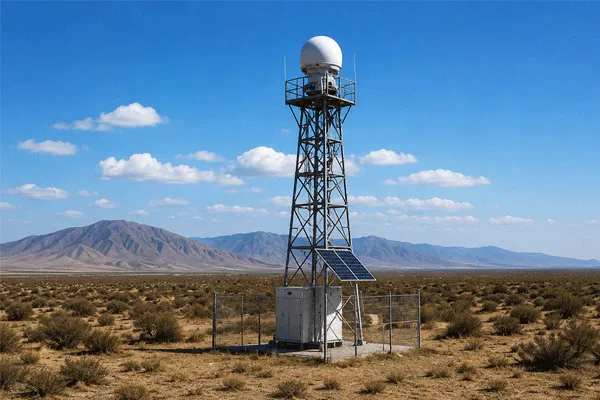
A complete radar-to-camera function may require radar track output, protocol conversion, GIS coordinate transformation, camera driver, PTZ control, boresight calibration, terrain compensation, video display, automatic target handover and operator interface configuration.
“Compatible with PTZ cameras” is not equivalent to a commissioned radar-EO/IR fusion system.
How to Compare Surveillance Radar Quotations: 15 Checks Before You Choose a Supplier
Check 9: Which Interfaces and Protocols Are Actually Included?
Interface claims should be verified through documentation. Ask for API or SDK descriptions, message structure, coordinate format, timestamp format, track identity rules, update frequency, alarm message format, authentication method, supported operating systems, integration examples and version-control policy.
The buyer should distinguish between an existing production interface, an interface available through paid development, a planned interface and a generic statement that integration is “possible.”
The quotation should identify who is responsible for third-party development, testing, cybersecurity review, interface troubleshooting and maintenance after software upgrades.
Quotation Practice Note
For project-level proposals, Midradar recommends separating sensor capability, EO/IR linkage, interface availability, third-party development, calibration, commissioning and acceptance responsibilities into individual quotation items. Buyers should request the same level of detail from every supplier rather than accepting a general statement that integration is “supported.”
Check 10: What Software, Licences and Computing Hardware Are Included?
Radar quotations frequently separate sensor hardware from software and server requirements.
Check whether the price includes radar control software, track display, GIS map, alarm management, video integration, historical playback, reporting, user management, server operating system, database, cybersecurity tools, client licences, API licence and future software updates.
Confirm whether licences are perpetual, annual, per sensor, per server, per operator, per concurrent user or based on track volume.
Check 11: Are Installation Materials Included?
A radar cannot be deployed with the sensor alone. Depending on the project, required items may include a mast or tower, mounting bracket, foundation, lightning protection, surge protection, grounding, weatherproof cabinet, network switch, fibre converter, power supply, UPS, heater or cooling system, junction box, cables, connectors and spare installation hardware.
Ask the supplier to separate included materials, optional materials, buyer-supplied materials and site-dependent materials.
This prevents installation components from appearing later as unplanned variation orders.
Check 12: Who Is Responsible for Site Survey and Coverage Validation?
A supplier may prepare a quotation using only a general site description. That may be sufficient for budgeting but not for a binding performance commitment.
The commercial offer should state whether remote site review, satellite-map analysis, terrain analysis, on-site survey, electromagnetic environment survey, line-of-sight inspection, mast-height recommendation, coverage simulation, final design and post-installation validation are included.
A clear responsibility matrix should state whether relocation, additional mast height or extra radar units are included, excluded or subject to change order.
Check 13: What Commissioning and Acceptance Activities Are Included?
Commissioning is not the same as powering on the equipment.
A complete commissioning scope may include hardware inspection, network configuration, orientation and levelling, radar calibration, clutter-map generation, alarm-zone setup, target-class configuration, camera calibration, platform integration, operator training, trial operation and acceptance testing.
Acceptance criteria should be agreed before contract award, not defined after installation.
Check 14: What Support, Warranty and Update Obligations Are Included?
A warranty period alone does not describe service quality.
Ask each supplier to specify warranty start date, warranty duration, remote response time, on-site response conditions, repair turnaround, advance replacement availability, spare-parts availability period, software update policy, algorithm update policy, cybersecurity patch policy and end-of-life notification period.
For internationally deployed systems, also verify remote diagnostic capability, local partner capability, customs responsibility for returned units and availability of regional spare parts.
How to Compare Surveillance Radar Quotations: 15 Checks Before You Choose a Supplier
Check 15: What Is the Total Evaluated Project Cost?
The final comparison should not use equipment price alone.
A more accurate evaluated cost includes sensors, EO/IR cameras, servers, software, licences, masts, accessories, installation, integration, commissioning, training, freight, insurance, duties, taxes, annual licences, support, connectivity, calibration, maintenance, spare parts, software updates and periodic training.
The correct commercial question is: What will it cost to deliver, accept and operate the required capability for the defined project period?
A Practical Radar Quotation Comparison Matrix
Before selecting a supplier, convert every quotation into the same comparison format. Every blank cell represents unresolved project risk. Use the downloadable editable Radar Quotation Comparison Matrix to record compliance, evidence, clarifications and evaluated cost.
| Evaluation area |
Supplier A |
Supplier B |
Supplier C |
| Target-specific detection range |
|
|
|
| Stable tracking range |
|
|
|
| Detection and false-alarm conditions |
|
|
|
| Azimuth and elevation coverage |
|
|
|
| Number of radar units |
|
|
|
| Coverage drawing supplied |
|
|
|
| Track update rate |
|
|
|
| Track capacity |
|
|
|
| Classification categories |
|
|
|
| Radar-to-camera linkage |
|
|
|
| API/SDK and protocol documents |
|
|
|
| Third-party integration included |
|
|
|
| Server and software included |
|
|
|
| Licence model |
|
|
|
| Masts and installation accessories |
|
|
|
| Site survey |
|
|
|
| Installation and commissioning |
|
|
|
| Acceptance test |
|
|
|
| Training |
|
|
|
| Warranty and SLA |
|
|
|
| Spare parts |
|
|
|
| Delivery period |
|
|
|
| Exclusions |
|
|
|
| Initial project cost |
|
|
|
| Five- or ten-year evaluated cost |
|
|
|
Red Flags in a Surveillance Radar Quotation
- A maximum range stated without a defined target, RCS or operating condition
- No distinction between detection, track initiation and stable tracking
- No coverage drawing, minimum range or blind-zone assessment
- Radar-to-camera integration described only as “supported”
- API or protocol availability claimed without documentation or a defined integration responsibility
- Server, software, licence or recurring-cost details omitted from the commercial schedule
- No formal exclusions, commissioning scope or acceptance-test criteria
- A very low price combined with undefined integration, installation or final-performance responsibilities
These issues do not automatically indicate an unsuitable supplier. They indicate that the quotation is not yet sufficiently defined for a fair commercial decision.
How Buyers Should Structure the Evaluation Process
Step 1: Freeze the operational requirement
Define the target, environment, coverage, reaction time, integration and acceptance requirements.
Step 2: Issue a common response schedule
Require every supplier to complete the same technical and commercial tables.
Step 3: Separate compliance from advantage
First determine whether the quotation complies with mandatory requirements. Only then score additional performance.
Step 4: Clarify all assumptions and exclusions
Record supplier clarifications formally and incorporate them into the final offer or contract.
Step 5: Conduct coverage and integration review
Confirm that the proposed number of sensors, installation positions and interfaces can deliver the required system architecture.
Step 6: Compare evaluated project cost
Include equipment, software, installation, integration, support and lifecycle obligations.
Step 7: Link payment to measurable deliverables
Define documentation, factory testing, delivery, commissioning and site acceptance milestones.
Conclusion
A radar quotation should be evaluated as a system-delivery commitment, not as a product price list.
The most important differences between suppliers are often found outside the headline specification: the target used to define range, the conditions attached to performance, the number of sensors required for real coverage, the extent of integration work, the software and licence model, the installation and commissioning boundary, and the acceptance obligations.
A structured comparison protects both the buyer and the supplier. It reduces ambiguity, limits change orders and establishes a measurable basis for project delivery.
For projects involving low-altitude surveillance, ground perimeter monitoring, coastal security, airport protection or radar-EO/IR integration, the quotation should be reviewed against the actual site and operational requirement before the final supplier decision.
Need a Project-Level Quotation Review?
Midradar can review your target requirements, site conditions, coverage objectives and system-integration needs before recommending a radar configuration.
Provide the following information:
- site location or map
- protected-area dimensions
- target types
- required detection range
- installation constraints
- existing cameras or security platform
- environmental conditions
- preferred project schedule
The result is a project-specific configuration basis that can be used to compare technical proposals on consistent terms.
FAQ
Why do radar quotations with the same stated range have different prices?
Because the quoted range may be based on different targets, radar cross-sections, detection probabilities, environmental conditions and system scopes. One quotation may also include software, integration and installation that another excludes.
What is the most important parameter when comparing radar quotations?
The first comparison should be target-specific stable-tracking performance under the same operating conditions. Maximum detection range alone is not sufficient because target RCS, altitude, detection probability, false-alarm limits and environmental conditions may differ between quotations.
What does “camera integration supported” mean?
It may only mean that the radar can export coordinates. Buyers should confirm whether the supplier includes the camera driver, coordinate conversion, calibration, PTZ control, automatic slew-to-cue and acceptance testing.
When should acceptance criteria be agreed?
Before contract award. Detection targets, test routes, environmental conditions, false-alarm limits, integration outputs and pass/fail thresholds should be defined in the contract or technical annex.



 15:19
15:19