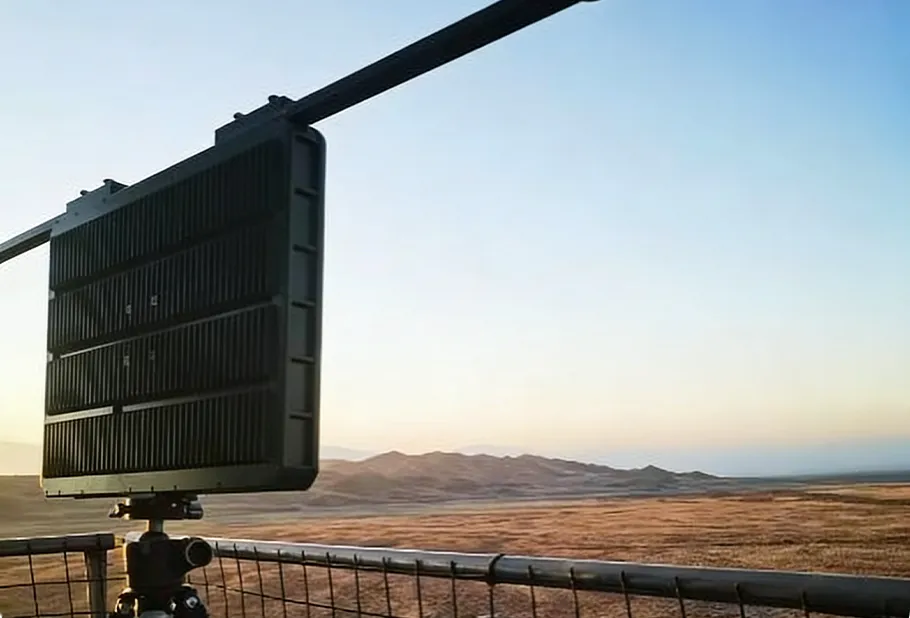
Ground Surveillance Radar Guide

Ground Surveillance Radar: Detecting People, Vehicles & Vessels Along Your Perimeter

Ground surveillance radar detects and tracks personnel, vehicles and surface vessels across open, semi-open and coastal boundaries — day or night, in weather that defeats cameras alone. Here's how it actually works, what's really inside it, and how to source one from a manufacturer that builds every core component in-house.

View System Specs
A ground surveillance radar detects and tracks moving targets on the ground and water surface — personnel, vehicles and vessels — across open perimeters, borders and coastlines. It's optimized differently from the drone-detection radars covered in our Drone Detection Radar guide and Counter-UAS Radar System guide — those are tuned for small, fast, airborne targets, while ground surveillance radar is tuned for slower, larger, ground-level targets in cluttered environments (vegetation, terrain, sea state). The two categories generally require different processing, deployment geometry and acceptance criteria; whether a specific model can also cover the other target class depends on its published specifications and site-specific testing, not on the product category name alone. Midradar's Surface Surveillance Radar line spans five real models from a 10km compact unit to a 50km long-range system, all designed to feed a radar-video fusion workflow: detect → verify → respond.

What Is a Ground Surveillance Radar?

Why detecting a person or a truck needs a different radar design than detecting a drone.

1

Slower Targets, More Clutter

Ground surveillance radar has to detect slow-moving, and sometimes intermittently-moving, targets close to terrain, vegetation, buildings or the sea surface. This requires target processing and clutter suppression tuned to the site's target classes and environment — a materially different design problem than filtering fast-moving airborne targets in open sky.

2

Phased-Array / DBF Beam Steering

Midradar's Surface Surveillance Radar line uses one-dimensional AESA (active phased array) or DBF (Digital Beam Forming) technology — solid-state, no moving parts — to scan a sector electronically and hold a stable track on multiple slow, low, cluttered targets at once.

3

Sector or Full 360° Coverage

Ground and coastal boundaries are rarely a single straight line. Depending on the site, you need either a 90°–95° sector radar aimed at one approach, or a 360° array covering every direction from a single mast — both are real, distinct Midradar product configurations (see below).

How Ground Surveillance Radar Works

Midradar's own published perimeter-protection workflow — from detection to a closed, reviewable alarm record.

1 Detection Radar scans the perimeter 2 Calculation Position, speed & trajectory computed 3 Virtual Fence Target enters an alarm zone, rule fires 4 EO/IR Linkage Camera auto-turns to the target 5 Video Verification Operator confirms the intrusion 6 Alarm Handling Confirmed: record + dispatch response
Midradar's own published perimeter-protection workflow. If a target is not confirmed as an intrusion in Step 5, the event is logged as a nuisance alarm and used to tune alarm rules — the loop feeds back into Step 3.

This is the same "radar detects → camera verifies → operator decides" logic used across Midradar's perimeter-protection deployments, and it's the reason ground surveillance radar is deployed as part of a radar-video fusion system rather than as a standalone sensor — the radar's job is early, all-weather detection; the camera's job is visual proof before anyone is dispatched.

Single-Sector (90°) vs. Full-Azimuth Coverage

Two real configurations of the same product family — site geometry is a primary factor in choosing between them.

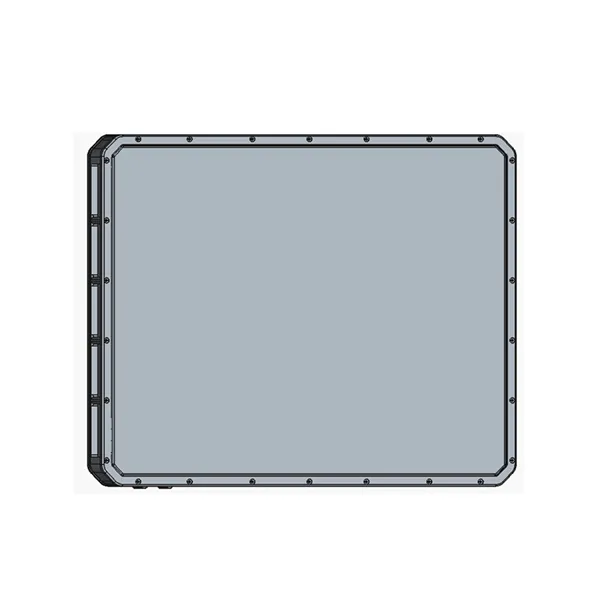
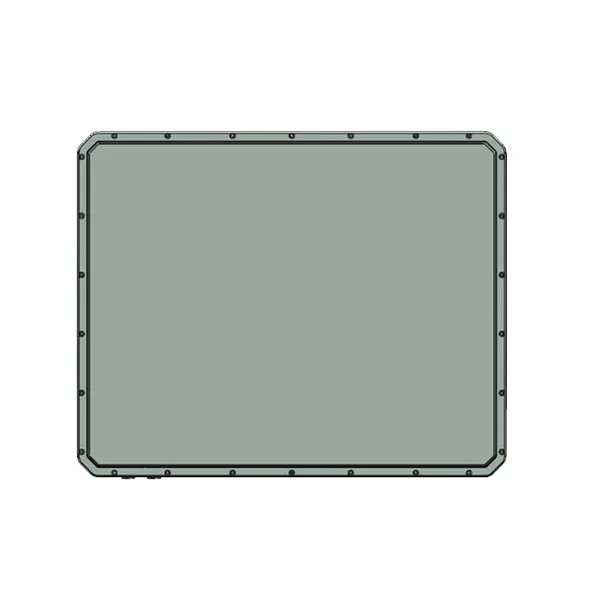
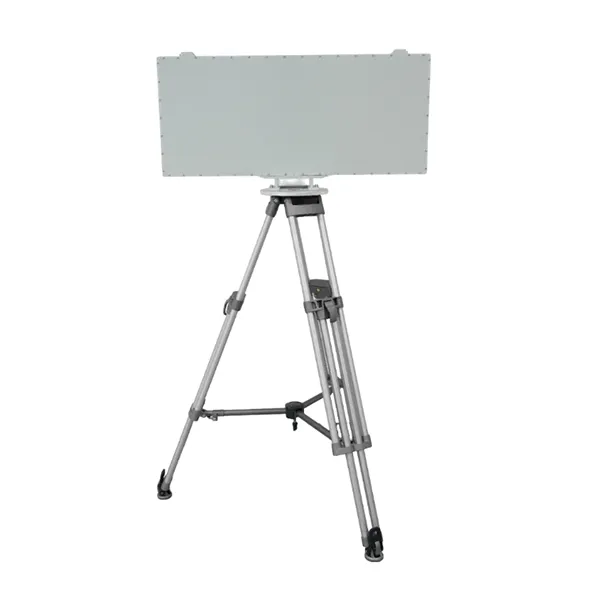
MR-RDG03K — Single Panel, 90° Covers one approach or fence line MR-RDG03-4R — Four-Panel Array Covers every direction from one mast
Both share the same Ku-band DBF core specifications (≥10km range, ≥3km pedestrian, 4Hz refresh) per Midradar's published data sheets. The MR-RDG03-4R's product description states the four-panel array is built to achieve full-azimuth coverage; note that Midradar's own published parameter table lists "Azimuth Coverage: 90°" for the 4R model as well (likely per-panel, pending factory confirmation) — verify exact coverage geometry with Midradar for your specific site before specifying.
Single-Panel (90°–95°)

Best for one clear approach

  • A single fence line, road, coastline stretch, or valley approach where the threat direction is known
  • Lower cost per meter of coverage on a linear boundary
  • Easy to add more units in series along a long, straight perimeter
MR-RDG03K Specs →
4-Panel Full-Azimuth

Best for an open or irregular site

  • An island site, isolated facility, or compound where threats could approach from any direction
  • One mast instead of several separately-aimed units — simpler cabling and power
  • No blind arc between adjacent sector radars to manage
MR-RDG03-4R Specs →

Inside the System: Published Technical Specifications

Five real Midradar Surface Surveillance Radar models, from a 10km compact unit to a 50km long-range system.

ModelMR-RDG03KMR-RDG03-4RMR-RDG06KMR-RDG20KMR-RDG50K
Band / TechnologyKu-band, 1D-DBFKu-band, 1D-DBF, 4-panelX-band, 1D-AESAX-band, 1D-AESAX-band, 1D-AESA
Detection Range≥10 km≥10 km≥16 km≥25 km≥50 km
Pedestrian Detection≥3 km≥3 km≥5 km≥10 km≥15 km
Vehicle / Small Boat≥6 km≥6 km≥8 km≥15 km≥25 km
Large Vessel≥10 km≥10 km≥16 km≥25 km≥50 km
Azimuth Coverage90°90° per panel*90°95°90°
Refresh Rate4 Hz (≤0.25s)4 Hz (≤0.25s)1 Hz1 Hz1 Hz
Tracking Capacity≥100 targets≥100 targets≥200 targets≥200 targets≥200 targets
Power / Weight≤85W≤85W≤75W / ≤5kg≤140W / ≤10kg≤200W / ≤20kg
Protection RatingIP67IP67IP67IP67IP67

*MR-RDG03-4R's product description states the four-panel configuration is built for full-azimuth coverage, but Midradar's own published parameter table lists "90°" for this field on both the single-panel and four-panel models — likely a per-panel figure rather than the combined array figure. Confirm exact coverage geometry with Midradar before specifying. All figures above are manufacturer-published values from midradar.com and have not been independently tested by a third party.

Deployment Reference

The same Midradar-published petrochemical tank-farm case referenced in our other pillar pages — this time from the ground/perimeter side.

Petrochemical Perimeter · Ground & Vehicle Intrusion

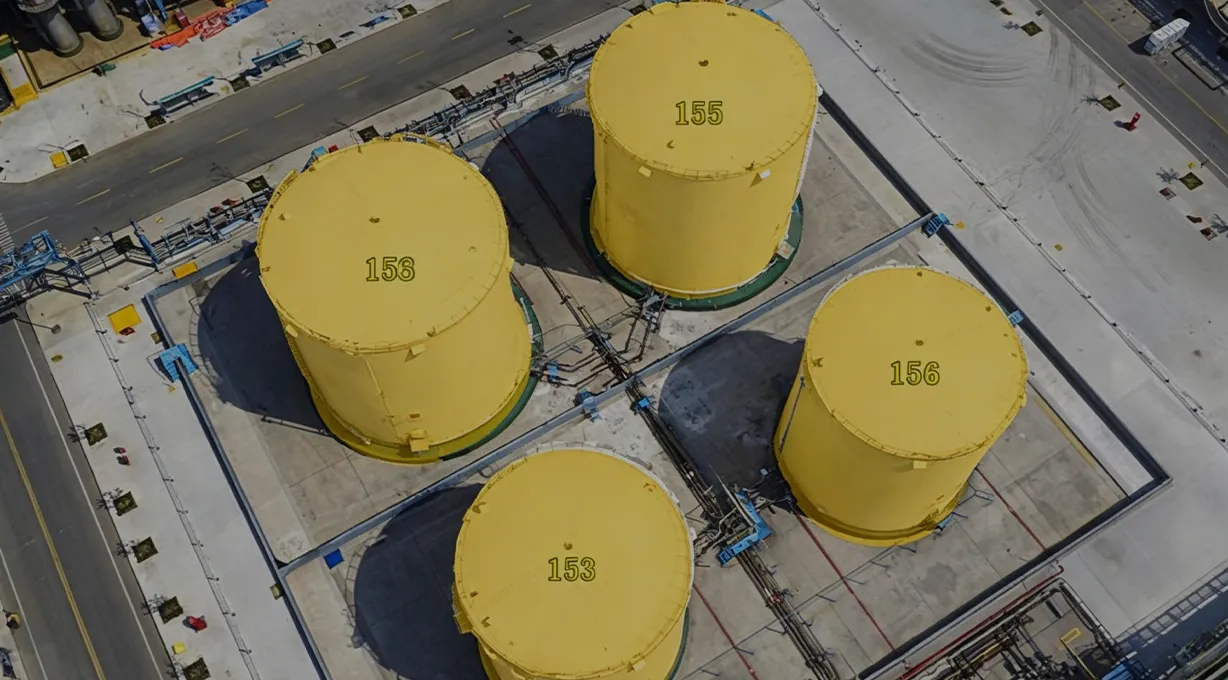
8+ km Coastal Tank-Farm Perimeter, Personnel & Vehicle Intrusion Detection

A large coastal petrochemical tank farm deployed 3× MR-RDT20K low-altitude surveillance radar and long-range thermal PTZ cameras to build a 24/7, all-weather perimeter protection system across an 8+ km boundary. The ground/perimeter-relevant capabilities Midradar publishes for this deployment: virtual fence zoning, personnel intrusion detection, vehicle trespass alerts, EO/IR auto-linkage for visual confirmation, threat grading, and structured alarm evidence recording.

8+ km
Perimeter covered
3
Radar units deployed
24/7
All-weather operation
Note: this case used MR-RDT20K (Midradar's low-altitude surveillance radar, also capable of ground/vehicle detection) rather than the dedicated MR-RDG surface-surveillance line featured on this page — cited here because it's Midradar's most fully-documented public case for the personnel/vehicle-intrusion and virtual-fence workflow described above, which applies equally to an MR-RDG-based deployment.
Read the Full Case Study →
1000km+
Border & coastline protected
1000+
Successful projects worldwide
50+
Countries with active deployments
99.9%
System uptime in field operations

Company-reported figures, according to Midradar's published company information — not independently audited.

Who Needs Ground Surveillance Radar

Real application scenarios published on Midradar's Perimeter Protection solution page.

Petrochemical Plant Perimeter Security
Oil & Gas / Industrial

Petrochemical Plants & Chemical Industrial Parks

Monitors large industrial boundaries, plant entrances, open yards and restricted production areas — radar for early detection, EO/IR for visual verification and traceable alarm handling.

Border and Coastal Security Zone
Border / Coastal / Port

Border, Coastal & Port Security Zones

Long-range moving-target detection across wide open areas, coastal lines and port boundaries, with EO/IR confirmation under night-time or low-visibility conditions.

Airport Perimeter Security
Aviation

Airports, Runways & Restricted Airside Areas

Perimeter monitoring around airport boundaries, runways and restricted airside zones — earlier detection of moving targets, verified through EO/IR camera linkage.

Warehouses & Logistics Compounds

Monitors vehicle movement, personnel activity and boundary intrusion events across open storage and loading areas.

Power, Water & Utility Facilities

Stable perimeter awareness around key equipment areas and access points, reducing blind spots with alarm recording for later review.

Data Center Perimeter Security

Continuous monitoring around fences, gates, loading areas, cooling facilities, power rooms and backup generator zones, 24/7.

Why Source From a Manufacturer

Ground surveillance radar is a long-term security asset — who builds it, and how they support it, matters as much as the spec sheet.

2015
Founded, headquartered in Qingdao
3
Production bases: Qingdao, Jinan, Xi'an
50+
Countries served worldwide
80+
Patents & software copyrights

Company-reported figures, according to Midradar's published company information.

In-house radar technology development

Midradar independently develops the core radar technologies listed on its Technology page — TR modules, microwave frequency synthesizers, signal processors, algorithms, and display/control software — according to company-published information. Midradar reports reinvesting over 30% of annual revenue into R&D, with more than 60% of its R&D team in senior engineering roles across microwave technology, signal processing, AI, and software.

OEM / ODM and custom development
"If our standard products do not fully meet your requirements, we can modify existing designs or develop entirely new solutions — with rapid prototyping capabilities that deliver custom results faster than traditional manufacturers."
— Midradar, Support page
Certifications & compliance

Midradar holds ISO 9001:2015 Quality Management System certification, CE marking for European compliance, and is recognized as a National High-Tech Enterprise in China. Every unit goes through supplier qualification, PCB AOI inspection, environmental stress screening, a 24-hour aging test, and functional testing/calibration before it ships.

Export experience & logistics

Products are deployed in more than 50 countries across Asia, the Middle East, Africa, and beyond — including over 1,000km of border and coastline under active protection. Midradar is fully licensed to export security and radar equipment, with an in-house export compliance team handling customs documentation and trade regulations, and works with freight forwarders for both air and sea freight with door-to-door coordination.
How to Choose / Buyer Checklist

The decision points that matter most when specifying a ground surveillance radar.

  • Detection range needed — match the model's pedestrian/vehicle/vessel range figures to your site's actual boundary length, not just the headline "max range" number.
  • Sector (90°–95°) vs. 360° coverage — a single approach or fence line vs. an open or irregular site with threats from any direction (see comparison above).
  • Environment and clutter — coastal sea-state, dense vegetation, or urban terrain all affect real-world detection performance differently than the clear-air published figures.
  • EO/IR integration — confirm the radar's output (target coordinates, tracks) can drive your camera's auto-tracking/PTZ linkage for the detect→verify→respond workflow.
  • Customization / OEM needs — confirm whether a standard model meets your requirement or whether factory-side customization or rapid prototyping is needed.
  • Certification requirements — verify what import/use certifications your country requires for radio-frequency-emitting radar equipment.
  • Delivery & logistics — confirm production lead time and international shipping method (air vs. sea freight) and customs support.
  • After-sales support — installation/commissioning, operator training, maintenance contracts, remote diagnostics, and spare-parts availability.

Midradar's Ground Surveillance Radar Solutions

Five real models — from a compact 10km unit to a 50km long-range flagship.

MR-RDG03K Surface Surveillance Radar
Compact · 90°

MR-RDG03K

Ku-band DBF, ≥10km, 4Hz refresh

Compact, portable single-sector radar for precise ground and maritime target detection with low power consumption and high mobility.

Learn More →
MR-RDG03-4R Surface Surveillance Radar
Compact · 360°

MR-RDG03-4R

Ku-band DBF, ≥10km, 4-panel 360°

Four-sided array version of the MR-RDG03K, giving full azimuth coverage from a single mast for open or irregular sites.

Learn More →
MR-RDG06K Surface Surveillance Radar
Mid-Range

MR-RDG06K

X-band AESA, ≥16km, ≤5kg

Lightweight X-band phased array radar for long-range sector surveillance with high accuracy and low power consumption.

Learn More →
MR-RDG20K Surface Surveillance Radar
Long-Range

MR-RDG20K

X-band AESA, ≥25km detection

Enhanced-range X-band radar for wide-area ground and coastal surveillance ahead of the MR-RDG50K flagship.

Learn More →

Frequently Asked Questions

Understanding the System
What's the difference between ground surveillance radar and drone detection radar?
Ground surveillance radar is designed to detect and track people, vehicles and vessels moving on the ground or water surface, typically at slower speeds and in clutter-heavy environments. Drone detection radar (see our Drone Detection Radar guide) is optimized for small, fast, low-radar-cross-section airborne targets. The two are generally optimized differently and are usually deployed together — whether a given model also covers the other target class depends on its published specifications, not on the product category name alone.
Can ground surveillance radar detect boats and ships?
Yes — all five Midradar Surface Surveillance Radar models publish separate detection ranges for surface vessels alongside pedestrian and vehicle ranges, which is why the product line is positioned for coastal defense and port security as well as land perimeters.
Does ground surveillance radar work in bad weather and at night?
Radar detection itself is largely weather- and light-independent, which is its main advantage over camera-only systems. In practice, deployments still pair radar with EO/IR (thermal) cameras for visual verification, since heavy precipitation and dense clutter can affect detection performance and a confirmed alarm needs visual proof before dispatch.
Do I need a 360° radar or is a single-sector model enough?
It depends on your site's shape, not on raw performance — see the comparison above. A single fence line, coastline stretch or one clear approach is usually well served by a 90°–95° sector model; an isolated or irregularly-shaped site is better served by a 360° full-azimuth model from one mast.
Sourcing & Manufacturer
Can Midradar customize a ground surveillance radar for our specific site?
Yes — Midradar's standard policy is to modify existing designs or develop new solutions when standard products don't fully meet a project's requirements, supported by in-house rapid-prototyping capability.
What certifications does Midradar hold?
Midradar holds ISO 9001:2015 Quality Management System certification, CE marking for European compliance, and is recognized as a National High-Tech Enterprise in China.
Does Midradar export to our region?
Midradar's products are deployed in more than 50 countries across Asia, the Middle East, Africa, and beyond, including over 1,000km of border and coastline under active protection, and the company is fully licensed to export security and radar equipment with an in-house export compliance team.
What's the typical lead time and shipping method?
International shipments move by air or sea freight through Midradar's freight-forwarder network with door-to-door customs coordination; exact lead time depends on configuration and order volume — contact Midradar for a project-specific timeline.
What after-sales support is included?
Every product carries a manufacturing-defect warranty (extended options available), field-engineer installation and commissioning, structured operator training, flexible maintenance contracts, 24/7 technical hotline and remote diagnostics, and lifetime technical support after the warranty period ends.

Ready to Specify a Ground Surveillance Radar?

Tell us about your perimeter, border, or coastline, and our engineering team will recommend the right model and coverage pattern.

Get a Quote

    We will reply you within 24 hours. If for urgent case, please add WhatsApp/WeChat: +86 15954290051. Or call +86 15954290051 directly.

    *We respect your confidentiality and all information are protected.

    We will only use your information to respond to your inquiry and will never send unsolicited emails or promotional messages.

    Get a Quote

      We will reply you within 24 hours. If for urgent case, please add WhatsApp/WeChat: +86 +86 13361376820,. Or call +86 +86 13361376820 directly.

      *We respect your confidentiality and all information are protected.

      We will only use your information to respond to your inquiry and will never send unsolicited emails or promotional messages.