La Sfida
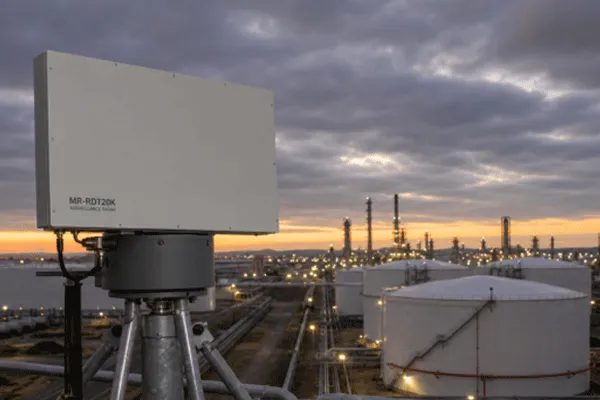
A critical aviation facility was facing a persistent long-range observation challenge. The facility’s operational perimeter was adjacent to several stretches of public road and open agricultural land, providing external observers with unobstructed lines of sight to aircraft movement areas, maintenance aprons, and a significant portion of the facility’s internal road network.
Security staff had noted multiple instances of individuals parking vehicles on nearby public roads and remaining for extended periods. On several occasions, personnel also observed reflections from long-range camera lenses or other optical instruments from vehicles and from a tree line approximately 900 m from the facility boundary.
The challenge was structural: the facility could not legally or practically prevent visibility from public land. It could not simply expand its physical perimeter. What it needed was a reliable way to detect optical observation, identify the precise location of the observer, and support timely field verification — without relying only on chance observation by patrol staff or continuous manual monitoring of every potential vantage point.
A secondary concern had emerged from the facility’s security assessment: some observation activity had shifted to night-time hours, using thermal imaging equipment that made conventional visible-light-only detection methods less effective after dark. The facility needed a solution that could operate across the full day-night cycle and detect both CMOS/CCD-type camera systems used during the day and thermal imaging devices used at night.

La Soluzione
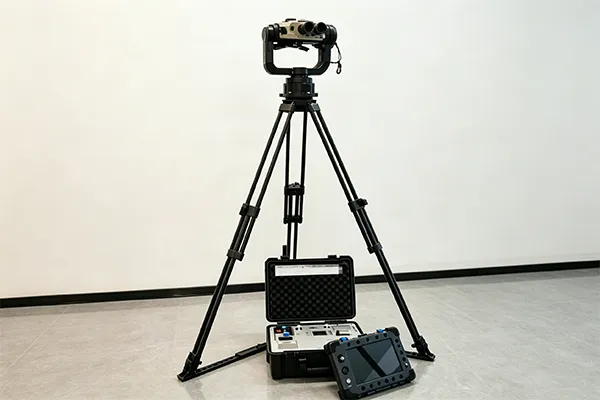
The facility deployed a networked optical surveillance detection system comprising three FinderPro-X fixed units and two FinderPro-E multi-spectral units, integrated into a central security command software platform.
Phase 1: Initial network — FinderPro-X
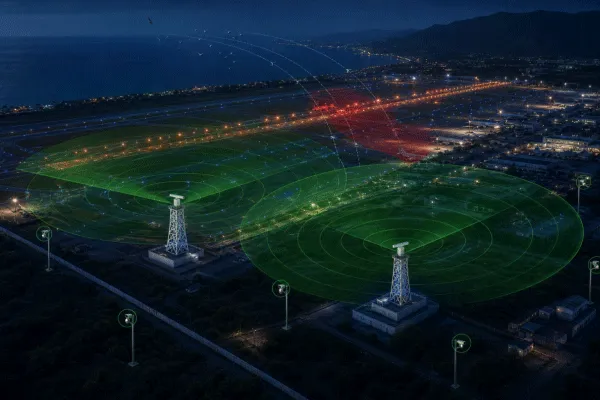
In the first phase, three FinderPro-X fixed optical detection systems were deployed on existing security towers at the facility perimeter’s north, east, and west sectors, providing overlapping 360° coverage of external observation angles within 2,000 m.
Each unit was configured to scan continuously and report confirmed detections directly to the central command console. This allowed the security operations center to receive location-based alerts whenever an optical device was oriented toward sensitive areas of the facility.
Within the first week of operation, the system identified 31 distinct external optical observation events. Of these, 27 were traced to vehicles or individuals on the public road to the north, and 4 were traced to observers near the tree line to the west.
Geolocation data allowed security staff to dispatch field personnel for timely verification and follow-up action. In all 31 cases, the observers relocated or ceased observation after being identified and handled by the security team.
After 30 days, the frequency of external observation events in the north sector dropped from an estimated daily occurrence to zero detections over a three-week period. The optical detection capability helped reduce persistent daytime observation and gave the facility a more active perimeter awareness layer.
Phase 2: Multi-spectral extension — FinderPro-E
The success of Phase 1 revealed a remaining night-time visibility gap. Thermal imaging activity had been observed between 2100 and 0400 hours, outside the effective detection range of visible-light-only monitoring methods.
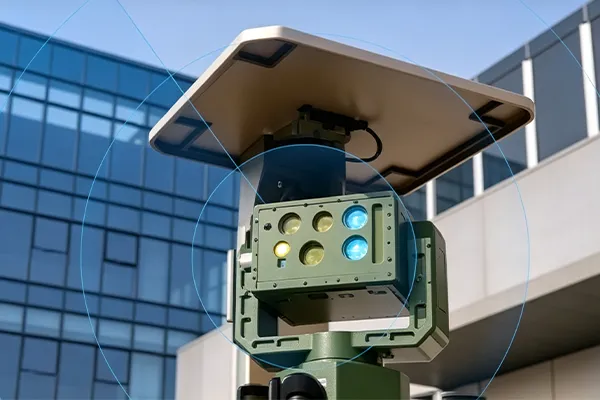
Two FinderPro-E multi-spectral systems were added to the east and south sectors — the directions from which night-time observation activity had been assessed as the highest concern.
Each FinderPro-E unit used near-infrared and long-wave infrared laser probing modules, enabling detection of both CMOS/CCD cameras and thermal imagers in a single scan cycle. This improved the facility’s ability to monitor optical activity during both day and night operations.
Within 72 hours of FinderPro-E activation, the system detected three separate instances of thermal imaging observation from the tree line and a residential building approximately 780 m to the south. All three events were geolocated and handled by field personnel. No further night-time observation events were recorded during the subsequent four-week monitoring period.
Patrol support — FinderPro-P
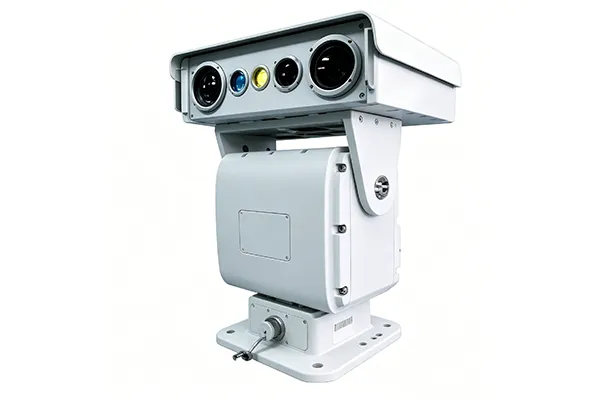
Four FinderPro-P handheld optical detection devices were issued to security patrol staff for mobile scanning operations.
Patrol personnel used the FinderPro-P to sweep designated sectors during routine rounds, providing flexible scanning coverage in areas between fixed unit arcs and during maintenance periods when fixed units were temporarily offline.
The handheld devices also gave the patrol team a practical tool for quick verification when a new concern was reported from the command center or identified during on-site inspection.
Networked command integration
All five fixed and multi-spectral detection units were integrated into the facility’s existing security management platform through the FinderPro central command software.
A unified detection display allowed the security operations center to view active detections from all units simultaneously. Real-time azimuth, range, and geolocation data were available to both SOC operators and patrol dispatch teams, improving coordination between system alerts and field response.
Risultati
Phase 1: Months 1–2, FinderPro-X only
- 31 external optical observation events detected and handled in the first 30 days
- Daily observation activity in the north sector reduced to zero within 30 days
- Average detection-to-response time: 4.2 minutes
- No facility operation periods were affected by undetected long-range optical observation during the monitoring period
Phase 2: Months 3–4, full network including FinderPro-E
- 3 night-time thermal imaging observation events detected within 72 hours of activation
- Zero night-time observation events recorded in the subsequent 4 weeks
- Full 24-hour monitoring coverage achieved across all key perimeter sectors
- Patrol staff scanning coverage increased by approximately 40% through handheld unit deployment
Combined system performance: 4-month assessment
- Detection probability maintained at ≥95% across all unit types in operational conditions
- False alarm rate ≤8%, below the ≤10% specification, following calibration for local environmental conditions including road traffic and agricultural vehicle movement
- System uptime reached 99.3% across all five fixed and multi-spectral units
The facility security officer summarized the outcome: the networked deployment helped transform the site from a facility with known long-range observation exposure into one with active, location-based optical detection coverage. Attempts at sustained external observation could now be detected, geolocated, and handled before sensitive operational information could be continuously collected.
System Configuration Summary
| Component |
Modello |
Units |
Role |
| Fixed optical detection system |
FinderPro-X (MR-CH1500) |
3 |
Primary perimeter coverage, 2,000 m range, day and NIR detection |
| Multi-spectral optical detection system |
FinderPro-E (MR-MS2000) |
2 |
Night-time thermal imaging detection and NIR coverage |
| Handheld optical detection device |
FinderPro-P (MR-MH1200) |
4 |
Patrol support and mobile scanning |
| Command software |
FinderPro central platform |
1 |
Unified SOC display and all-unit integration |