Zusammenfassung
Die Auswahl des geeigneten Radarfrequenzbands ist eine der wichtigsten Entscheidungen bei der Entwicklung eines Sicherheitssystem für den Luftraum in niedriger Höhe. Die Wahl der falschen Technologie kann zu einer verringerten Erkennungsleistung, übermäßigen Fehlalarmen, betrieblichen Blindstellen und deutlich höheren Lebenszykluskosten führen.
Unter den Radartechnologien zur Drohnenerkennung sind X-Band und Ku-Band am weitesten verbreitet. Obwohl beide unbemannte Luftfahrzeuge (UAVs) erkennen und verfolgen können, sind sie für grundlegend unterschiedliche Missionen optimiert.
X-Band-Radar (8-12 GHz) ist für Langstreckenüberwachung, flächenweite Überwachung und Frühwarnanwendungen konzipiert. Häufig an Flughäfen, Grenzregionen und großflächiger kritischer Infrastruktur eingesetzt.
Ku-Band-Radar (12-18 GHz) ist optimiert für die Erkennung und Verfolgung kleiner, niedrig-RCS-Ziele wie Verbraucher-Drohnen, FPV-Drohnen und kommerzielle UAVs, die in niedriger Höhe operieren.
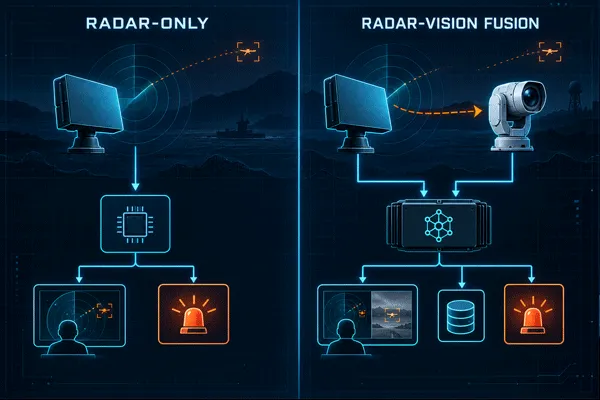
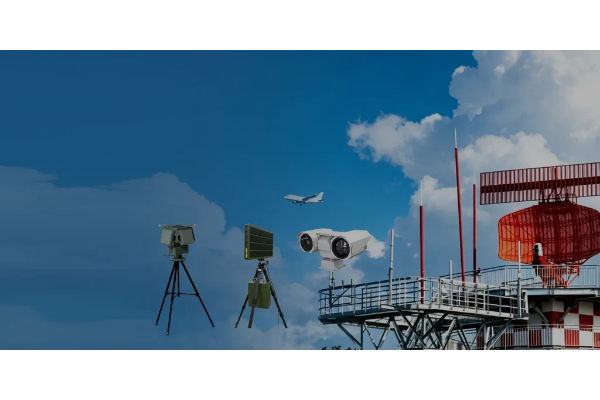
Für die meisten professionellen Einsätze zur Abwehr von UAVs ist die beste Lösung nicht, ein Band über das andere zu wählen. Eine mehrschichtige Architektur, die X-Band-Radar, Ku-Band-Radar kombiniert, EO/IR-Sensoren, und Command-and-Control-Software liefert das höchste Maß an Situationsbewusstsein und operativer Effektivität.
Dieser Leitfaden richtet sich an Flughafensicherheitsmanager, Grenzschutzbehörden, Betreiber kritischer Infrastrukturen, Organisationen für öffentliche Sicherheit und Systemintegratoren, die Radartechnologien für Drohnenerkennung und Luftraumsicherheit in niedriger Höhe bewerten.
Dieser Leitfaden wurde vom technischen Team Midradar entwickelt und basiert auf Radar-Deployment-Projekten an Flughäfen, Grenzkorridoren, Energieanlagen und städtischen Sicherheitsprogrammen in 50+ Ländern. Midradar entwirft und fertigt X-Band und Ku-Band Radarsysteme, die für internationale Beschaffung verfügbar sind. Erkennungsreichweite versus RCS Leistungsdaten für alle Standardkonfigurationen sind auf Anfrage verfügbar.
Technische Vergleichsmatrix
| Parameter |
X-Band-Radar |
Ku-Band-Radar |
| Frequenzbereich |
8-12 GHz |
12-18 GHz |
| Wellenlänge |
2,5-3,75 cm |
1,67-2,5 cm |
| Typischer Detektionsreichweite |
15-30+ km |
3-15 km |
| Erkennung kleiner Drohnen (RCS < 0,01 m²) |
Gut |
Ausgezeichnet |
| Winkelauflösung |
Gut |
Ausgezeichnet |
| Mikro-Doppler-Leistung |
Gut |
Ausgezeichnet |
| Falschalarmrate (überladene Umgebung) |
Mäßig |
Niedrig |
| Langstrecken-Frühwarnung |
Ausgezeichnet |
Begrenzt |
| Leistung bei starkem Regen |
Ausgezeichnet |
Gut |
| Leistung der städtischen Umwelt |
Gut |
Ausgezeichnet |
| Typische Anwendungen |
Flughäfen, Grenzen, Energieinfrastruktur |
Kritische Infrastruktur, städtisch, Gegen-UAV |
Hinweis zu Falschalarmen: In Umgebungen mit starkem Clutter wird die Arbeitsbelastung des Bedienpersonals häufig stärker durch Störalarme als durch die reine Erkennungsreichweite bestimmt. Ku-Band bietet bei der Verfolgung kleiner Drohnen in urbanen Gebieten in der Regel eine bessere Ziel-Clutter-Trennung und niedrigere Falschalarmraten.
Midradar bietet sowohl X-Band- als auch Ku-Band-Konfigurationen an. Vergleichen Sie Radarsystemoptionen basierend auf Abdeckung, Bedrohungsprofil und Integrationsanforderungen.
X-Band- oder Ku-Band-Radar zur Drohnenerkennung: Welches System passt?
Beschaffungsentscheidungsbaum
| Brauchst du eine Erkennung jenseits 15 km?
|
– Ja –> X-Band Radar
|
+– No
|
+– Hauptbedrohung: kleine Consumer-Drohnen?
| |
| – Ja –> Ku-Band Radar
| +– No
| |
| +– Flughafen- oder Hafensicherheit?
| | –> X-Band + Ku-Band [Ansicht: midradar.com/products/]
| +– Energie- oder städtische Anlage?
| → Ku-Band EO/IR
|
– Benötigen Sie eine Allwetter-Weitdeckung?
→ X-Band Ku-Band EO/IR |
Wichtige Erkenntnisse für die Beschaffung
| Betriebsanforderungen |
Empfohlene Lösung |
| Langstrecken-Frühwarnung (>15 km) |
X-Band |
| Erkennung kleiner Drohnen (RCS < 0,03 m²) |
Ku-Band |
| Überwachung des Flughafenperimeters und Anflugs |
X-Band + Ku-Band |
| Grenz- und Küstenüberwachung |
X-Band |
| Schutz von Energieanlagen |
Ku-Band |
| Städtische öffentliche Sicherheitsoperationen |
Ku-Band |
| Umgebungen mit starkem Clutter |
Ku-Band |
| Vollspektrum-Luftraumverteidigung in niedriger Höhe |
X-Band Ku-Band EO/IR |
Verständnis X-Band Radar
Zwischen 8 GHz und 12 GHz arbeitet X-Band Radar seit Jahrzehnten als grundlegende Technologie für Luftfahrtsicherheit, maritime Überwachung, Grenzschutz und Überwachung in großen Bereichen. Seine längere Wellenlänge ermöglicht es, Energie effizient über große Entfernungen auszubreiten und gleichzeitig eine zuverlässige Leistung unter widrigen Wetterbedingungen aufrechtzuerhalten.
Langstrecken-Erkennungsfähigkeit
X-Band Radar ist hervorragend bei der Überwachung auf großen Flächen. Typische Einsatzumgebungen:
• Überwachung von Flughafenperimeter und Anflugzonen
• Nationale Grenzüberwachungskorridore
• Küsten- und Hafensicherheit
• Schutz von großflächigen Energie- und Industrieanlagen
• Landesweite Überwachung kritischer Infrastrukturen
Je nach Radararchitektur und Zieleigenschaften überschreiten die Erfassungsreichweiten routinemäßig 20 bis 30 Kilometer gegenüber mittelgroßen und großen Luftzielen.
Verlängerte Reaktionszeit
Die Langstreckenerkennung gibt Sicherheitsbetreibern Zeit, Bedrohungen zu bewerten, Einsatzmittel zu koordinieren und Schutzmaßnahmen umzusetzen, bevor eine Bedrohung ihr Ziel erreicht. Für viele Einsätze ist die Reaktionszeit operationell wertvoller als die maximale Erkennungsreichweite.
Allwetterzuverlässigkeit
Im Vergleich zu höherfrequenten Radarbändern weist X-Band eine geringere atmosphärische Abschwächung auf, was einen zuverlässigen Betrieb bei starkem Regen, dichtem Nebel, Schnee und Staub ermöglicht. Dies macht X-Band zur bevorzugten Technologie für dauerhafte 24/7 Luftraumüberwachung in herausfordernden klimatischen Umgebungen.
Kosteneffiziente Gebietsabdeckung
Eine einzelne X-Band-Radar-Installation kann Lufträume über hunderte Quadratkilometer überwachen, was sie kosteneffizient für nationale Infrastrukturprojekte und die Perimetersicherung großer Einrichtungen macht.
Einschränkungen des X-Band Radars
• Verringerte Empfindlichkeit gegenüber Mikrodrohnen und Consumer-UAVs mit niedriger RCS
• Niedrigere Winkelauflösung im Vergleich zu Ku-Band Systemen
• Anfälligkeit für Clutter in komplexem Gelände ohne fortschrittliche Signalverarbeitung
• Weniger effektive Zieltrennung in dichten städtischen Umgebungen
Verständnis Ku-Band Radar
Ku-Band Radar arbeitet zwischen 12 GHz und 18 GHz und ist zu einer der am weitesten verbreiteten Technologien für dedizierte Counter-UAV- und Tiefflugsicherheitssysteme geworden. Seine kürzere Wellenlänge verbessert die Erkennungsempfindlichkeit gegenüber kleinen Luftzielen erheblich.
Überlegene Klein-Drohnen-Erkennung
Ku-Band Radar ist äußerst effektiv gegen Verbraucher-Quadrocopter, FPV Drohnen, kommerzielle UAVs und andere Luftbedrohungen mit geringer RCS. Die kürzere Wellenlänge erzeugt stärkere elektromagnetische Wechselwirkungen mit kleinen Drohnenstrukturen, verbessert minimale detektierbare Signalschwellenwerte und die allgemeine Erkennungszuverlässigkeit.
Höhere Winkelauflösung
Im Vergleich zu X-Band Radar bieten Ku-Band Systeme engere Strahlbreiten, was zu folgenden Ergebnissen führt:
• Bessere Zieltrennung im dichten Luftraum
• Verbesserte Höhenschätzung
• Verbesserte Multi-Target-Verfolgung
• Genauere Sensorsignalisierung für EO/IR Verifikationssysteme
Fortgeschrittene Mikro-Doppler-Analyse
Rotierende Drohnenpropeller erzeugen charakteristische Mikro-Doppler-Frequenzsignaturen. Moderne Ku-Band Radarprozessoren analysieren diese, um Drohnen von Vögeln, Wetterphänomenen und Umweltstörungen zu unterscheiden und reduzieren so direkt Störalarme bei anhaltenden Einsätzen.
Niedrigere Falschalarmraten in städtischen Umgebungen
Die überlegene Auflösung des Ku-Band Radars ermöglicht eine feinere Unterscheidung von Clutter in urban and suburban deployments, reducing false detections and improving operator confidence in high-density environments.
Einschränkungen des Ku-Band Radars
• Kürzere maximale Detektionsreichweite begrenzt den Nutzen für Frühwarnung bei großflächigen Frühwarnungen
• Größere atmosphärische Abschwächung bei starken Niederschlägen im Vergleich zu X-Band
• Typischerweise höhere Einheitskosten pro Kilometer Abdeckung
• Die Anforderungen an die Spektrum-Lizenzierung variieren je nach Gerichtsbarkeit
Radarrückstrahlfläche (RCS) und Erkennung kleiner Drohnen
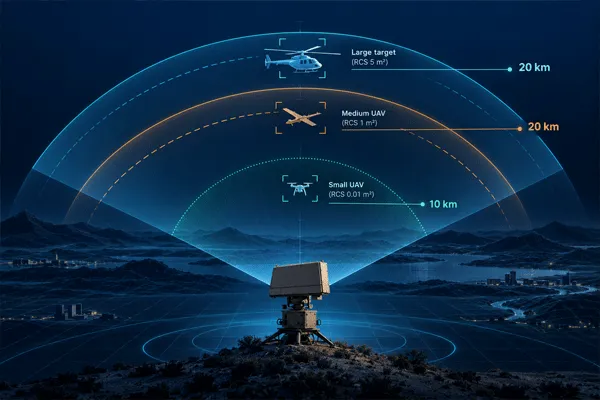
Radarrückstrahlfläche (RCS) ist der Parameter, der am direktesten bestimmt, wie auffindbar ein Ziel ist. Kleinere RCS-Werte weisen auf schwerer zu entdeckende Ziele hin. Die meisten Verbraucher- und Handelsdrohnen fallen in die Kategorie der niedrigen RCS, die herkömmliche Radarsysteme herausfordert.
Richtwerte für RCS-Bereiche nach Zielkategorie
| Zielkategorie |
Ungefährer RCS-Bereich |
| Verkehrsflugzeug |
100-1.000 m² |
| Leichte Flugzeuge |
1-10 m2 |
| Hubschrauber |
1-5 m2 |
| Große kommerzielle UAV |
0.1-1 m2 |
| Verbraucher-Multirotor-Drohne |
0.003-0.05 m2 |
| Mikro-UAV / FPV-Drohne |
0.001-0.01 m2 |
Wichtig: Die tatsächlichen RCS-Werte variieren erheblich je nach Zielorientierung, Betriebsfrequenz, Nutzlastkonfiguration, Seitenwinkel und Messmethodik. Diese Zahlen sind indikative Baureferenzen. Eine unabhängige Feldverifikation unter repräsentativen Einsatzbedingungen wird empfohlen, bevor die Systembeschaffung abgeschlossen wird.
Bei der Bewertung von Radaranbietern fordern Sie Erkennungskurven an, die die Reichweite im Vergleich zu RCS über das relevante Zielspektrum für Ihr Einsatzszenario zeigen.
Drei Beschaffungsfehler zu vermeiden

Fehler #1: Vergleich der Erkennungsreichweite ohne RCS Kontext
Ein Radarsystem, das als Zielerkennung auf 30 km beworben wird, kann diese Reichweite nur gegen große Flugzeuge erreichen. Gegen eine Consumer-Drohne mit einem RCS von 0.01 m² kann dasselbe System zuverlässige Erkennung nur für 3-5 km bieten.
Fragen Sie immer Lieferanten: Welches Ziel RCS wurde zur Berechnung des veröffentlichten Erkennungsbereichs verwendet? Können Sie eine Erkennungsreichweite im Vergleich zu RCS Leistungskurve für unser Bedrohungsprofil angeben? Seriöse Hersteller stellen diese Daten standardmäßig bereit.
Fehler #2: Ignorieren standortspezifischer Umweltbedingungen
Die Radarleistung ist stark umweltabhängig. Geländeprofil, Nähe zu Gebäuden und Fahrzeugverkehr, lokale Wetterlagen und elektromagnetische Störungen beeinflussen alle die reale Systemleistung. Ein für die Überwachung von offenem Gelände optimierte Radar kann an einer städtischen Energieanlage inakzeptable Falschalarmraten erzeugen. Fordern Sie vor der Beschaffung ortsspezifische Leistungsmodellierungen oder eine Feldversuchsphase an.
Fehler #3: Radar als eigenständige Lösung behandeln
Radar erkennt und verfolgt Luftobjekte. Es identifiziert sie nicht zuverlässig. Professionelle Tiefflugsicherheitssysteme integrieren:
• Radarerkennung (X-Band und/oder Ku-Band)
• EO-Kameras zur visuellen Identifikation
• Wärmebildgebung für Bestätigung bei Nacht und ungünstigem Wetter
• RF Spektrumanalysatoren zur Identifikation von Kommunikationsprotokollen
• AI Klassifikationssoftware für die automatisierte Benachrichtigungsfilterung
Multisensor-Fusionsarchitektur
Professionelle Drohnenerkennungseinsätze basieren selten auf einer einzigen Sensortechnologie. Eine geschichtete Architektur verteilt Verantwortlichkeiten auf Erkennung, Verifikation, Klassifizierung und Befehlsfunktionen.
Detektionsschicht
• X-Band Radar für Frühwarnungen auf größere Entfernung
• Radar Ku-Band für präzise Erkennung und Verfolgung von Klein UAV Flugzeugen
Verifikationsschicht
• EO-Kameras zur visuellen Bestätigung bei Tageslicht
• Wärmebildkameras für Nacht- und Schwachsicht-Erkennung
Klassifikationsschicht
• AI Zielerkennungs- und Alarmfiltersoftware
• RF Signalanalyse zur UAV Protokollerkennung
• Mikro-Doppler-Spektralverarbeitung zur Zieltypklassifikation
Befehls- und Kontrollschicht
• GIS-basierte Luftraum-Lageanzeige
• Integriertes Alarmmanagement und Bediener-Workflow
• Vorfallprotokollierung und Beweiserfassung
• Sensorfusion und Spurenkorrelation
Diese Architektur verbessert die Erkennungszuverlässigkeit, reduziert Störalarme und liefert die für die Koordination der Einsatzmaßnahmen und die Überprüfung nach dem Vorfall erforderlichen operativen und Beweisnachweis.
Einsatzempfehlungen nach Szenario
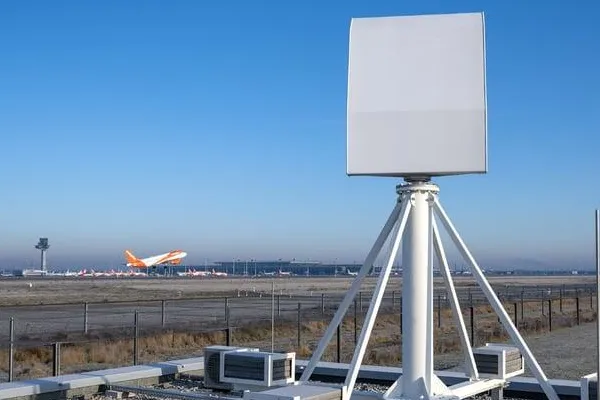
Flughafen- und Luftfahrtanlagensicherheit
Bedrohungsprofil
• Unautorisierte Consumer-Drohnen in Anflug- und Abflugkorridoren
• Drohnen mit schneller Manöverfähigkeit FPV
• Potenziell koordinierte Multi-Drohnen-Operationen während Stoßzeiten
Wichtige Leistungsanforderungen
• Mindestnachweisbare RCS: 0.01 m² bei 3-5 km
• Aktualisierungsrate verfolgen: <=2 Sekunden für aktive Ziele
• Gleichzeitige Streckenkapazität: 50+ Ziele
• Falschalarmrate: operativ handhabbar ohne dediziertes Filterpersonal
Empfohlene Architektur
• X-Band Radar für die Frühwarnung am äußeren Perimeter bei 10-20 km
• Ku-Band Radar für präzise Verfolgung innerhalb der 5 km kritischen Anflugzone
• EO/IR Kamerasystem, das für die Zielverifikation mit Radar-Tracking-Ausgaben ausgestattet ist
• Integrierte Kommandoplattform für Multisensor-Display und Alarmverwaltung
Empfohlene Midradar-Konfiguration: MR-RDT20K (äußere X-Band-Perimeter) + MR-RDV05K (innere Ku-Band-Präzisionsverfolgung)
Integrationshinweis: Die Koordination mit bestehenden Luftfahrtnavigations- und Kommunikationssystemen ist erforderlich. Eine Genehmigung durch die nationale zivile Luftfahrtbehörde ist in der Regel vor dem operativen Einsatz erforderlich.
Grenz- und Küstenüberwachung
Bedrohungsprofil
• Grenzüberschreitende Drohnenoperationen für Schmuggel, Aufklärung und Kommunikationsübertragung
• Bedrohungen, die typischerweise in niedriger Höhe operieren, um die Radarsignatur zu verringern
• Zufahrtskorridore können sich über Hunderte von Kilometern gemischtes Gelände erstrecken
Wichtige Leistungsanforderungen
• Erkennungsreichweite: 15-30 km gegen mittelgroße UAVs
• Anhaltende 24/7 Allwetterabdeckung
• Niedrige Falschalarmrate gegenüber Vögeln und Geländemerkmalen
Empfohlene Architektur
• Langstrecken-X-Band Radar, das in sich überlappenden Abdeckungssektoren eingesetzt wird
• Wärmebildsysteme für die Verifikation im mittleren Reichweitenbereich
• Integration mit Grenzkommandoplattformen für die Koordination mehrerer Behörden
Schutz von Energie- und Industrieanlagen
Bedrohungsprofil
• Zielgerichtete Drohnenoperationen gegen Stromerzeugungs-, Öl- und Gas- sowie Wasseraufbereitungsanlagen
• Bedrohungen: kleine Verbraucher- oder modifizierte kommerzielle Drohnen auf 1-5 km Reichweite
• Nutzlastlieferung und Aufklärung sind die wichtigsten Bedrohungsvektoren
Wichtige Leistungsanforderungen
• Minimales detektierbares RCS: 0.003-0.01 m² bei 1-3 km
• Hohe Winkelauflösung für eine präzise Analyse der Anflugbahn
• Niedrige Falschalarmrate in industriellen Überlastungsumgebungen
Empfohlene Architektur
• Radar als primärer Detektionssensor innerhalb des 5 km Bedrohungsbereichs Ku-Band
? KI-gest?tzte Klassifizierung zur Reduzierung von Fehlalarmen durch V?gel und Industrieanlagen
• EO/IR Verifikation, die für die Identifikation bei 1-3 km optimiert ist
• Kommandoplattform integriert in das Sicherheitsoperationszentrum der Einrichtung
Städtische öffentliche Sicherheit und Veranstaltungssicherheit
Bedrohungsprofil
• Unautorisierte Drohnenüberflüge von öffentlichen Räumen, Regierungsgebäuden und Verkehrsknotenpunkten
• Hauptanliegen: Datenschutzverletzungen, Lieferung von Nutzlast, Störung des Luftraums
Wichtige Leistungsanforderungen
• Erkennung bei dichtem Clutter mit hoher Falschalarmunterdrückung
• Mindestnachweisbare RCS: 0.01 m² bei 1-3 km
• Schnelle Alarmierung und Nachverfolgung der Übergabe an Verifizierungssensoren
Empfohlene Architektur
• Radar Ku-Band für die präzise Erkennung von kleinen Drohnen im überfüllten städtischen Luftraum
• EO/IR Kameras für schnelle Zielerkennung
• AI Analysen für die automatisierte Bedrohungsklassifizierung und Priorisierung von Warnungen
Sicherheit von Hafen- und Maritimen Einrichtungen
Bedrohungsprofil
• Drohnenbasierte Aufklärung von Schiffsbewegungen und Frachtoperationen
• Mögliche Schmuggeloperationen mit Drohnen zum Transport von Schmuggelware
• Bedrohungen können sowohl von Land- als auch aus Seerichtung kommen
Empfohlene Architektur
• X-Band Radar für maritime Oberflächen- und Luftüberwachung auf größere Entfernung
• Ku-Band Radar für präzise Verfolgung innerhalb der inneren Hafensicherheitszone
• Wärmebildbildung zur Zielverifikation bei geringer Sichtbarkeit
Geschätzte Radararchitektur nach Anlagentyp
| Anlagentyp |
Empfohlene Architektur |
| Kleine gewerbliche Anlage |
Einzelne Ku-Band Radar + EO/IR |
| Industriecampus |
Ku-Band + EO/IR + KI-Analytik |
| Öl- und Gasraffinerie |
Ku-Band + EO/IR + KI-Analytik |
| Internationaler Flughafen |
X-Band Ku-Band EO/IR |
| Grenzüberwachungskorridor |
X-Band + Wärmebildkameras |
| Hafen- oder Maritime Einrichtung |
X-Band + Ku-Band + Thermik |
| Nationale kritische Infrastruktur |
X-Band Ku-Band EO/IR Befehlsplattform |
Regulatorische und spektrumbezogene Überlegungen
Die Radarbeschaffung zur Drohnenerkennung umfasst sowohl technische als auch regulatorische Dimensionen, die während der Planungsphase berücksichtigt werden müssen. Regulatorische Probleme, die spät im Beschaffungszyklus festgestellt werden, gehören zu den häufigsten Ursachen für Projektverzögerungen und Kostenüberschreitungen.
Spektrumlizenzierung
Both X-band and Ku-band frequencies fall within regulated spectrum bands in most jurisdictions. Operation of ground-based radar systems In der Regel ist eine Genehmigung von der National Telecommunications Regulatory Authority erforderlich. Die Lizenzfristen variieren von mehreren Wochen bis zu mehreren Monaten – planen Sie ausreichend Zeit für die Projektplanung ein.
Elektromagnetische Kompatibilität
Stationierungen an Flughäfen und Häfen erfordern typischerweise eine formale elektromagnetische Kompatibilitätsanalyse (EMC), um sicherzustellen, dass der Radarbetrieb keine Navigationshilfen, Schiffsverkehrssysteme oder andere kritische Elektronik stört. Dies wird vom Anlagenbetreiber mit technischer Unterstützung des Radarherstellers durchgeführt.
Exportkonformität
Radarsysteme für Grenzsicherheit, den Schutz kritischer Infrastrukturen und die Bekämpfung UAV Anwendungen werden typischerweise als Dual-Use-Güter klassifiziert. Exporte aus China unterliegen dem Exportkontrollgesetz und der Dual-Use Export Control List (MOFCOM Notice Nr. 51, 2024). Importeure sollten überprüfen, dass der Lieferant die entsprechenden Exportklassifizierungsverfahren abgeschlossen hat und vor dem Versand eine Konformitätsdokumentation vorlegen kann.
Beschaffungsempfehlung
Beziehen Sie Compliance-Spezialisten und das Exportteam des Radarherstellers in der frühesten Phase der Projektplanung ein. Für internationale Einsätze wird mindestens 60 bis 90 Tage eingeräumt, damit Exportdokumentation, Importlizenzierung und Spektrumautorisierung parallel zu den technischen Beschaffungsaktivitäten abgeschlossen werden können.
Häufig gestellte Fragen
Ist Ku-Band Radar besser als X-Band für Drohnenerkennung?
Für kleine Consumer-Drohnen bietet Ku-Band in der Regel eine bessere Erkennungsempfindlichkeit, Verfolgungspräzision und Clutter-Unterdrückung. Für die Weitfeldüberwachung, bei der Priorität ist, Bedrohungen bei 15-30 km zu erkennen, bleibt X-Band die geeignetere Primärtechnologie. Die meisten professionellen Counter-UAV-Architekturen verwenden Ku-Band zur präzisen Erkennung innerhalb der inneren Bedrohungszone und X-Band für die Frühwarnung am äußeren Perimeter. Die beiden Technologien ergänzen sich und sind nicht wettbewerbsfähig.
Kann X-Band Radar DJI und ähnliche Consumer-Drohnen erkennen?
Ja. Gegen Verbraucher-Multirotor-Drohnen mit RCS-Werten, typischerweise im Bereich von 0.01-0.05 m², erreichen leistungsfähige X-Band-Systeme in der Regel eine zuverlässige Erkennung bei 3-8 km. Ku-Band Systeme erweitern typischerweise die zuverlässige Erkennungsreichweite gegen dieselben Ziele auf 5-12 km. Bei der Bewertung von Radarsystemen fordern Sie Erkennungsreichweite im Vergleich zu RCS Leistungsdaten an, anstatt sich auf maximale Reichweiten-Headline-Spezifikationen zu verlassen.
Welches Radarband funktioniert bei starkem Regen besser?
X-Band Radar liefert bei starkem Regen in der Regel eine bessere Leistung. Bei starken Niederschlägen von etwa 10-15 mm pro Stunde kann Ku-Band Radar-Erkennungsreichweite im Vergleich zur Trockenwetterleistung um 15-30 % reduziert werden. Für Einsätze in tropischen, Monsun- oder Küstenklimazonen sollte X-Band Radar die primäre Allwetter-Erkennungsschicht bilden.
Verwenden Flughäfen sowohl X-Band als auch Ku-Band Radar?
Fortschrittliche Drohnenerkennungsstationen an Flughäfen kombinieren zunehmend beide Technologien. X-Band bietet Frühwarnung auf längere Entfernungen entlang des Flughafenperimeters, während Ku-Band eine hochpräzise Verfolgung und Klassifizierung innerhalb der kritischen inneren Zone nahe Start- und Landebahnen ermöglicht. Ein-Sensor-Flughäfen werden unter den aktuellen Bedrohungsbewertungen in niedriger Höhe zunehmend als unzureichend angesehen.
Welche Erkennungsreichweite sollte ich gegen eine Drohne in Verbrauchergröße erwarten?
Für Verbraucher-Multirotor-Drohnen mit RCS-Werten, typischerweise unter 0.05 m², erreichen professionelle Drohnenerkennungsradarsysteme in der Regel zuverlässige Erkennungsreichweiten von 3 bis 12 km, abhängig vom Systemtyp und den Umweltbedingungen. Beschaffungsentscheidungen sollten auf verifizierten Feldtestdaten unter repräsentativen Standortbedingungen basieren und nicht auf vom Anbieter veröffentlichten maximalen Reichweitenzahlen.
Wie viele Ziele kann ein Radar gleichzeitig verfolgen?
Die Verfolgungskapazität variiert stark je nach Radardesign. Einstiegssysteme unterstützen typischerweise 20-50 gleichzeitige Strecken. Systeme für größere Anlagen unterstützen häufig 100-200-Gleise. Fortschrittliche Phased-Array-Systeme können 500+ gleichzeitige Spuren aufrechterhalten. Anforderungen sollten auf Basis der Spitzenbelastung im Szenario und nicht auf durchschnittlichen Bedingungen festgelegt werden.
Welche Radarsysteme bieten Midradar zur Drohnenerkennung an?
Midradar stellt sowohl X-Band- als auch Ku-Band-Radarsysteme für Überwachung in niedrigen Höhen und Gegen-UAV-Anwendungen her. X-Band-Konfigurationen unterstützen Detektionsreichweiten von 10 bis 20 km. Ku-Band-Konfigurationen ermöglichen die präzise Verfolgung von Zielen mit einem RCS von bis zu 0,001 m². Alle Systeme bieten eine 360-Grad-Azimutabdeckung und integrieren sich in EO/IR-Überprüfungssensoren sowie Befehlssoftware. Vollständige Produktspezifikationen: Midradar-Radarsysteme.
Können Midradar vor der Beschaffung eine standortspezifische Deckungsanalyse vorlegen?
Ja. Das technische Team von Midradar führt eine Abdeckungsmodellierung basierend auf dem Gelände der Anlage, dem Bedrohungsprofil und den operativen Anforderungen durch, bevor eine Systemempfehlung ausgesprochen wird. Dies umfasst die Kartierung der Erkennungsreichweite, die Analyse von toten Winkeln und die Planung der Integration mehrerer Sensoren. Kontaktieren Sie das technische Team, um eine Abdeckungsanalyse für Ihr Projekt zu starten.
Fazit
Es gibt kein universell überlegenes Radarfrequenzband für die Drohnenerkennung. Die richtige Technologie hängt von den operativen Anforderungen, dem Bedrohungsprofil, dem Gelände und den Umweltbedingungen ab.
Wählen Sie X-Band Radar, wenn:
• Langstreckenüberwachung hat Priorität (15–30+ km)
• Große geografische Gebiete müssen mit begrenzten Sensorknoten abgedeckt werden
• Betriebliche Beständigkeit bei jedem Wetter ist eine Hauptanforderung
• Die Frühwarnreaktionszeit ist operativ entscheidend
Wählen Sie Ku-Band Radar, wenn:
• Die Erkennung von Drohnen für kleine Verbraucher ist die Hauptaufgabe
• Einsatz in Städten, Vororten oder Industriegebieten mit komplexem Clutter
• Niedrige Falschalarmraten haben Priorität
• Hohe Verfolgungspräzision und EO/IR Sensor-Cueing sind erforderlich
Wählen Sie eine kombinierte Architektur, wenn:
• Die Stationierung muss das gesamte Spektrum der Luftbedrohungen abdecken
• Der Schutz von Flughafen-, Hafen-, Grenz- oder nationaler kritischer Infrastruktur ist die Mission
• Betriebskontinuierlichkeit bei schlechtem Wetter ist erforderlich
• Das höchste Maß an Luftraum-Situationsbewusstsein ist das Ziel
Für die meisten professionellen Sicherheitsprojekte in niedriger Höhe, ein geschichtete Architektur Die Kombination von X-band-Radar, Ku-band-Radar, EO/IR-Sensoren, KI-Analysen und einer integrierten Kommando-Plattform liefert die operative Effektivität, die einzelne Technologielösungen nicht erreichen können.


 18:46
18:46