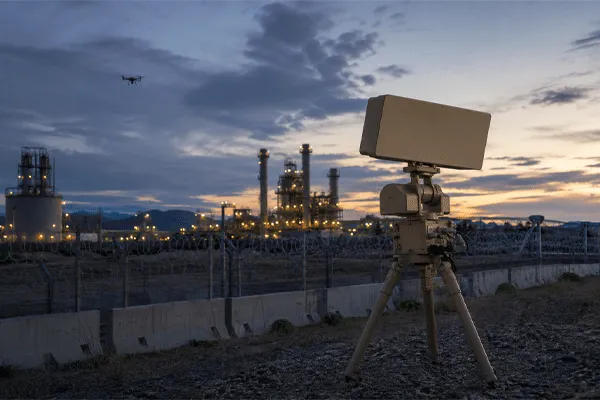
Zusammenfassung
Radar OEM and ODM cooperation should convert a customer’s project requirements into a controlled, documented and repeatable product configuration. It can include branding, mechanical integration, power and mounting adaptation, data-interface work, C2 or EO/IR integration, software configuration, documentation, testing and lifecycle support. It should not mean changing every parameter without engineering control.
Midradar’s value to system integrators is based on the combination of radar products, EO/IR and PTU integration experience, MR2000 C2 software functions and project-level interface review. The final scope depends on the selected model, destination, final use, performance requirements, development effort and verification plan.

Radar OEM and ODM Solutions: From Project Requirements to Repeatable Delivery
Schlüsselfragen, die dieser Leitfaden beantwortet
- What is the difference between radar OEM, ODM and system integration?
- Which hardware, interface, software and documentation items can be customized?
- How should a standard radar platform be selected before engineering changes begin?
- How are prototypes, configuration baselines and change requests controlled?
- Which IP, NRE, MOQ, warranty and lifecycle terms must be agreed?
Applicability and Customization Boundary
This guide applies to system integrators and regional partners that need a repeatable radar configuration derived from an existing Midradar platform. OEM usually changes branding, documentation, packaging or selected external interfaces while retaining the core product design. ODM may involve broader mechanical, electrical, software or workflow adaptation. Neither term means that every requested change is technically, commercially or legally available. The project must separate configurable items from protected design elements, regulated functions and changes that would require a new verification or certification program.
1. OEM, ODM and System Integration Are Different
OEM normally starts with an established product platform and adapts branding, documentation, interfaces or approved configuration options. ODM may include deeper mechanical, electronic or software design changes for a defined customer requirement. System integration connects the radar to cameras, C2 platforms, networks and operational workflows.
A project may use all three models, but the contract should separate them. Branding changes, interface adaptation, new enclosure design and full system delivery have different engineering effort, ownership, test and support implications.
Review Midradar’s radar technology capabilities before defining the customization boundary.
Commercial Model and Lifecycle Support
A sustainable OEM/ODM program needs more than prototype approval. The parties should define forecast and minimum-order assumptions, non-recurring engineering charges, tooling ownership, sample and production pricing, payment milestones, lead times, warranty, spares, software-update policy, obsolescence management and the process for end-of-life decisions. Intellectual-property ownership and use rights should be explicit for standard Midradar technology, customer-funded adaptations, branding assets and jointly developed material.
The production release should reference one approved bill of materials, drawing set, software version, interface document and test specification. Later changes require impact assessment and regression testing. Without this discipline, a successful prototype can become an unstable production product whose support cost exceeds the original customization value.
Customization-Control Matrix
| Change Class |
Typical Examples |
Control Requirement |
| Low-impact configuration |
Branding, labels, language, packaging and approved settings |
Document review and configuration record |
| Interface adaptation |
Connector, message mapping, UI fields or third-party driver |
ICD, integration test and version control |
| Design change |
Enclosure, power, mounting, thermal or environmental change |
Engineering review, prototype and verification |
| New platform development |
Major RF, antenna, waveform, processing or architecture change |
Separate development plan, risk, compliance and acceptance baseline |
2. A Controlled Customization Matrix
Customization should be divided into categories. Commercial customization may include private labels, model naming, packaging and customer-facing documents. Mechanical customization may include brackets, connectors, cable routing, radomes, vehicle or tripod kits and environmental treatments. Electrical customization may include approved power input, connector pinout and system harnesses. Software customization may include UI branding, user roles, maps, alarm zones, workflows and reports. Interface customization may include message mapping, data-field adaptation, coordinate conversion and device-control work.
Every requested change should be classified as standard, configurable, engineering change or unsupported. This protects schedule and product integrity and gives both parties a clear cost and acceptance basis.
Verwenden Sie die aktueller Radarkatalog to identify a standard platform before requesting changes. When the project also needs formal requirement definition before supplier selection, refer to the Leitfaden für die Beschaffung von Drohnen-Detektionsradar.
3. Development Workflow
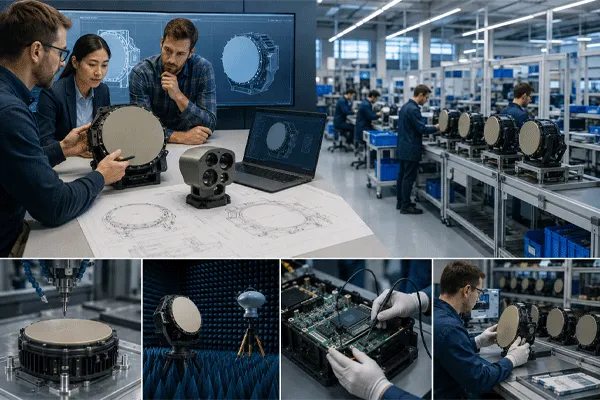
A disciplined OEM/ODM project normally follows seven stages: requirement clarification, feasibility review, configuration baseline, prototype or engineering sample, verification, pilot delivery and controlled production. The requirement stage should define target performance, environment, installation, interfaces, cybersecurity, documentation, compliance and acceptance.
The feasibility review identifies what can use an existing platform and what requires development. The baseline records the selected hardware, software version, drawings, interface documents and responsibilities. Prototype verification should cover both the changed item and its effect on the complete system. Pilot delivery confirms manufacturing repeatability before larger production.
Radar OEM and ODM Solutions: From Project Requirements to Repeatable Delivery
4. Interface and Software Adaptation
Interface adaptation is often more valuable to an integrator than a cosmetic change. A project may need radar track data mapped to a customer platform, a specified coordinate system, synchronized timestamps, device-health information, EO/IR control, event logs or a defined alarm workflow.
Midradar can evaluate project-specific integration using Ethernet-based radar data, MR2000 C2 functions and radar-to-EO/IR cueing. Exact APIs, SDKs, protocol versions and data fields must be confirmed during technical review. Where a standard such as ASTERIX, SAPIENT, ONVIF or another industry interface is requested, the required category, profile, version and acceptance tests should be stated before compatibility is claimed. Use the pan-tilt selection guide when the customized system includes radar-cued EO/IR.
5. Documentation, IP and Change Control
The project should define ownership and permitted use of drawings, firmware, source code, interface documents, test tools, customer branding and jointly developed work. Most projects do not require transfer of all underlying intellectual property. They require sufficient documentation for integration, operation, maintenance and agreed future support.
Changes should be controlled through numbered requirements, versioned drawings and software, deviation records and approval gates. The customer should know which configuration is being quoted, tested, delivered and supported. This is particularly important when private labels or customer model numbers hide the original technical baseline.
6. Verification and Production Readiness
Verification should be derived from the customization. Mechanical changes may require vibration, sealing, corrosion, thermal or installation checks. Electrical changes may require power, EMC and protection tests. Interface changes require message validation, reconnect behavior, timing, coordinate and fault tests. Software changes require functional, permission, logging, recovery and upgrade tests.
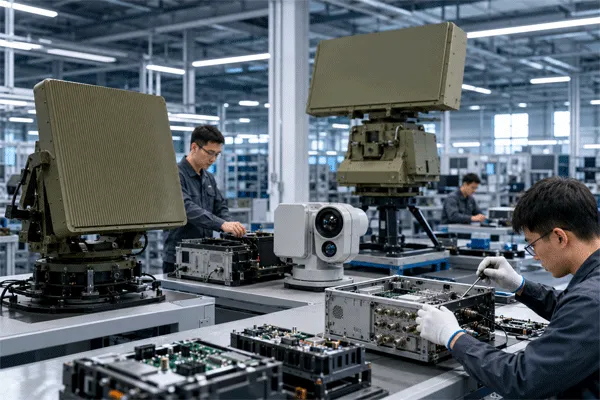
Production readiness includes approved drawings, bills of material, software images, serial-number rules, inspection plans, test records, packaging, spares and release authority. Without these controls, an ODM prototype may work once but fail to become a repeatable product.
Radar OEM and ODM Solutions: From Project Requirements to Repeatable Delivery
7. Information Required from the Partner
To start an OEM/ODM review, provide the application, target and performance requirements, quantity and schedule, destination and final use, installation concept, environmental conditions, power and network, required interfaces, existing C2 or EO/IR equipment, branding scope, documentation language, acceptance method and expected support model.
A complete input package allows Midradar to separate available configuration, engineering work, technical risk and commercial assumptions before development begins.
Fazit und Handlungsaufforderung
The strongest OEM/ODM partnership combines a stable product platform with transparent engineering change control. It gives the integrator enough flexibility to meet the project without creating an unsupported one-off product.
Midradar can review radar, C2, EO/IR and mechanical integration requirements and prepare a preliminary customization matrix, responsibility split, development path and verification plan. Final capability remains subject to technical feasibility, compliance and an approved project baseline.
Häufig gestellte Fragen
Can Midradar provide private-label radar products?
Private-label and branding requirements can be evaluated as part of an OEM scope, subject to model, market, documentation, compliance and commercial review.
Does ODM mean the customer receives source code?
Not automatically. Intellectual-property and software-delivery scope must be defined contractually. Many projects need interface documentation and configuration support rather than full source-code transfer.
What is the first OEM/ODM deliverable?
A requirement and customization matrix that separates standard, configurable, engineering-change and unsupported items.
Which items are normally suitable for OEM customization?
Typical review items include branding, enclosure color, mounting, power input, connectors, selected interface fields, UI labels, documentation and packaging. Availability depends on the platform and validation effort.
How are changes controlled after prototype approval?
Freeze an approved configuration baseline. Later changes should use a formal request, impact assessment, updated records, regression testing and renewed approval before production release.











 15:40
15:40