Project Background
In high-altitude and high-latitude border regions—particularly across the vast frontiers of Russia and Northern Eurasia—long winters, severe snowstorms, strong winds, and persistent low temperatures create serious challenges for border surveillance and low-altitude security. Traditional patrol-based defense models are limited by harsh weather, difficult terrain, and long response times. At the same time, low-flying drones and other small aerial targets have become new threats to border management, requiring continuous monitoring and rapid response capabilities.
To strengthen border defense in severe winter conditions, Midradar deployed an AI unattended border interception system integrating radar, electro-optical tracking, and intelligent analysis. The system was designed to provide 24/7 low-altitude target detection, automatic tracking, and alarm linkage in snowy and icy environments, helping border units improve situational awareness and reduce the pressure of manual patrols.
Customer Challenges
The customer needed a reliable border defense solution capable of operating continuously in extreme cold and snow-covered environments typical of Russian border territories. Key requirements included:
- Detecting and tracking low-altitude UAVs and other intruding targets
- Ensuring stable system operation in snow, ice, frost, and strong winds (down to -40°C and below)
- Reducing reliance on manual observation and patrols through AI unattended monitoring
- Providing long-range visual verification after radar detection
- Supporting rapid warning and interception response for border defense missions
In such environments, conventional surveillance equipment can suffer from icing, poor visibility, or reduced mobility, making all-weather monitoring difficult.
The Solution
Midradar provided a three-in-one radar-optoelectronic interception system specifically engineered for the harsh climates of Russia and high-latitude regions. The deployed system integrates:
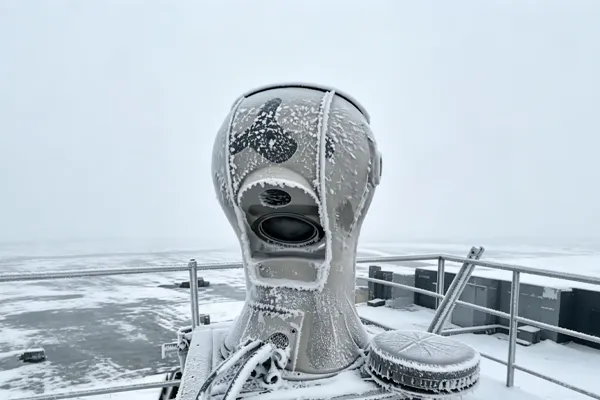
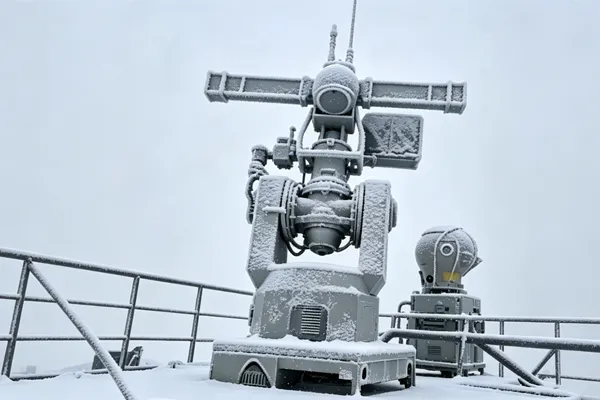
Installed at the border site, the system maintains reliable monitoring even under severe snow accumulation and freezing conditions. As shown in the project images, both the electro-optical unit and the radar-tracking system continued to operate in the field despite visible ice and frost on the equipment surface, proving its resilience for Siberian-grade winters.
How the System Works
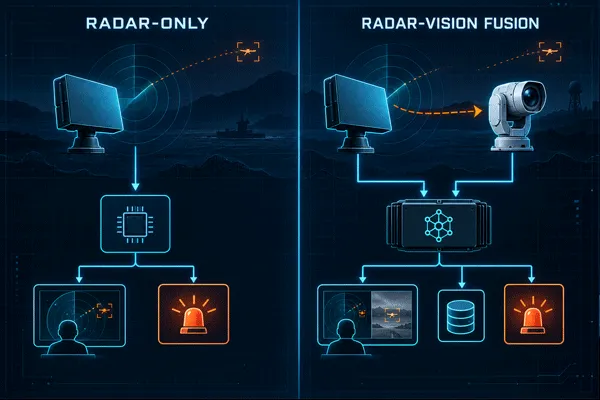
1. Radar Detection
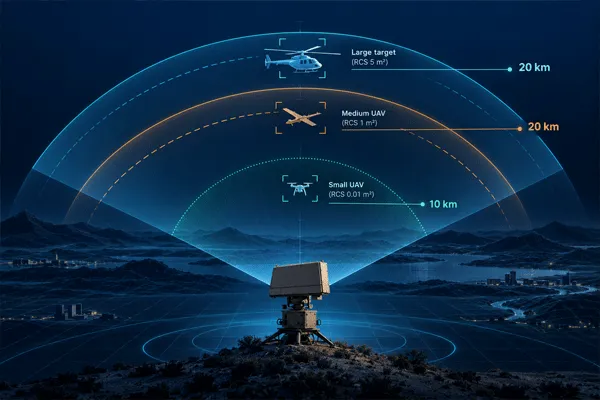
The low-altitude radar scans the protected area in real time and detects UAVs or other suspicious targets entering the surveillance zone.
2. Automatic Slew-to-Cue
Once a target is detected, the system automatically guides the electro-optical unit toward the target area for visual confirmation.
3. Visual Verification and Tracking
Using visible-light and/or thermal imaging, the system identifies and continuously tracks the target in day or night conditions, even in poor visibility caused by Arctic blizzards.
4. AI Analysis and Alarm Linkage
The system applies AI algorithms for target recognition and threat assessment, reducing false alarms and improving the efficiency of unmanned monitoring.
5. Response and Interception Support
Once a threat is confirmed, the system can trigger alarms or support further response and interception measures according to operational requirements.
Key Advantages
Reliable Operation in Severe Winter Conditions
The deployed system demonstrated stable field performance despite snow, frost, and low temperatures, supporting year-round border security in Northern Russian regions.
AI Unattended Monitoring
By reducing dependence on manual patrols, the system enables 24/7 unattended surveillance in remote border areas where human presence is logistically difficult.
Radar and Vision Fusion
The combination of radar detection and electro-optical confirmation improves target identification and reduces false alarms.
Long-Range Day-and-Night Tracking
The electro-optical unit provides effective visual verification and tracking of low-altitude targets in complex weather and lighting conditions.
Improved Border Response Efficiency
Automatic warning and linkage help security personnel respond more quickly to potential airspace intrusions.
Results
After deployment, the system helped the customer establish a more intelligent low-altitude defense capability for border management in harsh winter conditions. The project demonstrated that Midradar’s AI unattended border interception system can maintain operational effectiveness in snow-covered, extreme-cold environments while improving early warning, target verification, and response efficiency.
This case also verified the practical value of radar-electro-optical integrated systems for border security applications in Russia and other high-latitude markets where harsh climate and difficult terrain make traditional monitoring methods insufficient.
Conclusion
Border defense in ice and snow conditions—such as those found in Russia’s extensive border zones—requires surveillance systems that can remain stable, intelligent, and responsive under extreme environmental stress. Midradar’s AI unattended border interception solution combines low-altitude radar, electro-optical tracking, and AI analysis to provide reliable all-weather monitoring for remote and high-risk border areas.
By supporting automatic detection, target verification, and rapid response, the system helps border units improve low-altitude defense capability while reducing the burden of manual operations in the world’s most demanding climates.














 10:43
10:43