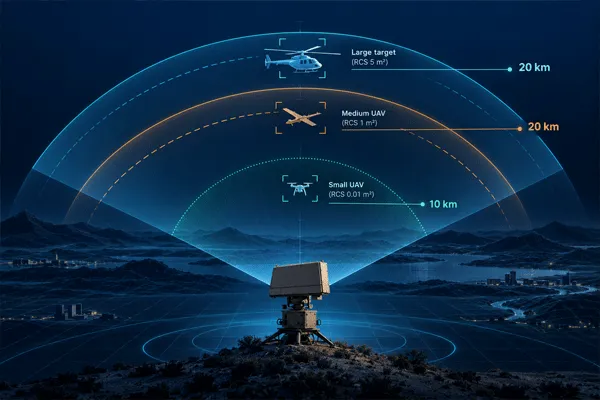
MidRadar delivers the industry’s most resilient counter-UAV systems for high-aridity environments. By leveraging a Solid-State AESA antenna architecture integrated with Digital Beamforming (DBF) processing, our solutions maintain 24/7 detection accuracy under 50°C+ heat and severe sandstorm conditions, effectively filtering out thermal shimmering and background clutter.
Overcoming Environmental Fatigue with Advanced Radar Architecture
Desert environments demand a system that is both mechanically robust and digitally intelligent. Traditional sensors often succumb to “environmental fatigue” within months of deployment due to the punishing combination of heat and abrasive particulates.
1. Solid-State AESA: Eliminating Mechanical Failure
Traditional radars rely on mechanical rotation, which inevitably fails as fine sand grit grinds down internal gears and motors in arid territories.
The MidRadar Advantage: Our MR-RDA10K series utilizes a fully solid-state AESA (Active Electronically Scanned Array) design.
Reliability: With no moving parts, the risk of mechanical wear is eliminated. This ensures stable, long-term operation in remote areas where maintenance is logistically challenging.
2. Digital Beamforming (DBF): Filtering Thermal Noise
Extreme desert heat (50°C+) creates “thermal shimmering”—refractive air turbulence that blinds standard optical and legacy radar sensors.
Precision Processing: While the AESA hardware provides rapid beam agility, our DBF algorithms perform high-speed digital spatial filtering.
Target Extraction: This synergy allows the system to suppress ground clutter and extract unique UAV signatures from intense background thermal radiation, providing a clear “digital picture” in a distorted environment.
Third-Party Validated for Extreme Conditions
Midradar systems are certified through extreme-condition validation by authoritative third-party testing to ensure resilience in the most punishing climates globally:
- Sand & Dust Resistance: Fully compliant with IP67 standards, preventing micro-particle ingress even during severe sandstorm events.
- Structural Stability: Wind tunnel tested to remain operational in 40m/s (Level 13) winds, and survived fatigue testing up to 50m/s (Level 15), ensuring the integrity of the radar mast and sensor array.
- Thermal Resilience: Operational and storage integrity verified under extreme high/low temperature cycles, specifically optimized for the sharp diurnal temperature swings of desert regions.
- Vibration & Shock Protection: Verified through rigorous industrial vibration tests (including frequency 10, amplitude 0.05 benchmarks) to ensure steady data flow during high-wind oscillations.
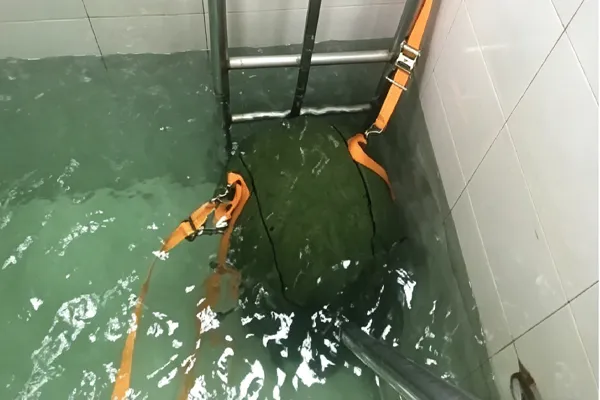
IP67 protection test
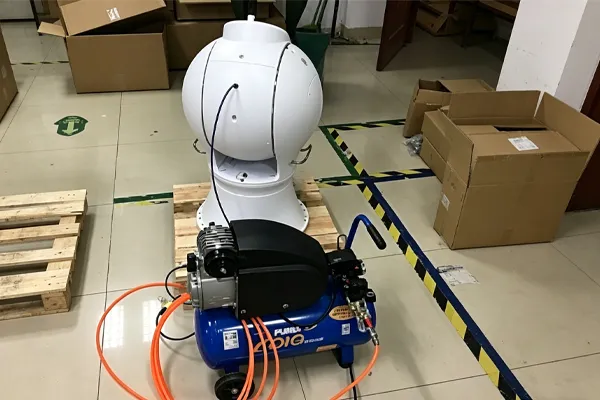
Sealing Performance: Full-machine airtightness, nitrogen-filled gimbal chamber
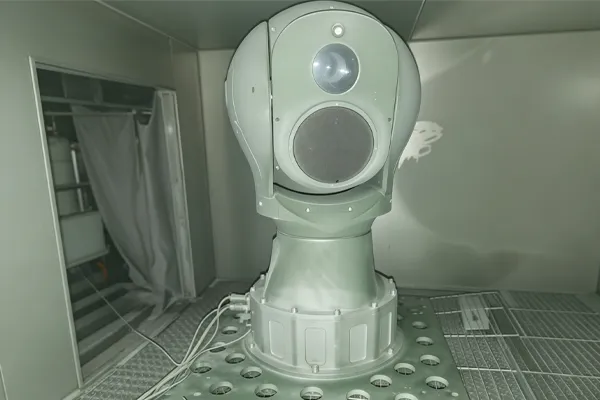
Sand & Dust Test
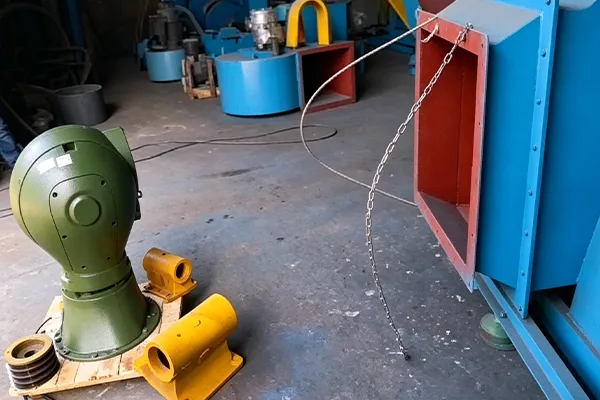
Wind Resistance Test
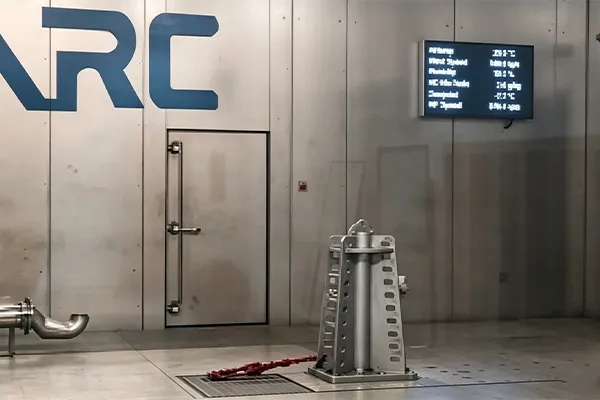
Wind Tunnel Test
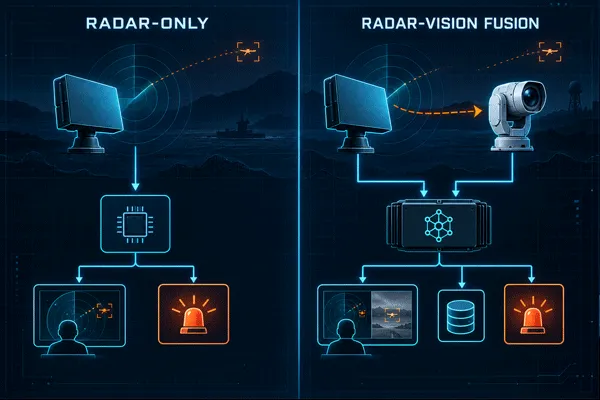
Sensor Fusion: The “Search & Confirm” Monitoring Chain
MidRadar provides more than just raw data; it provides actionable intelligence through a closed-loop monitoring chain:
360° Wide-Area Search: The AESA radar maintains a continuous search of the airspace, unaffected by light, dust, or heat.
Intelligent Target Classification: Our engine automatically filters out desert birds and chaotic thermal updrafts, ensuring industry-leading low false-alarm rates.
Automated Slew-to-Cue: Upon detection, the system automatically guides long-range multi-spectral cameras (equipped with Optical Image Stabilization) to the precise coordinates for visual confirmation.
FAQ: High-Arid Airspace Security
Q: Why choose AESA with DBF for desert deployment?
A: This combination offers the best of both worlds. AESA provides a solid-state hardware foundation that avoids sand-induced mechanical wear. DBF provides the digital intelligence to cancel out thermal noise and “shimmering” caused by 50°C+ heat, ensuring consistent detection ranges.
Q: How does the system handle high-vibration environments?
A: Our systems have passed rigorous shock and vibration tests and feature integrated stabilization for vision sensors. This ensures that even during heavy winds near high-vibration industrial sites, the data remains stable and the tracking remains locked.
Q: What is the MTBF for MidRadar systems in arid regions?
A: Thanks to our solid-state architecture and advanced thermal management, MidRadar systems achieve a significantly higher Mean Time Between Failures (MTBF) compared to mechanical scanning radars, drastically reducing the Total Cost of Ownership (TCO) for critical infrastructure projects.
Ready to Secure Your Airspace?
Don’t let extreme weather compromise your security. MidRadar provides the field-tested technology required for the world’s most demanding environments.
Request a quote for your desert project
Talk to an arid-region security expert



 10:03
10:03