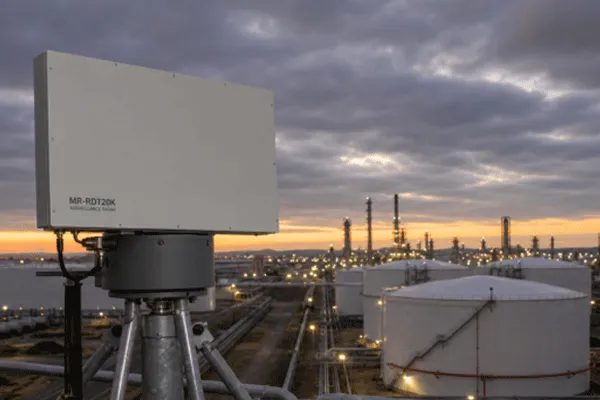
In large chemical industry parks, safety management is never only about routine inspection. It is about seeing risks before they become incidents. High-temperature equipment, hazardous substances, long-distance pipelines, and densely distributed production units all create an environment where even a small abnormal temperature change can quickly develop into a much bigger safety problem.
For Yantai Development Zone Chemical Industry Park, the challenge was not simply how to monitor equipment, but how to build a more continuous, more visible, and more intelligent safety supervision system across a complex industrial environment.
To strengthen risk prevention and improve operational safety, the park introduced an online temperature monitoring and hazardous chemical safety solution built around thermal imaging, intelligent analysis, and centralized management. The goal was clear: move from passive response to proactive warning.
The Challenge
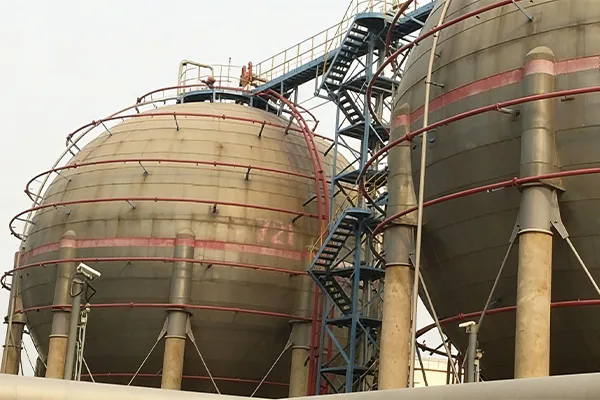
Traditional inspection methods are important, but they have natural limitations in large industrial sites. Manual patrols are periodic, while risk conditions can change at any moment. In a chemical park, operators are not only dealing with high-temperature equipment and storage facilities, but also with outdoor exposure, changing weather conditions, and multiple critical points spread across a wide area.
This meant the customer needed more than a simple camera system. They needed a solution that could operate continuously, monitor key thermal conditions in real time, and provide a more reliable basis for early warning and daily safety management.
The Project Goal
The project was designed to help the customer establish a more intelligent thermal safety monitoring network across the chemical park. Instead of depending only on human observation, the system would continuously watch critical areas, identify abnormal heat patterns, and help management teams respond faster and more accurately.
At the same time, the customer also needed a system that could be integrated into broader park-level management, so that different monitoring points, alarm events, and historical temperature data could all be viewed in a more unified way.
The Solution
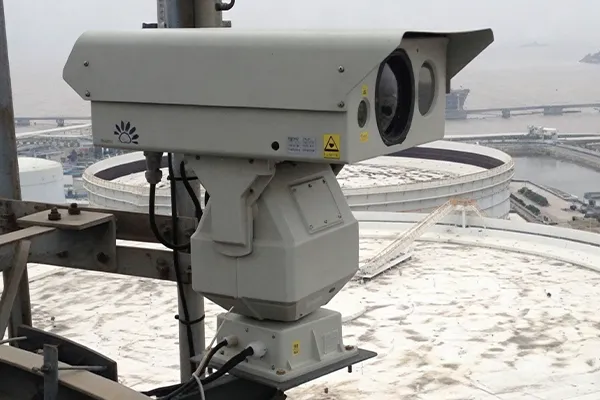
To meet these requirements, the project deployed an integrated industrial online temperature monitoring solution combining thermal imaging observation, visual verification, alarm linkage, and centralized platform control.
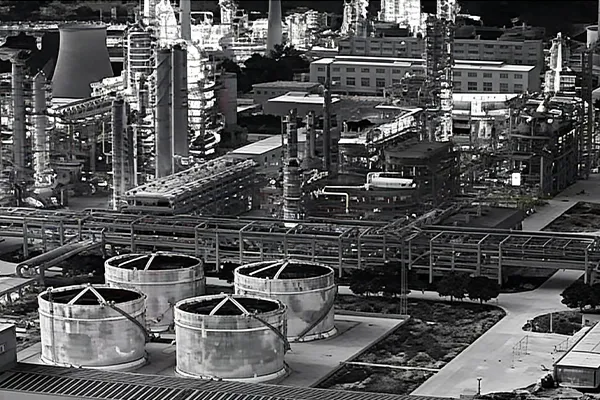
Thermal imaging equipment was used to continuously monitor key industrial targets and detect temperature anomalies that are difficult to identify through conventional visual inspection alone. By combining temperature analysis with visible-light imaging, the system also helped operators verify field conditions more clearly and reduce misjudgment.
More importantly, this was not just a front-end camera deployment. The system formed a connected monitoring structure. Field devices, alarm functions, and management terminals worked together through a networked platform, allowing the park to build a more organized and more responsive safety supervision process.
From Monitoring to Early Warning
The real value of this project lies in the shift from “seeing” to “understanding.”
In many industrial environments, a camera can show the site, but it cannot always reveal whether a condition is becoming dangerous. Thermal monitoring changes that. By observing heat distribution and abnormal temperature change over time, the system helps security and operations personnel detect hidden risks earlier.
This is especially important in chemical industrial areas, where the difference between normal operating heat and abnormal thermal behavior can be the first sign of a larger issue. A system that records, analyzes, and warns based on temperature conditions gives the customer a stronger foundation for prevention rather than reaction.
Stronger Visibility for Daily Safety Management
Another important outcome of the project is better management visibility.
Instead of scattered monitoring points working independently, the park benefits from a more centralized structure. Operators can review live conditions, receive warnings, and check recorded data through a more unified monitoring process. Historical data and trend analysis also provide useful support for routine maintenance, management review, and post-event investigation.
This means the system is not only a warning tool, but also a long-term management tool. It supports daily supervision, strengthens data-based decision-making, and helps the customer gradually improve safety digitalization.
Practical Value for Chemical Industry Parks
For industrial parks handling hazardous chemicals, safety monitoring must be stable, continuous, and credible. This case shows how intelligent thermal monitoring can support exactly that need.
With the deployment of an online temperature monitoring and hazardous chemical safety solution, Yantai Development Zone Chemical Industry Park gained a more efficient way to supervise critical assets, detect abnormal conditions earlier, and improve coordination between field monitoring and management response.
The project reflects a broader trend in industrial safety: replacing fragmented, reactive methods with integrated, intelligent systems that provide earlier warning and stronger operational confidence.
Conclusion
The Yantai Development Zone Chemical Industry Park project demonstrates how thermal imaging and intelligent monitoring technologies can create real value in high-risk industrial environments. By improving continuous visibility, strengthening early warning capability, and supporting centralized management, the system helps the customer build a more proactive and more modern safety management framework.
For chemical plants, hazardous material storage areas, and industrial parks facing similar challenges, this case offers a practical example of how intelligent temperature monitoring can support safer operations and better long-term control.