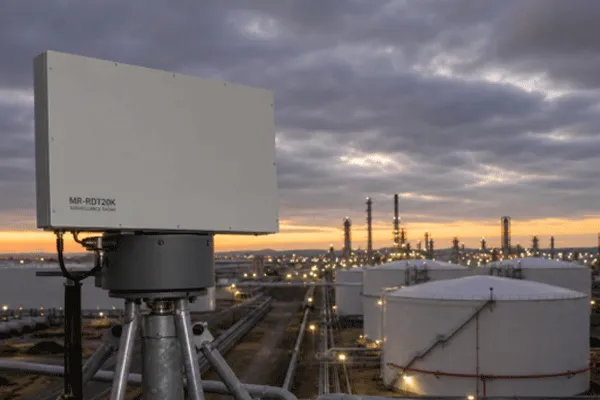
Airports require continuous situational awareness across large, open environments where aircraft movements, ground operations, and potential low-altitude security threats must be monitored simultaneously. Maintaining reliable visibility over these areas presents a significant challenge for conventional camera-based surveillance systems.
To address these requirements, Midradar supplied an integrated radar and electro-optical surveillance configuration for an la sicurezza aeroportuale project, combining elevated sensor deployment with visual monitoring capabilities to support more comprehensive observation of the surrounding airfield environment.
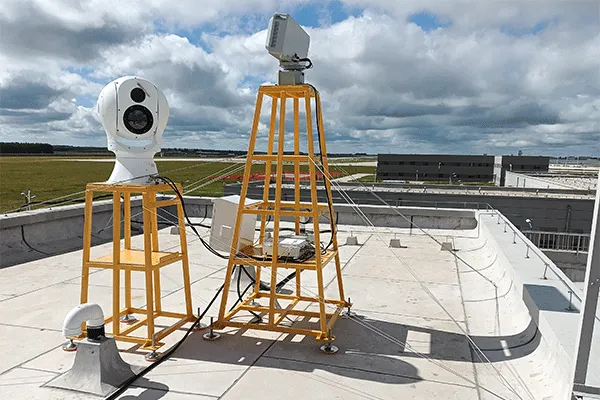
The project installation photographs illustrate how radar and electro-optical equipment can be deployed together on an airport rooftop to support coordinated surveillance while accommodating the site’s operational environment.

Project Overview
The project focuses on deploying a radar and electro-optical surveillance solution at an airport facility. The installation incorporates elevated radar equipment, a pan-tilt electro-optical imaging system, and supporting infrastructure designed for monitoring activities across the surrounding airport environment.
The solution is intended to strengthen situational awareness by combining radar-based detection with visual observation, providing a foundation for coordinated target monitoring and security operations.
| Project Item |
Descrizione |
| Applicazione |
Airport Security and Surveillance |
| Deployment Environment |
Airport Rooftop and Surrounding Airfield |
| Solution Type |
Radar and Electro-Optical Surveillance |
| Main Equipment |
Radar Unit and Pan-Tilt Electro-Optical System |
| Metodo di installazione |
Elevated Rooftop Mounting |
| Primary Objective |
Improved Situational Awareness and Coordinated Monitoring |
| Solution Provider |
Midradar |
The Challenge: Maintaining Reliable Surveillance Across Complex Airport Environments
Airport security presents unique operational challenges due to the size of monitored areas, continuous aircraft movements, and changing environmental conditions.
Traditional surveillance systems relying primarily on fixed cameras can experience limitations when monitoring distant or moving targets across large, open spaces.
Several considerations are particularly important for this type of project.
1. Large-Area Monitoring Requirements
Airport facilities encompass extensive open spaces, including runways, taxiways, aprons, and surrounding operational areas. Maintaining visibility across these environments requires sensors capable of supporting wide-area observation.
2. Reliable Target Detection and Visual Identification
Detecting an object and visually identifying it are two separate requirements. While radar provides target-detection capabilities, electro-optical equipment supports further observation and visual verification.
Combining these technologies can help security personnel obtain more useful information about detected objects.
3. Complex Outdoor Operating Conditions
Airport surveillance equipment must operate in exposed environments subject to changing sunlight, wind, temperature, and weather conditions.
Equipment positioning, mounting stability, and suitable installation infrastructure are therefore important considerations in system design.
4. Coordinated Security Monitoring
Standalone monitoring devices can create fragmented information. An integrated surveillance architecture provides a foundation for combining detection information with corresponding visual observations.
Radar Aeroportuale e Sorveglianza Elettro-Ottica: Un Dispiegamento Integrato di Sicurezza Aeroportuale
Midradar’s Solution: Integrated Radar and Electro-Optical Surveillance
For this project, Midradar provided a surveillance configuration combining radar and electro-optical equipment within an elevated airport installation environment.
The system brings together two complementary sensing technologies, supporting a coordinated approach to airport monitoring.
Radar-Based Target Detection
The radar unit is installed on an elevated steel mounting structure, providing a suitable position for observing the surrounding airport environment.
Radar technology supports the detection of targets within its configured coverage area and can provide target information for subsequent monitoring.
When integrated with an appropriate control platform, rilevamento radar information can also support the directional positioning of compatible electro-optical equipment.
Electro-Optical Visual Monitoring
A separate electro-optical system is installed alongside the radar equipment.
The pan-tilt configuration allows the imaging system to be directed toward different observation areas, supporting the visual monitoring of objects and activities within the airport environment.
This provides an additional source of information to complement radar detection and helps operators conduct further visual assessments.
Radar and Electro-Optical Coordination
The central value of the solution lies in combining the strengths of both sensing technologies.
Radar supports target detection, while electro-optical equipment provides corresponding visual observation.
In an integrated configuration, the two technologies can support a coordinated surveillance workflow:
- Target Detection: Radar detects objects within its configured surveillance coverage.
- Target Information: Relevant detection data can be transmitted to the monitoring platform.
- Visual Observation: The electro-optical system can be directed toward the area of interest.
- Target Assessment: Operators use available sensor information to conduct further observation and assessment.
- Security Response: Relevant monitoring information supports subsequent operational decisions.
This combination provides a practical technical foundation for airport security applications requiring both target detection and visual monitoring.
Radar Aeroportuale e Sorveglianza Elettro-Ottica: Un Dispiegamento Integrato di Sicurezza Aeroportuale
Deployment Highlights: Rooftop Installation at an Airport Facility
The installation photographs demonstrate several practical aspects of deploying radar and electro-optical surveillance equipment in an operational airport environment.
1. Elevated Equipment Installation
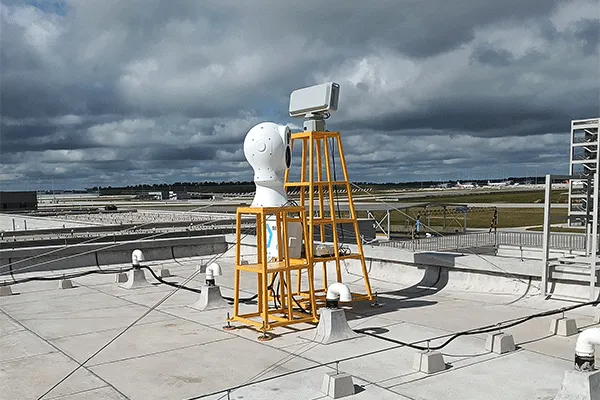
The radar and electro-optical devices are positioned on separate elevated steel structures installed on a building rooftop.
This arrangement raises the equipment above the immediate roof surface and provides a more suitable observation position toward the surrounding airfield.
The radar is mounted on a taller support structure, while the electro-optical equipment is installed on an adjacent platform.
Their respective installation heights and positions reflect the need to accommodate different equipment configurations within the available rooftop space.
2. Structural Support and Equipment Positioning
The photographs show steel mounting frames, base supports, stabilization cables, and associated installation components.
These elements form part of the physical deployment arrangement and provide mounting infrastructure for the surveillance equipment.
Appropriate installation positioning is particularly important for airport security systems, where equipment must be located with consideration for surrounding structures and operational visibility.
3. Supporting Equipment and Cabling
The rooftop installation also includes supporting equipment enclosures and visible cable routing.
These components form part of the installation infrastructure required to accommodate the surveillance devices and their associated connections.
The installation demonstrates how multiple sensing devices can be arranged within a shared rooftop deployment area.
4. On-Site Equipment Commissioning
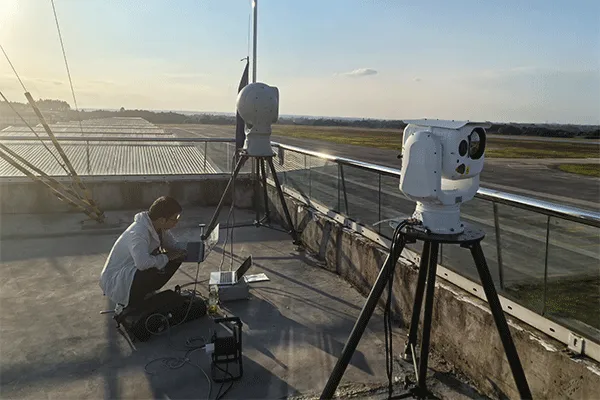
Additional project photographs show technical personnel working with connected equipment and laptops at an outdoor installation location.
On-site commissioning is an important stage of surveillance system deployment, allowing technical teams to inspect equipment connections, review device operation, and configure the installed hardware according to project requirements.
Radar Aeroportuale e Sorveglianza Elettro-Ottica: Un Dispiegamento Integrato di Sicurezza Aeroportuale
5. Additional Visual Surveillance Infrastructure
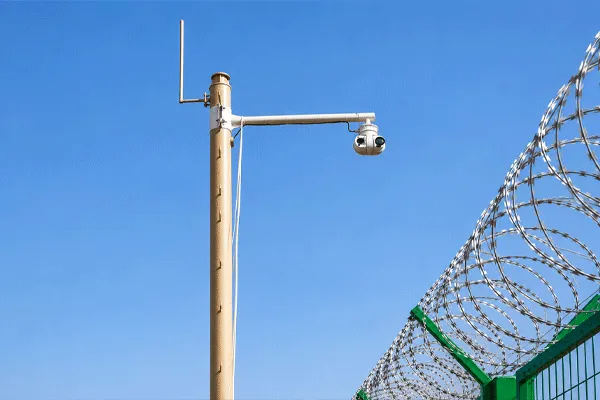
The supplied project photographs also include a pole-mounted surveillance camera positioned near a secured perimeter.
This illustrates an additional type of visual monitoring infrastructure relevant to airport and critical-facility security environments.
Such cameras can complement larger surveillance installations by providing observation of designated perimeter areas.
Technical Configuration
Based on the installation photographs, the project features the following visible equipment configuration.
| Componente di sistema |
Deployment Description |
| Radar Unit |
Elevated radar installation on a dedicated steel structure |
| Electro-Optical System |
Pan-tilt imaging equipment on a separate mounting platform |
| Mounting Infrastructure |
Rooftop steel support frames |
| Supporting Equipment |
Associated equipment enclosures and connection infrastructure |
| Additional Visual Monitoring |
Pole-mounted surveillance camera shown in project documentation |
| Commissioning |
On-site equipment configuration and inspection |
The configuration illustrates a modular deployment approach in which radar and visual monitoring devices can be installed according to the physical requirements of the site.
Application Value: Building a More Comprehensive Airport Surveillance Framework
The integration of radar and electro-optical technologies offers several advantages for airport security system design.
Complementary Detection and Observation
Radar and imaging equipment provide different types of monitoring information. Combining them helps establish a more comprehensive understanding of activities within designated surveillance areas.
Improved Situational Awareness
Coordinated sensor information can help security operators observe relevant targets and assess activity across the monitored environment.
Flexible Installation Architecture
Separate mounting structures allow the radar and electro-optical equipment to be positioned according to their installation requirements, available space, and intended observation areas.
Scalable Security Infrastructure
The modular configuration provides a foundation for further system integration, including additional surveillance devices and centralized monitoring capabilities, subject to project requirements and platform compatibility.
Radar Aeroportuale e Sorveglianza Elettro-Ottica: Un Dispiegamento Integrato di Sicurezza Aeroportuale
Project Significance
This airport installation demonstrates Midradar’s approach to combining radar detection technology with electro-optical monitoring equipment in a practical security application.
The project highlights the importance of appropriate sensor positioning, installation infrastructure, and complementary monitoring technologies when developing surveillance solutions for complex airport environments.
By bringing radar and imaging equipment together, Midradar supports the development of integrated security systems designed to address the evolving monitoring requirements of airports and other critical infrastructure facilities.
Conclusione
Reliable airport surveillance requires more than individual monitoring devices. It depends on the coordinated use of appropriate sensing technologies, equipment positioning, and system integration.
This project demonstrates a practical rooftop deployment configuration combining radar and electro-optical equipment to support airport situational awareness and security monitoring.
Midradar continues to provide radar, electro-optical, and integrated surveillance solutions for airports, industrial facilities, border security, and other critical infrastructure applications.
Looking for an integrated airport surveillance solution?
Contatta Midradar to discuss your project’s monitoring requirements and explore suitable radar and electro-optical system configurations.