Systèmes de fusion Radar-Vision : Obtenir une réponse rapide ‘instantanée’ à partir de caméras PTZ

14:41
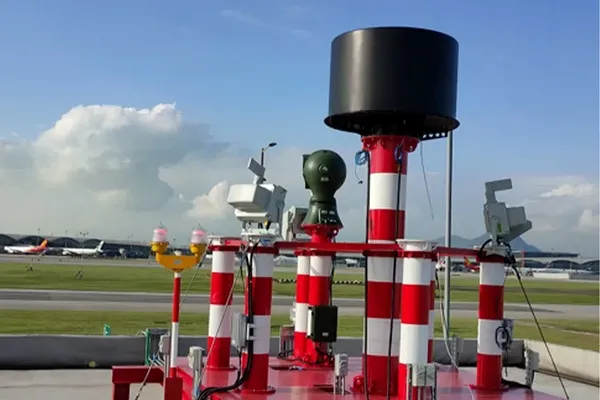
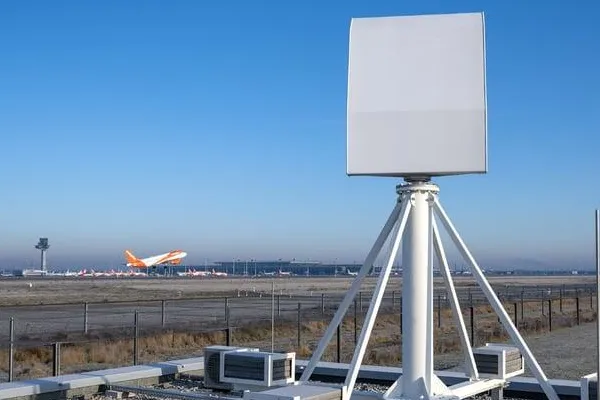
Dans systèmes de fusion radar-vision, Le radar est chargé de “détecter” les cibles (fournir des informations sur les coordonnées), tandis que le les caméras PTZ (Pan-Tilt-Zoom) sont responsables de « l'identification » des cibles (confirmation visuelle). Plus la latence entre la détection des coordonnées de la cible par le radar et l'alignement de la caméra PTZ sur la cible est faible, plus la valeur pratique du système est élevée.
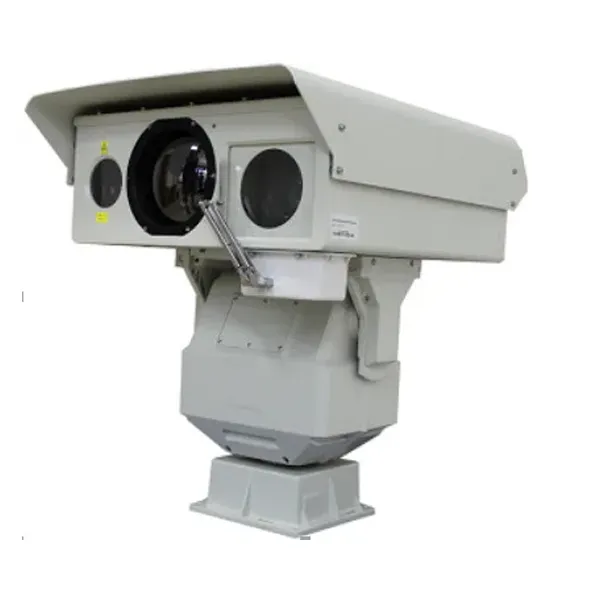
Au-delà de la sélection fondamentale des liaisons matérielles, les quatre technologies clés suivantes sont essentielles pour obtenir une réponse rapide :
1. “Optimisation des liaisons de communication ”à vitesse extrême
La connexion physique de base détermine la limite supérieure de la transmission des données.
- Sélection du protocole d'interface : Par rapport à RS232, RS422 ou RS485 offre des capacités supérieures de transmission longue distance et d'antiparasitage. Dans une unité de vision radar intégrée, il est recommandé d'utiliser une interface RS422 en duplex intégral pour permettre l'émission simultanée de commandes et le retour d'informations sur l'état de l'appareil sans conflit de bande passante.
- Optimisation du débit en bauds : Un débit de 9600bps peut introduire des retards notables avec des commandes complexes. Les solutions professionnelles augmentent généralement le débit en bauds à 115200bps ou plus, ce qui permet de traiter des centaines de mises à jour de coordonnées par seconde.
- Contrôle en réseau : Pour les systèmes haut de gamme, l'utilisation du protocole UDP (au lieu de TCP) pour la transmission des commandes de contrôle sur Ethernet peut réduire davantage la latence causée par les échanges de communication.
2. Des “protocoles privés” rationalisés et efficaces”
Les protocoles génériques standard tels que Pelco-D offrent une bonne compatibilité mais présentent souvent une redondance importante des commandes.
- Optimisation des commandes de longueur variable : Utilisation de protocoles privés binaires plus concis pour comprimer le nombre d'octets des commandes individuelles.
- Contrôle de positionnement absolu : Le contrôle traditionnel implique l'envoi de commandes de taux “tourner à gauche”, ce qui peut conduire à des mouvements “stop-and-go”. Un système de réponse rapide doit prendre en charge la transmission directe des coordonnées absolues des PTZ. Une fois que le radar a calculé la latitude/longitude ou la position relative, il les associe directement aux angles de panoramique et d'inclinaison de la PTZ, ce qui permet d'obtenir un positionnement précis en une seule étape.
3. Algorithmes internes de “servocommande” du PTZ
La rotation rapide du matériel ne garantit pas la précision. En l'absence d'algorithmes robustes, les unités Pan-Tilt peuvent subir des oscillations ou des dépassements.
- Contrôle par anticipation : L'unité de contrôle PTZ anticipe la prochaine seconde position de la cible en fonction de la vitesse de la cible fournie par le radar, en déclenchant le mouvement du moteur à l'avance pour éliminer l'inertie au démarrage.
- Réglage dynamique PID : L'utilisation d'algorithmes PID (Proportionnel-Intégral-Dérivé) optimisés garantit une accélération en douceur jusqu'à la vitesse maximale et une décélération jusqu'à l'arrêt, évitant ainsi tout sautillement lors de l'atteinte de la position cible.
- Codeurs de haute précision : Associés à des codeurs à nombre de lignes élevé, ils garantissent le respect des normes de sécurité. Unité PTZ fournit un retour d'information précis sur la position en temps réel (la fréquence de retour d'information recommandée est de 50 Hz ou plus).
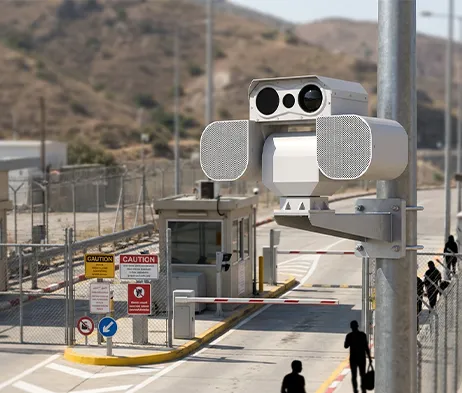
4. “Fusion en périphérie dans l'architecture du système
Le plus grand ennemi de la vitesse de réponse est une “boucle trop longue”.”
- Prise de décision localisée : Évitez de transmettre les données radar à un serveur dorsal pour qu'elles soient traitées avant d'envoyer des commandes à la PTZ. Au lieu de cela, effectuez la conversion des coordonnées (du système de coordonnées GCS au système de coordonnées PTZ) et l'émission des commandes directement à la périphérie de l'unité intégrée radar-vision.
- Synchronisation des fréquences : La fréquence de rafraîchissement du radar (généralement de 10 à 20 Hz) et la fréquence de contrôle de la PTZ nécessitent une compensation par interpolation. Le lissage des signaux radar à l'aide d'algorithmes permet d'éviter les bégaiements de la PTZ dus aux fluctuations des données radar.
Conclusion : Liste de contrôle pour la sélection des PTZ Radar-Vision Fusion
Si vous développez ou sélectionnez un système de fusion radar-vision, il est recommandé de se concentrer sur les paramètres suivants :
| Dimensions |
Exigences professionnelles |
Valeur fondamentale |
| Interface physique |
RS442 ou Gigabit Ethernet en duplex intégral |
Assure une transmission de données bidirectionnelle et sans collision |
| Fréquence de communication |
Fréquence de mise à jour des commandes ≥ 25Hz |
Garantit un suivi visuel fluide |
| Méthode de contrôle |
Prise en charge du positionnement angulaire absolu (P/T absolu) |
Élimine la rotation sans but, permet un ciblage précis |
| Mécanisme de retour d'information |
Retour d'information sur la position en temps réel et à grande vitesse |
Fournit des données pour le contrôle en boucle fermée |
Réflexions finales :
La réponse rapide ne consiste pas seulement en une « rotation rapide du moteur » ; c'est une synergie précise entre la bande passante de communication, l'efficacité du protocole et les algorithmes de contrôle du mouvement. En optimisant les liaisons physiques et en intégrant des algorithmes de conversion de coordonnées côté périphérique, les systèmes de fusion radar-vision peuvent véritablement atteindre des capacités de « viser-et-tirer », permettant un verrouillage de cible en moins d'une seconde.
Prêt à améliorer vos capacités de surveillance ?
Contactez MidRadar pour une solution personnalisée dès aujourd'hui !