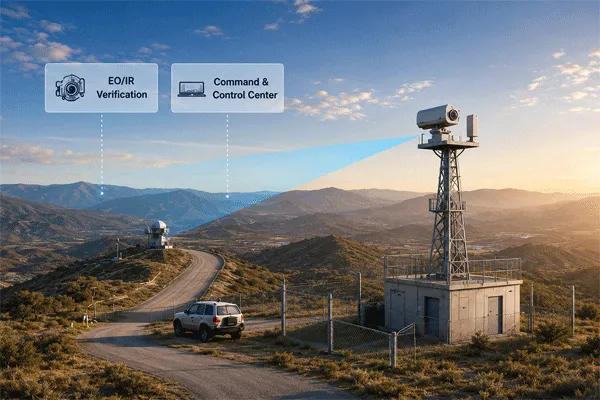
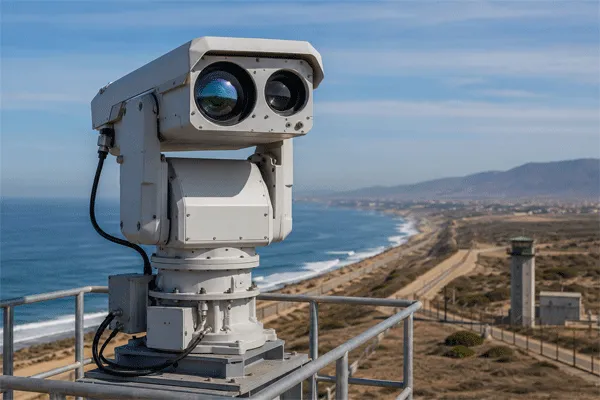
The Physics Problem Single-Band Systems Leave Unresolved
Optical detection systems based on the cat-eye effect work because many multi-element optical instruments return a concentrated retro-reflective signal when illuminated by a scanning laser. This return can help the system identify the presence and location of an optical device oriented toward a protected area.
However, not all optical devices operate in the same spectral band.
A visible-light camera or standard optical instrument often uses glass optics that are transparent to near-infrared, or NIR, wavelengths. A NIR probing laser can illuminate these optics and receive a detectable return signal.
A thermal imaging device is different. Long-wave infrared, or LWIR, cameras and thermal monoculars often use optics made from materials such as germanium or chalcogenide glass. These materials are designed for the 8–14 μm thermal infrared range and may not respond to NIR probing in the same way as standard glass optics.
The practical result is clear: a system that only probes in the NIR band can reliably detect many visible-light cameras and standard optical devices, but it may not detect thermal imaging devices operating in the LWIR band.
Why This Matters in Real Security Applications
Thermal imaging technology has become much more commercially available in recent years. Devices that were once limited to specialized professional use are now easier to purchase and deploy in many civilian environments.
For a facility or event that relies only on single-band NIR optical detection, this can create a night-time monitoring gap. During daytime, NIR-based detection may perform well against visible-light cameras and standard optical instruments. But after dark, an unauthorized observer may use thermal imaging equipment that operates outside the effective detection band of a single-band system.
This does not mean single-band systems are ineffective. It means their detection capability is strongest within the optical bands they are designed to monitor.
For locations that require 24/7 awareness, especially sites with both daytime and night-time exposure, the question becomes more specific:
Can the system detect both standard optical devices and thermal imaging devices?
That is where multi-spectral optical detection becomes important.
What Multi-Spectral Detection Adds
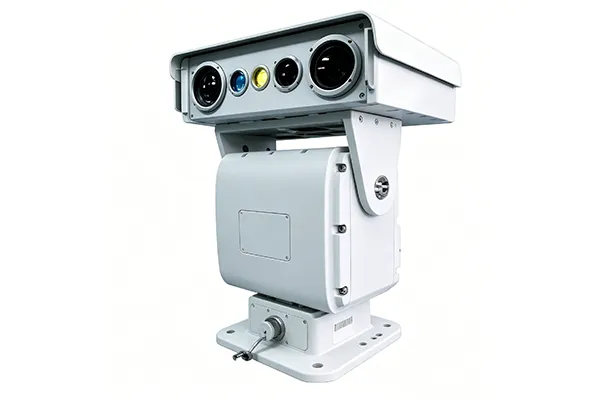
The FinderPro-E addresses this gap by combining two independent laser probing modules in one integrated unit: a near-infrared module for detecting CMOS/CCD cameras and standard optical instruments, and a long-wave infrared module for detecting LWIR-compatible optics used in thermal imaging devices.
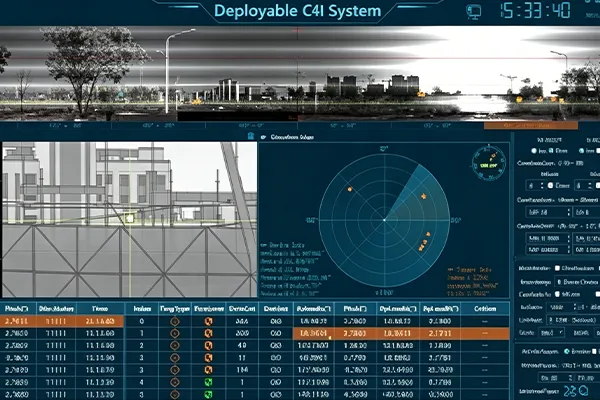
Both modules operate within the same system architecture and support a unified detection workflow. The system can scan the assigned coverage zone, identify optical devices operating in different spectral bands, and provide operators with location-based detection information such as azimuth, elevation, range, and confirmation imagery.
The key operational value is not only detecting thermal imaging devices. It is reducing the possibility that observation activity shifts from daytime visible-light equipment to night-time thermal equipment simply because the monitoring system is limited to one spectral band.
When both NIR and LWIR devices can be detected, security teams gain a more complete optical detection layer across different times of day and different device types.
When to Choose Single-Band vs. Multi-Spectral Detection
Single-band NIR systems, including FinderPro-X, FinderPro-M, and FinderPro-P, remain suitable for many applications.
They are often appropriate when:
- The project mainly requires daytime optical detection
- The environment is highly controlled and thermal imaging risk is considered low
- The primary concern is standard cameras, spotting devices, or visible-light optical instruments
- The budget or deployment plan prioritizes single-band coverage first
- A vehicle-mounted or handheld form factor is more important than full spectral coverage
Multi-spectral deployment, such as FinderPro-E, is more suitable when:
- The facility or event operates 24/7
- Night-time observation is a realistic concern
- Thermal imaging equipment may be used around the protected area
- The site has already deployed NIR-based systems and identified a night-time detection gap
- The project requires broader spectral coverage across both NIR and LWIR bands
For many real projects, the choice is not simply one or the other. A combined architecture may use single-band systems for broad daytime coverage and multi-spectral systems for sectors where night-time thermal imaging detection is more important.
Practical Deployment Example: Closing the Night-Time Gap
A practical example can be seen in an aviation facility optical detection network case study.
In that deployment, the first stage used fixed NIR optical detection systems to improve daytime perimeter awareness. The system helped identify external optical observation activity from public roads and nearby open areas.
After the initial deployment, the security team identified a remaining night-time visibility gap related to thermal imaging devices. Multi-spectral FinderPro-E units were then added to key sectors, improving the facility’s ability to detect both standard optical instruments and thermal imaging devices.
This phased approach shows how single-band and multi-spectral systems can work together. NIR systems can provide long-range daytime optical detection, while LWIR-capable multi-spectral systems can improve night-time coverage where thermal imaging activity is a concern.
Deployment Architecture: Combining NIR and LWIR in a Networked System
Multi-spectral coverage does not always require replacing existing NIR systems. FinderPro-E is designed to operate alongside FinderPro-X units in a shared command software environment.
Each unit can cover its assigned perimeter sector, while detections from multiple devices flow into a unified detection display. This helps operators see optical activity across different zones and respond based on location, time, and device type.
A typical combined deployment may use:
- FinderPro-X units for sectors requiring long-range NIR detection up to 2,000 m
- FinderPro-E units for sectors where night-time thermal imaging detection is more important
- FinderPro-P handheld devices for patrol teams, temporary checks, and fast field verification
- Central command software for detection display, event logging, and response coordination
The overlap between fixed units, multi-spectral units, and handheld devices helps reduce blind spots and supports a more complete optical detection network.
Explore Further
FinderPro-E Multi-Spectral Optical Detection System — technical specifications, detection ranges by device type, and deployment options.
FinderPro-X Fixed Optical Detection System — long-range fixed optical detection for perimeter and facility monitoring applications.
Optical Surveillance Detection Systems Catalog — comparison of FinderPro variants including spectral coverage, detection range, and deployment scenario.
Public Security Solutions — full multi-sensor architecture integrating optical detection with radar, EO/IR cameras, command software, and warning devices.
Fazit
Single-band NIR optical detection systems are valuable for identifying many standard optical devices, including visible-light cameras and common glass-based observation instruments. But thermal imaging devices operate in a different spectral band, which can create a monitoring gap in night-time or low-visibility environments.
Multi-spectral detection adds LWIR capability to address that gap. By combining NIR and LWIR detection in one networked architecture, security teams can improve awareness across day and night conditions, standard optical devices, and thermal imaging equipment.
For facilities, event venues, aviation areas, and other sites that require 24/7 optical awareness, multi-spectral detection provides a stronger foundation for long-term perimeter and observation risk management.














 13:47
13:47