At highway toll stations, image clarity is not just about surveillance quality. It directly affects vehicle verification, personnel identification, and the overall efficiency of site management. This becomes even more challenging at night, when headlights, low illumination, and reflections from vehicle glass often make conventional monitoring images difficult to use.
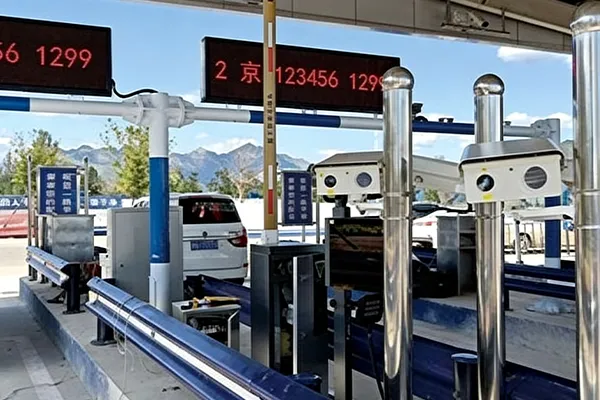
For Laiwu Toll Station, the practical need was clear: build a more reliable night-time monitoring solution for close-range vehicle windows and occupant observation, while maintaining stable image quality under complex toll-lane conditions.
To address this requirement, a through-window camera solution was deployed to improve close-range monitoring performance at the toll station and strengthen image capture capability in both day and night environments.
The Challenge
Toll stations are highly dynamic environments. Vehicles pass through at short distances, lighting conditions change constantly, and windshields or side windows can easily interfere with image capture. Traditional cameras may produce glare, unclear facial details, or weak night-time performance, especially when trying to observe occupants inside vehicles.
For the customer, the challenge was not simply installing another surveillance camera. The goal was to obtain clearer and more usable monitoring images in a short working distance, particularly for vehicle window scenes where accurate observation matters most.
Project Objective
The project at Laiwu Toll Station focused on improving monitoring effectiveness in toll-lane scenarios through a dedicated through-window imaging solution. The main objective was to enhance image visibility for vehicles and occupants at close range, especially under night-time conditions where conventional monitoring often becomes less reliable.
At the same time, the deployment also needed to fit the actual operating environment of a toll station: limited installation space, continuous vehicle flow, and long-term outdoor operation.
The Solution
To meet these needs, the site adopted a traffic checkpoint through-window camera designed specifically for close-range monitoring through vehicle glass.
The solution was built around several practical advantages shown in the brochure:
compact structure for easier installation
no visible red exposure effect during operation
dedicated optical and mechanical control design for better imaging through glass
strong image detail and clarity enhancement
IP66 protection for outdoor use
According to the product page, the system supports day and night operation, short-range observation, and face recognition capability within a close working distance. This makes it particularly suitable for toll station lanes, where vehicles stop or slow down briefly and image capture must be completed quickly and clearly.
What Changed on Site
After deployment, the project improved the quality of monitoring in several important ways.
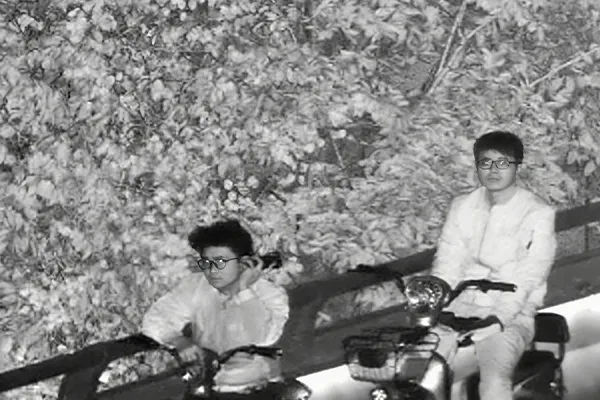
First, the camera made vehicle-window observation more practical at night. Instead of relying on ordinary night vision that may be affected by glare or weak detail, the through-window imaging design provided clearer usable images of vehicle occupants and cabin conditions.
Second, the system improved close-range scene capture efficiency. At toll stations, there is very little time to collect useful images before a vehicle moves forward. A dedicated short-distance solution is therefore more valuable than a general-purpose surveillance device.
Third, the deployment supported a cleaner and more discreet monitoring effect. The system specifically emphasizes the absence of obvious red exposure, which is meaningful in checkpoint-style environments where image acquisition must remain stable without creating strong visual interference.
Practical Value for Toll Station Management
For Laiwu Toll Station, the value of the project was not only better night imaging, but also more dependable operational visibility.
A through-window monitoring system helps strengthen scene verification in situations where ordinary cameras may struggle, such as:
observing occupants inside vehicles
checking vehicle-window areas at close range
maintaining usable images in low-light conditions
improving monitoring continuity across toll lanes
This kind of deployment is especially useful in transportation checkpoints and toll stations where image quality directly affects the usefulness of monitoring records.
A More Targeted Approach to Traffic Checkpoint Surveillance
One of the most important takeaways from this case is that traffic checkpoint monitoring often requires more specialized imaging methods than standard perimeter surveillance.
Laiwu Toll Station is a good example of this. The challenge was not wide-area observation, but accurate short-range viewing through vehicle windows. By using a camera solution developed specifically for that task, the project achieved a more targeted and more practical result.
This reflects an important trend in intelligent traffic security: instead of relying only on general surveillance equipment, more sites are choosing specialized systems designed for the exact scene they need to manage.
Conclusion
The Laiwu Toll Station project demonstrates the value of dedicated through-window imaging technology in traffic checkpoint applications. By improving night-time image quality, strengthening close-range observation, and supporting more reliable vehicle-window monitoring, the solution helped the site build a more effective monitoring capability for real operating conditions.
For toll stations, highway checkpoints, and other vehicle inspection environments, this case provides a practical example of how specialized imaging systems can solve scene-specific monitoring problems more effectively than conventional cameras.