What is the most effective airport security system in Brazil today?
For airports operating in tropical environments, radar-vision fusion has become the most reliable approach to perimeter security. By combining all-weather radar detection with intelligent visual verification, airports can maintain continuous surveillance—even in rain, fog, and low visibility.
Brazil’s Airport Security Reality
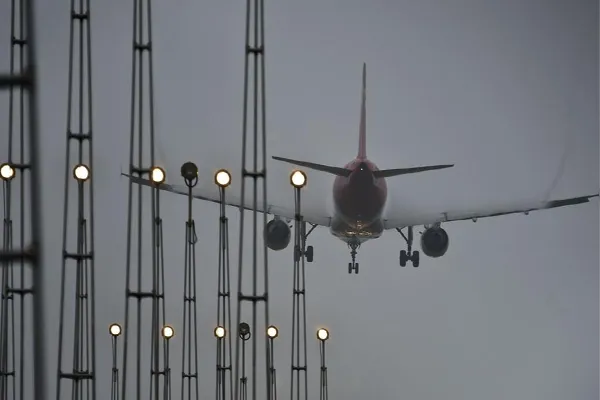
Airports such as São Paulo–Guarulhos International Airport and Rio de Janeiro–Galeão International Airport operate in environments that are fundamentally different from dry or temperate regions.
Security teams must deal with:
- Heavy rainfall and early-morning fog
- Dense vegetation causing constant movement
- High humidity affecting optical systems
- Frequent bird activity near runways
These factors make traditional camera-only systems unreliable as a primary detection tool.
Why Traditional CCTV Alone Is Not Enough
CCTV and thermal cameras still play an important role—but they have limitations:
- They depend on visibility conditions
- They are prone to false alarms from vegetation and animals
- They cannot effectively monitor long-distance perimeters
In large airports, this creates blind spots, delayed responses, and operational risks.

Real Case Logic: What Actually Works
Across multiple international airport deployments, one pattern is consistent:
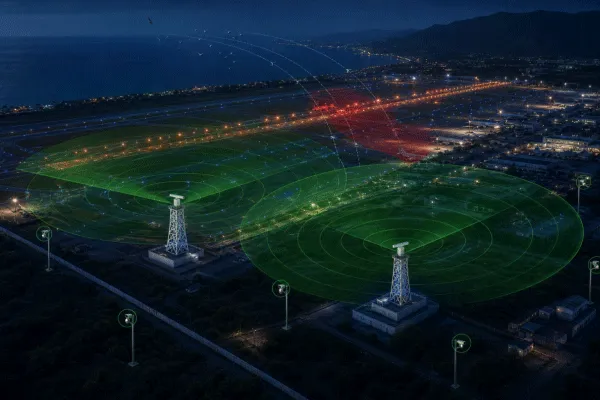
Radar detects → Camera verifies → AI classifies
This layered approach has proven effective in solving three critical problems:
1. Intrusion Detection in Adverse Weather
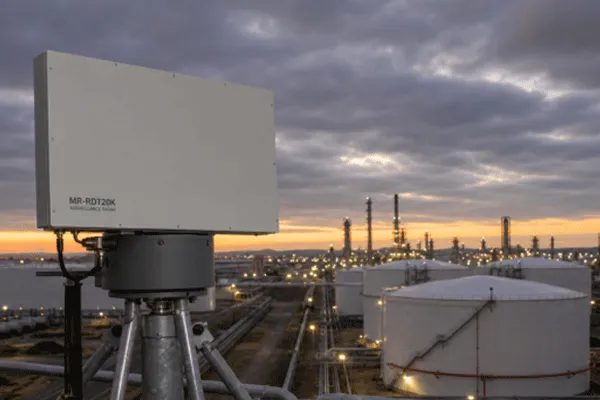
In tropical conditions, visibility can drop suddenly. Radar continues to detect movement even when cameras cannot see clearly, rain obscures the fence line, or fog reduces contrast. Once a target is detected, the camera is automatically directed to verify it.
2. Drone Detection Around Runways
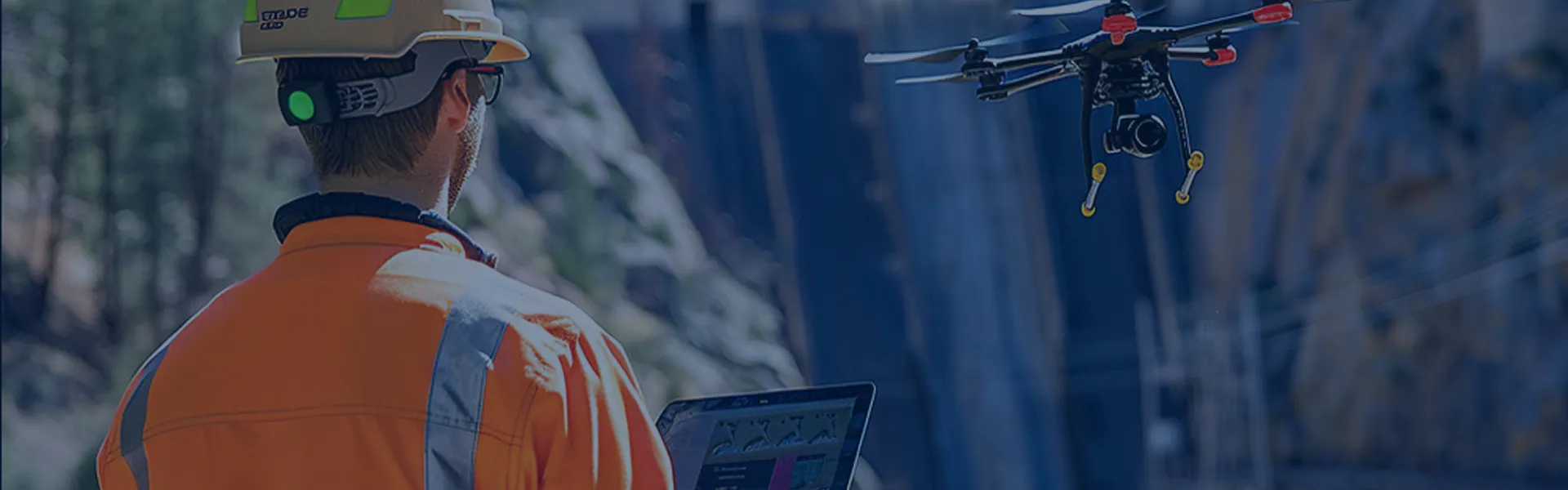
Unauthorized drones are one of the fastest-growing threats in aviation. Unlike optical systems, radar can detect low-altitude drones, slow-moving UAVs, and small targets approaching restricted airspace.
3. Bird Activity Monitoring and Risk Reduction
In Brazil, bird activity is a constant operational concern. Radar-vision systems help detect flock movement early, track behavior patterns, and support wildlife control teams, shifting airport safety from reactive response to proactive management.
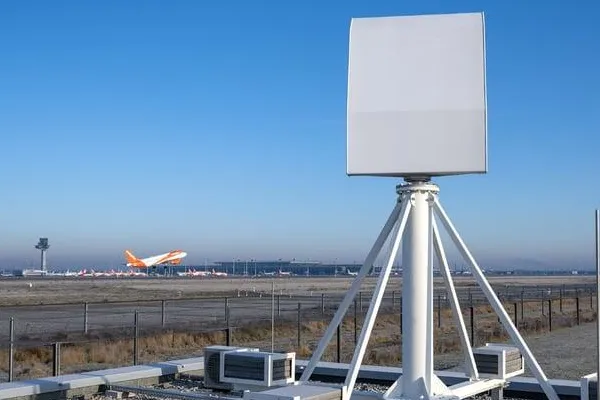
How Radar-Vision Fusion Works in Practice
A typical workflow looks like this:
- Radar continuously scans the environment
- Movement is detected and tracked
- The nearest camera is automatically assigned
- AI classifies the object (human, vehicle, bird, drone)
- Operators receive a verified alert
This creates a single, coordinated security workflow, rather than isolated systems.
Why This Approach Fits Brazil
Brazil’s environment demands systems that are resistant to weather interference, capable of long-range detection, able to reduce false alarms, and scalable across large perimeters.
Supporting Regulatory Frameworks
Airport security operations in Brazil are governed by the National Civil Aviation Agency of Brazil and related aviation regulations. Integrated monitoring solutions support incident documentation, risk assessment, and operational accountability.
Conclusion: From Visibility to Awareness
Airport security is no longer just about seeing—it’s about knowing in advance. In Brazil’s complex environment, radar-vision fusion provides continuous all-weather detection, intelligent threat classification, and faster, more reliable response.
FAQ
What is airport perimeter security?
It refers to protecting airport boundaries from unauthorized access and operational threats.
Why is radar important for airports in Brazil?
Because it works in rain, fog, and low visibility conditions where cameras struggle.
Can radar detect drones?
Yes, especially low-altitude and slow-moving UAVs.
Does radar replace cameras?
No. It works together with cameras to improve detection and verification.