Low-altitude security is shifting from a supporting requirement in drone applications to core infrastructure for scalable low-altitude economy operations. At World Drone Congress 2026 in Shenzhen, Midradar observed a clear change: industry conversations are moving beyond how far drones can fly and toward how low-altitude targets can be detected, identified, tracked, verified and managed.
As an exhibitor, Midradar saw that the low-altitude economy is no longer only about drones, eVTOL platforms and flying cars. It is entering a system-building stage supported by communications and navigation, low-altitude infrastructure, intelligent sensing, counter-UAV systems, platform management and scenario-based security design.
Public sources show that World Drone Congress 2026 was held in Shenzhen from May 21 to 23 under the theme “Low-Altitude Economy, Flying Toward the Future”; Hall 5 covered communications, navigation, low-altitude safety and counter-UAV technology equipment; and the exhibition covered about 110,000 square meters with 1,220 companies from 17 countries and regions. Sources are listed at the end of this article.
| Event |
World Drone Congress 2026 and International Low-Altitude Economy & Unmanned Systems Expo |
| Date |
May 21-23, 2026 |
| Venue |
Shenzhen Convention & Exhibition Center, Futian |
| Midradar Booth |
Hall 5 · Booth 5B20 |
| Zone |
Communications, navigation, low-altitude safety and counter-UAV technology equipment zone |

1. On-Site Observation: The Low-Altitude Economy Is Entering a System-Building Stage
The most obvious change at the exhibition was that the low-altitude economy is no longer presented only through aircraft platforms. Discussions are expanding from endurance, payload, image transmission and control accuracy to airspace operations, target sensing, platform management and security assurance.
This shift is inevitable once the low-altitude economy moves into real-world scenarios. As logistics delivery, industrial park inspection, energy site patrol, emergency response, urban management and public-event support continue to grow, low-altitude airspace will contain more targets and more complex interference. For operators, the essential question is not only whether aircraft can fly, but whether they can fly safely, orderly and under effective control.
A mature low-altitude economy therefore requires three capability layers. Flight platforms and payloads create operational capability. Communications, navigation and dispatch platforms create management capability. Low-altitude detection, identification, tracking, warning and counter-UAV systems create security capability. Without the security layer, the low-altitude economy will struggle to move from pilot projects to routine operations.
2. Core Judgment: Low-Altitude Security and Counter-UAV Systems Are Becoming Infrastructure
The importance of low-altitude security comes from the changing risk profile created by wider drone use. Authorized operational drones, temporary flight missions, unauthorized targets, birds, vehicle reflections and environmental interference can all appear in the same area. Manual observation or ordinary video surveillance is not enough for long-term protection of key sites.
For airports, energy facilities, industrial parks, ports, transportation hubs, major events and urban public safety areas, the value of a low-altitude security system is not simply discovering a flying target. Its value lies in building persistent, verifiable and traceable low-altitude situational awareness.
Midradar believes that low-altitude security should be understood as scenario-based system protection rather than a single-device capability. Users need a complete system that can detect targets, identify target types, maintain continuous tracks, provide visual verification, trigger linked alerts and support authorized response workflows.
3. What Capabilities Should a Low-Altitude Security System Have?
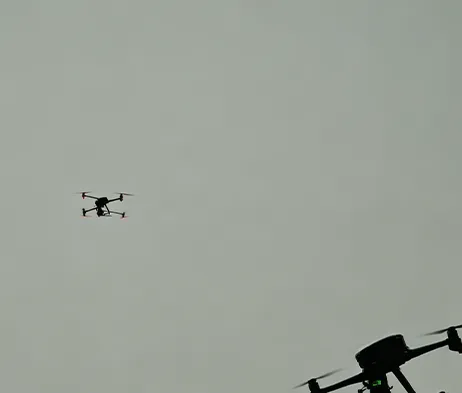
Based on exhibition conversations and typical project requirements, a future-oriented low-altitude security system should include at least six capabilities. These are also the key criteria buyers should evaluate when selecting a low-altitude surveillance radar, airport counter-UAV system or radar-EO fusion system.
Wide-area low-altitude detection
The system should continuously detect small, slow and low-flying targets around key areas and provide a foundation for identification, tracking and alerting.
Continuous multi-target tracking
As target density increases, the system should produce stable tracks instead of isolated alarm points.
Electro-optical verification
After radar detection, visible-light, thermal or multispectral cameras should verify the target and provide evidence for human decision-making and event records.
AI-assisted recognition
AI recognition should help reduce false alarms, improve classification efficiency and support operators in complex scenes.
Platform-based management
When multiple radars, EO devices and protected zones are connected, the platform should unify tracks, alerts, video, device status and event records.
Compliant authorized response
For confirmed high-risk targets, the system should support graded response and human confirmation to avoid improper or excessive action.
4. Technical Focus: Radar-EO Fusion, AI Recognition and Platform Management
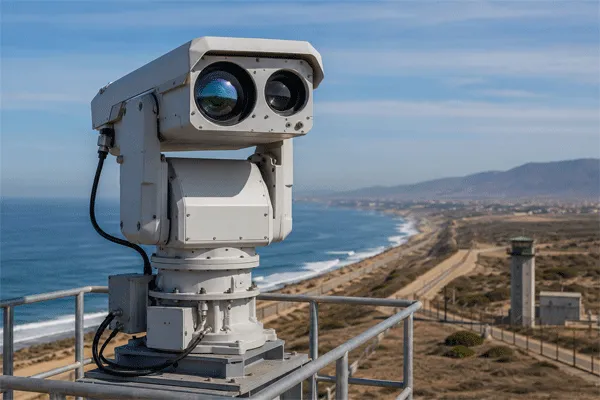
Low-altitude target monitoring cannot rely on a single sensor. Cameras provide intuitive images, but they are affected by distance, night conditions, rain and fog, glare, occlusion and viewing angle. RF detection can discover some communication links, but it has limitations when drones operate silently, autonomously or in complex electromagnetic environments. Radar is better suited for wide-area, all-weather and continuous detection and tracking.
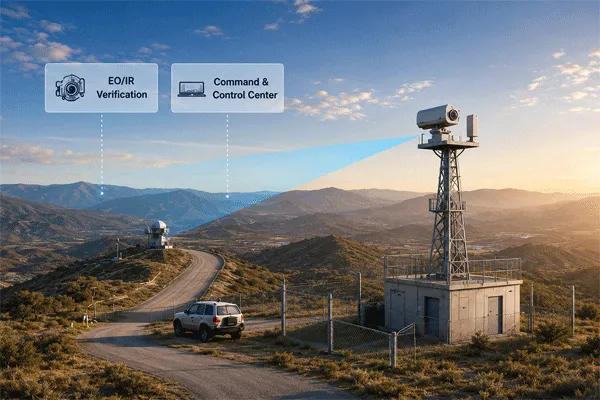
For Midradar, radar-EO fusion is not simply placing two device types together. It means allowing different sensors to complement each other in the same low-altitude security scenario. Radar detects earlier and continuously outputs tracks. EO devices provide visual confirmation, target verification and event evidence. AI algorithms assist target classification and reduce false alarm pressure in complex environments. The platform integrates alerts, device linkage, workflow management and event review.
This fusion approach turns a low-altitude target from a single alarm point into a complete event that can be tracked, visually confirmed, risk-assessed and reviewed. For international buyers evaluating counter-UAV radar, low-altitude surveillance radar or radar-EO fusion systems, this closed-loop architecture is more valuable in real projects than isolated hardware specifications.
5. Scenario Deployment: Different Sites Require Different Low-Altitude Security Designs
Low-altitude security is not a fixed template. It should be designed according to the risk source, management objective and deployment conditions of each scenario.
- Airports and clearance zones: Focus on runways, terminals, clearance protection zones and surrounding key areas. The system must detect abnormal low-altitude targets early and help operators assess risk through radar tracks and EO verification.
- Industrial parks and energy facilities: Focus on long-term watch, perimeter linkage, night-time detection, false alarm control and platform management. Low-altitude surveillance radar and EO linkage are suitable for these environments.
- Ports, transport hubs and logistics areas: Complex backgrounds require stronger target filtering and system collaboration to avoid misjudging ordinary moving objects or environmental interference as low-altitude risks.
- Major events and temporary security operations: Emphasize fast deployment, rapid alerting, on-site command collaboration and high-intensity short-term operation. Modular counter-UAV systems are especially suitable.
- Urban public safety areas: Require multi-site, multi-department and multi-system collaboration. Radar, EO, maps, alerts and event records should be managed through a unified platform.
6. Midradar Brand Perspective: From Device Supply to Scenario-Based Solutions
For Midradar, this exhibition was not only a product showcase. It was also a window into changing industry demand. More users are now asking about low-altitude target detection, radar-EO fusion, AI-assisted recognition, multi-target tracking, platform management and counter-UAV closed-loop capability.
This indicates that low-altitude security is moving from an optional configuration to necessary infrastructure. In the future, low-altitude security systems will not only protect individual sites. They will become the sensing layer, management layer and security layer of the low-altitude economy.
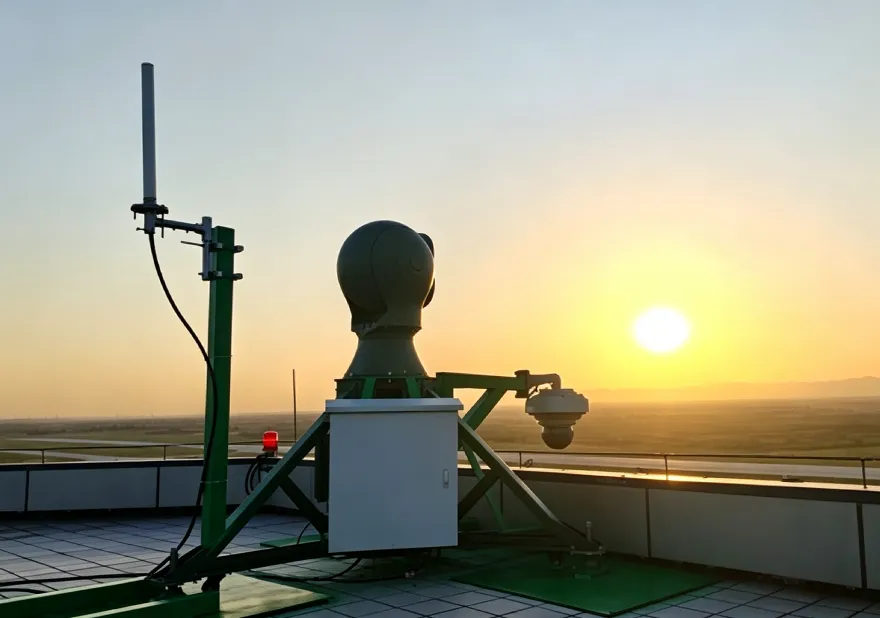
Midradar emphasizes a shift from device supply to scenario-based solutions. By coordinating low-altitude surveillance radar, electro-optical sensing, AI recognition and platform management, Midradar aims to help airports, parks, energy facilities, transportation hubs, public events and public safety sites build low-altitude security systems that are sustainable, scalable and manageable.
Conclusion
For airports, industrial parks, energy facilities, transportation hubs, public safety areas and major events, low-altitude security systems should not be treated as after-the-fact add-ons. They should be planned together with low-altitude applications.
Midradar will continue to focus on low-altitude target detection, radar-EO fusion, intelligent recognition and integrated counter-UAV systems to provide reliable, scalable and manageable security solutions for different industries. Contact Midradar to discuss your low-altitude security requirements and site-specific counter-UAV deployment needs.
Recommended Solutions
FAQ: Low-Altitude Security and Counter-UAV Systems
What is low-altitude security?
Low-altitude security refers to the ability to detect, identify, track, alert and manage drones, eVTOL platforms, low-altitude aircraft and abnormal targets in low-altitude airspace. It includes target discovery, visual verification, risk assessment, platform management and follow-up response.
Why does the low-altitude economy need counter-UAV systems?
As drone applications expand, the number and type of low-altitude targets increase. Counter-UAV systems help airports, parks, energy sites and public safety areas discover unauthorized low-altitude targets and reduce risks related to airspace intrusion, operational disruption and security incidents.
How does radar-EO fusion improve drone detection?
Radar supports long-range, all-weather and continuous detection and tracking. EO devices provide visual confirmation and target detail recognition. When combined, they improve the reliability of target discovery, identification, tracking and verification.
How is a low-altitude security system different from ordinary video surveillance?
Ordinary video surveillance mainly relies on visual observation and is limited by distance, lighting, weather and viewing angle. A low-altitude security system usually combines radar, EO devices, AI recognition and platform management to actively detect, track and alert low-altitude targets.
Where should low-altitude security systems be deployed?
Airport clearance zones, industrial parks, energy facilities, ports, transportation hubs, major events, urban key areas and public safety scenarios can deploy low-altitude security systems according to their risk levels and operational needs.
Public Sources
- Xinhua News Agency: Confirms the event date and theme of World Drone Congress 2026. Source
- Futian District Government English Website: Indicates that Hall 5 covered communications, navigation, low-altitude safety and counter-UAV technology equipment. Source
- Securities Times: Reports the exhibition scale of about 110,000 square meters and 1,220 companies from 17 countries and regions. Source



 15:13
15:13