

Earlier Detection
Critical sites need perimeter systems that can detect intrusions earlier, reduce nuisance alarms and support faster response in large, open or low-visibility environments.
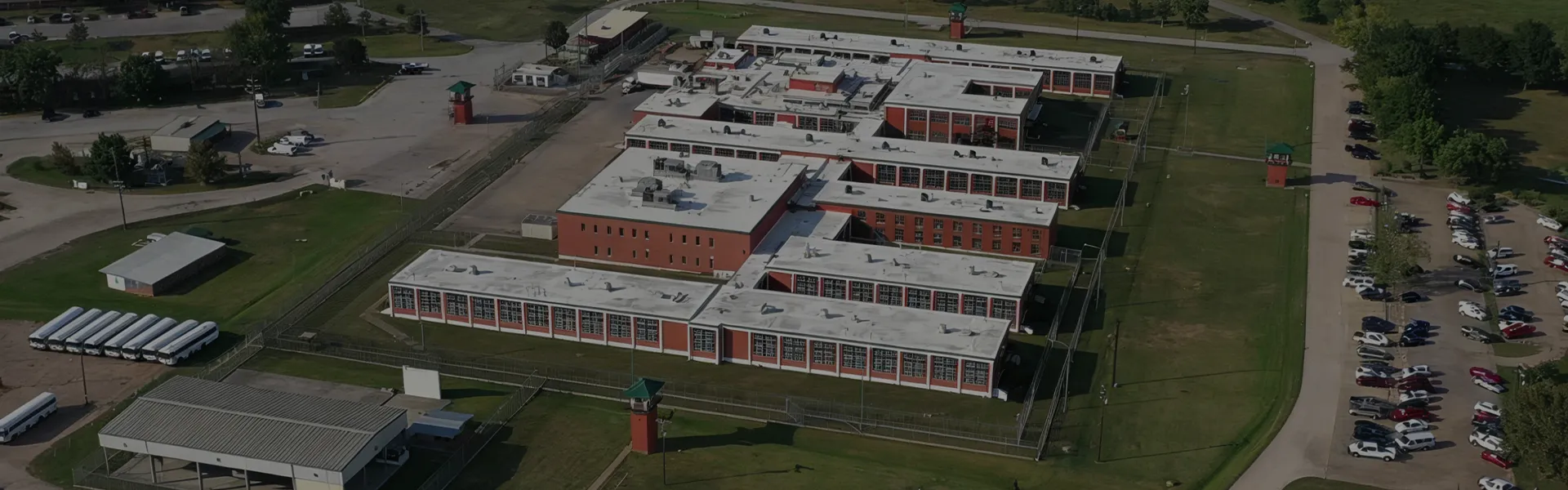
Radar-video fusion perimeter protection combines radar, EO/IR cameras, thermal imaging and AI analytics to detect, track, verify and record intrusion targets along critical boundaries.
Việc bảo vệ các khu vực có phạm vi rộng lớn như nhà máy điện, trung tâm dữ liệu và cơ sở giam giữ đặt ra những thách thức đặc thù mà các hệ thống cũ khó có thể khắc phục.
Critical sites need perimeter systems that can detect intrusions earlier, reduce nuisance alarms and support faster response in large, open or low-visibility environments.
Traditional infrared beams, electronic fences and standalone CCTV systems often struggle with long boundaries, bad weather, night operation and complex terrain.
CCTV can record an incident, but it may not detect a target early enough. Electronic fences can trigger alarms, but they usually cannot classify the target or provide a complete movement track.
A radar-video fusion system improves perimeter awareness by combining wide-area detection with visual confirmation. This supports a security-in-depth approach aligned with common facility protection objectives such as detection, delay, response, cyber protection and security management.
The source documents emphasize that perimeter security should not stop at detection. A practical system should convert alarms into a traceable operational workflow.

Radar detects moving targets along the protected perimeter and provides the initial target data for the system.
After a target is detected, the system calculates its position, speed and trajectory to understand where the target is and how it is moving.
When the target enters a predefined virtual fence or alarm zone, the platform automatically triggers the corresponding alarm rule.
The EO/IR camera automatically turns toward the target and starts visual or thermal tracking for secondary verification.
Operators can review visible-light and thermal video images to confirm whether the target is a valid intrusion.
If the intrusion is confirmed, the system records the alarm snapshot, video and target track, and the operator dispatches a response. If it is not confirmed, the event can be marked as a nuisance alarm and used for rule optimization.
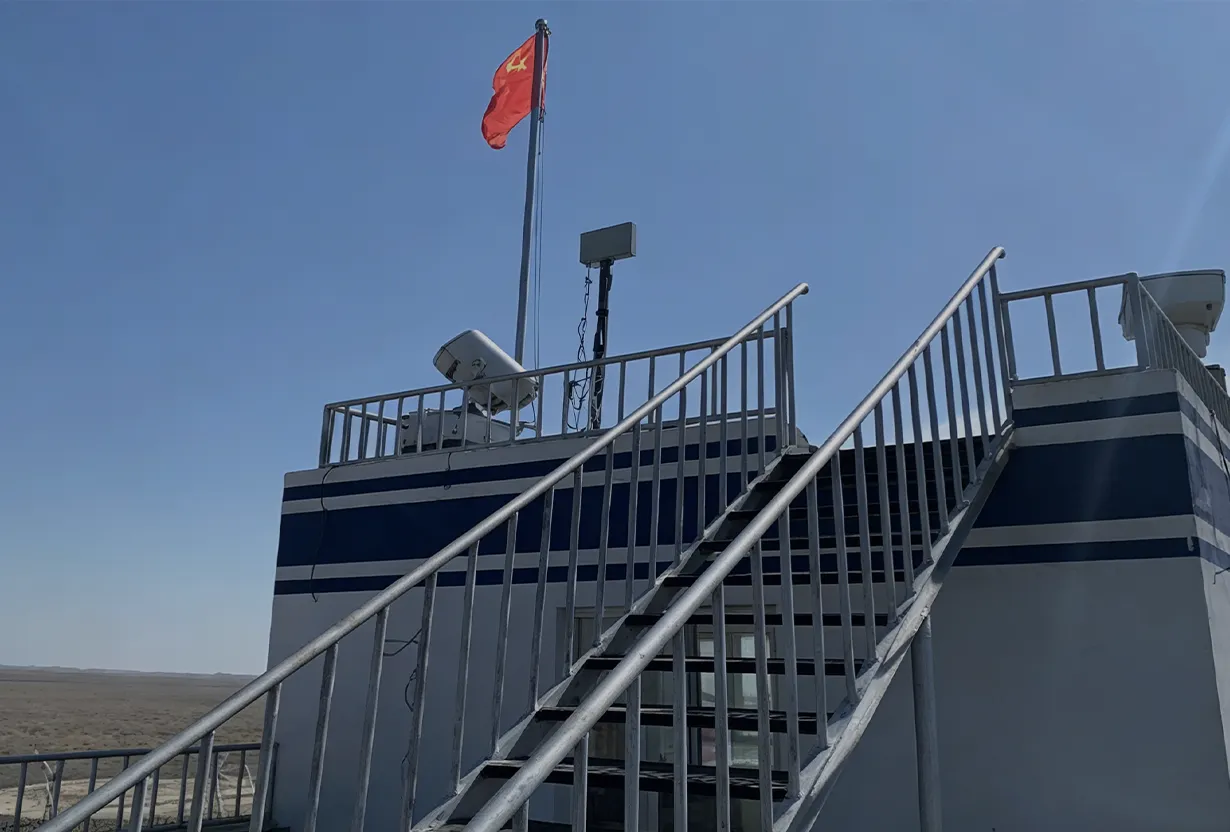
The solution turns perimeter alarms into verifiable events by combining target detection, visual confirmation, map positioning and evidence recording.
Radar continuously scans the protected perimeter and detects moving targets across open or semi-open boundary areas.
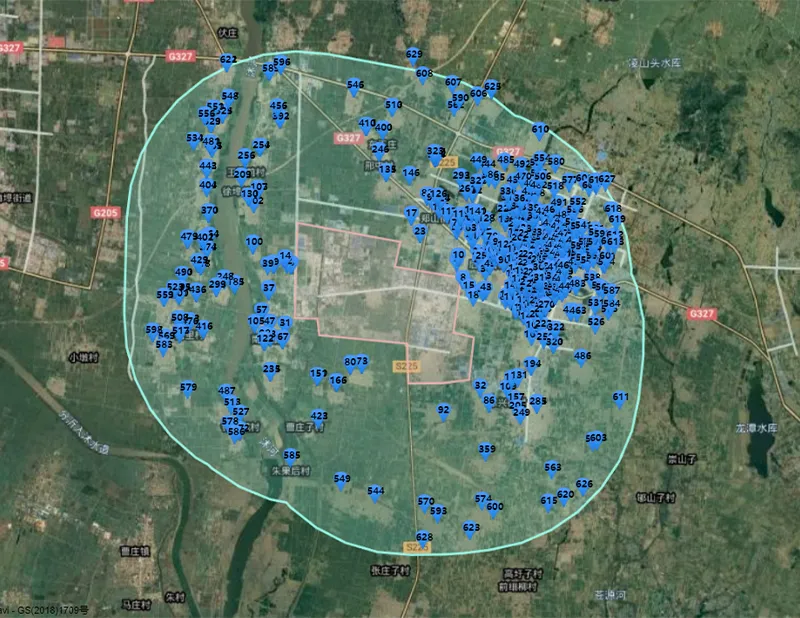
After radar detects a target, EO/IR cameras can automatically turn toward the target for visible-light or thermal verification.
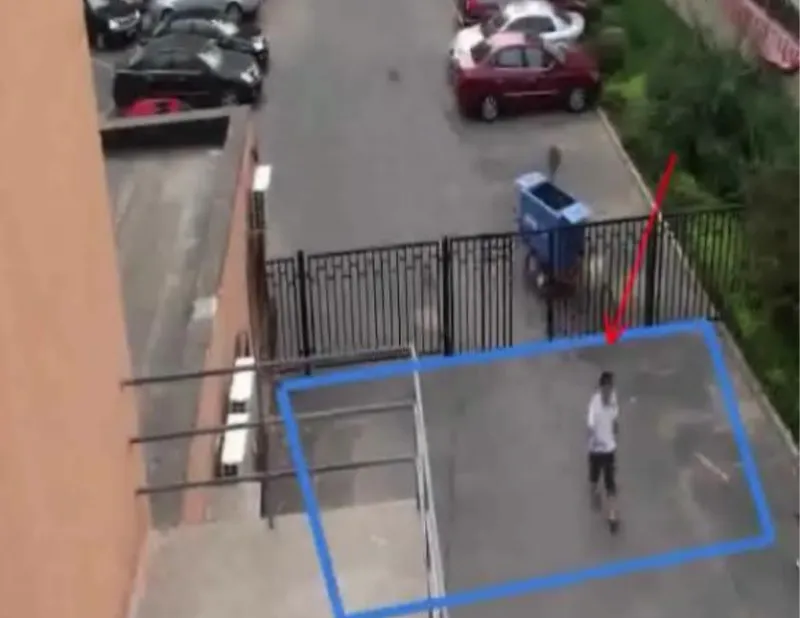
The platform supports virtual fence and zone-based alarm rules, helping operators define protected areas and trigger alerts when targets enter.
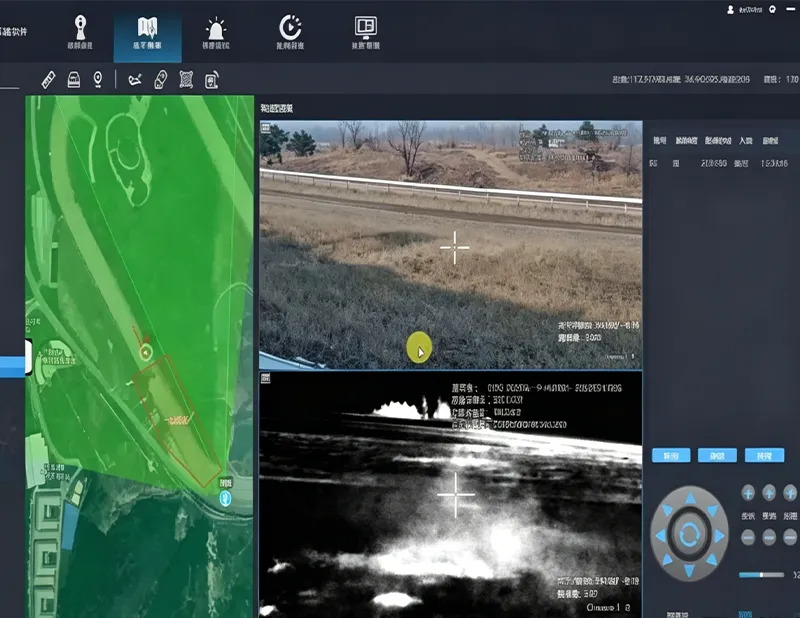
The system can track multiple targets with target ID and movement trajectory, helping operators understand target behavior in real time.
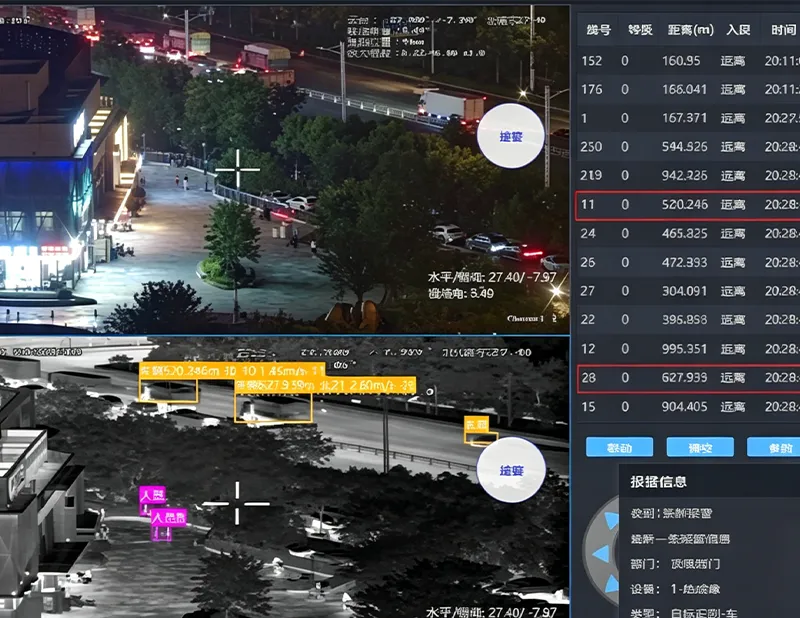
The platform supports assessment based on target direction, speed, area and behavior, helping operators prioritize alarm handling.
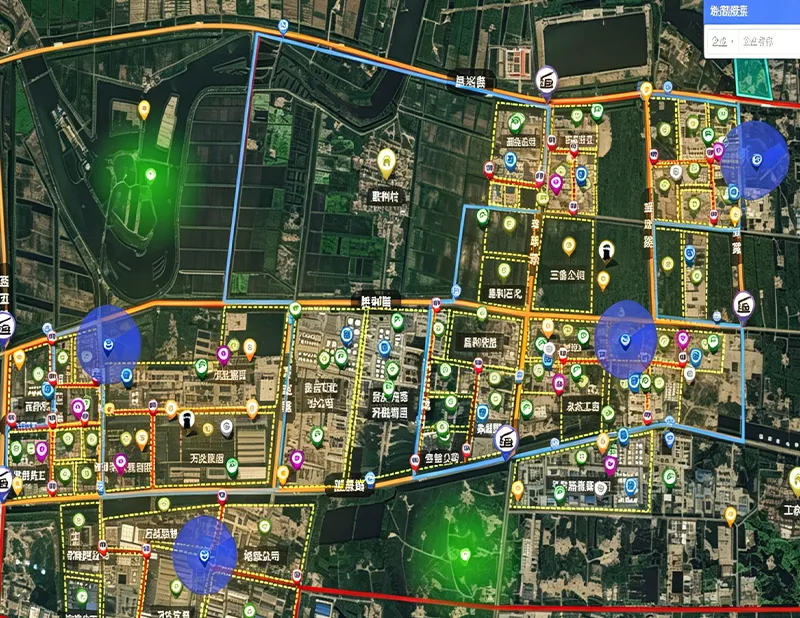
Alarm snapshots, video clips, timestamps and target tracks are recorded to support event verification and later review.
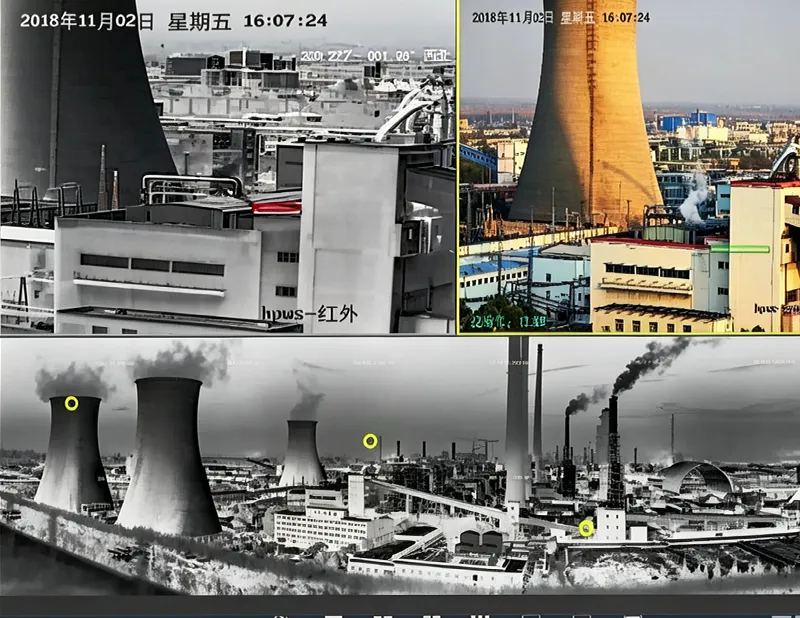
Radar-video perimeter protection is most suitable for open, semi-open and high-risk boundaries where early detection and fast verification are required.
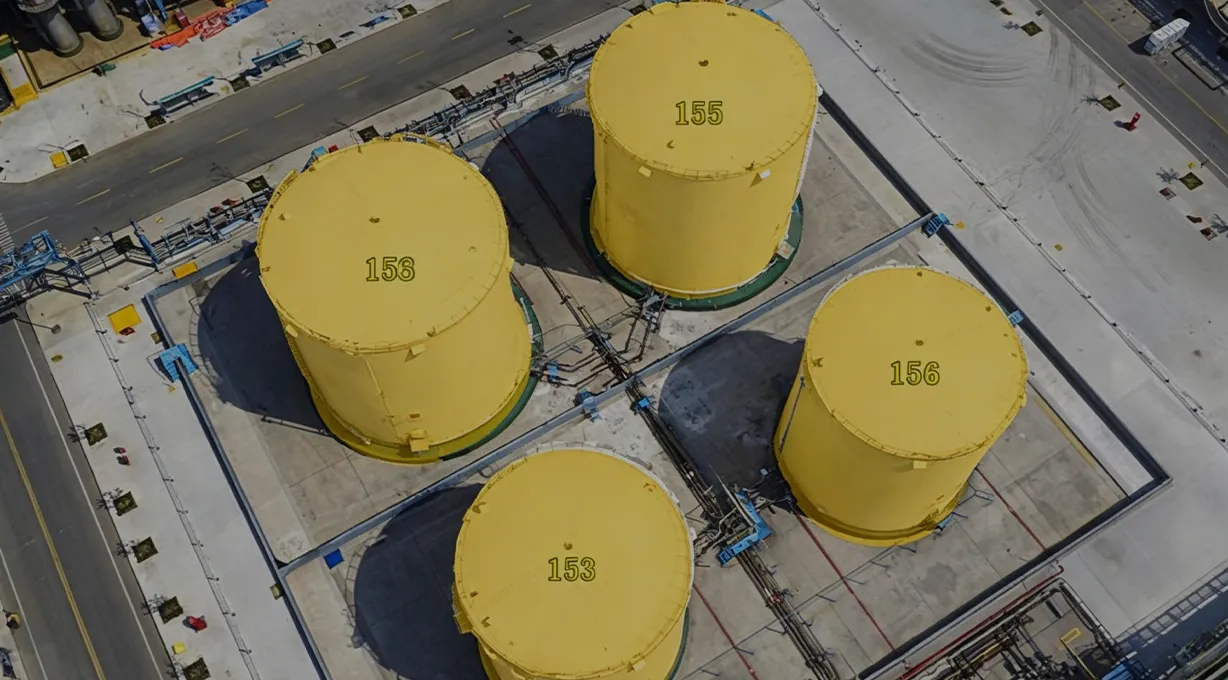
Radar-video fusion helps monitor large industrial boundaries, plant entrances, open yards and restricted production areas. Radar provides early moving-target detection, while EO/IR cameras support visual verification and traceable alarm handling.
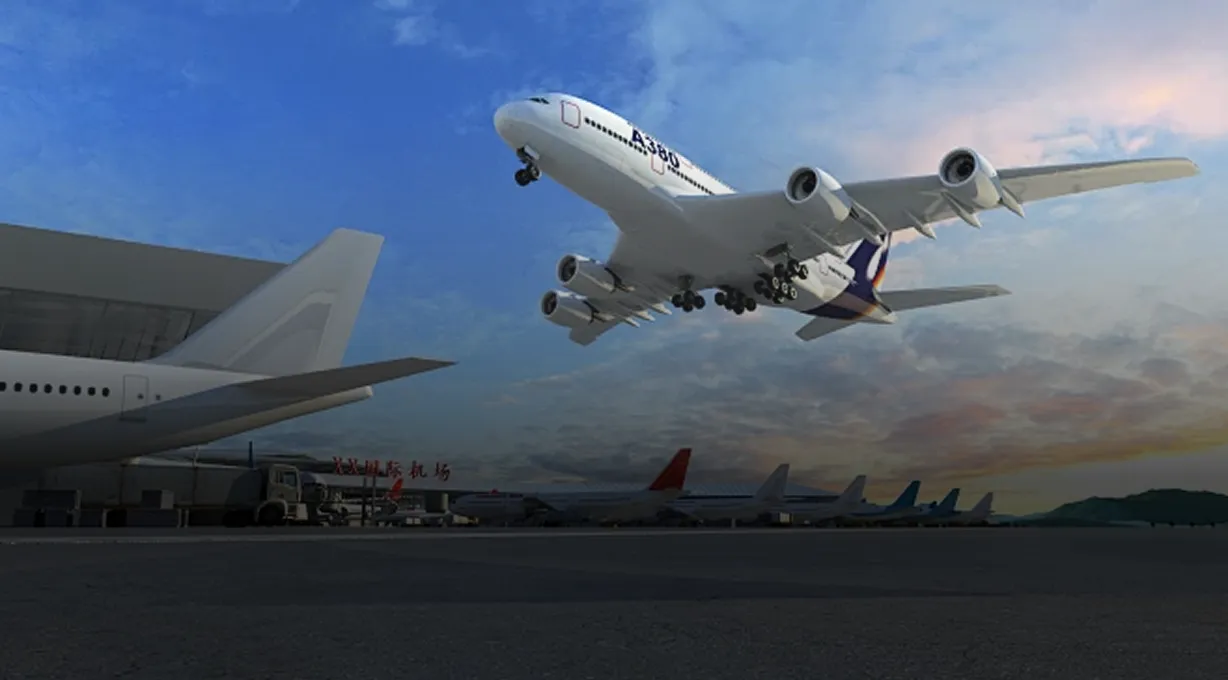
Radar-video fusion supports perimeter monitoring around airport boundaries, runways and restricted airside zones. It helps operators detect moving targets earlier and verify events through EO/IR camera linkage.
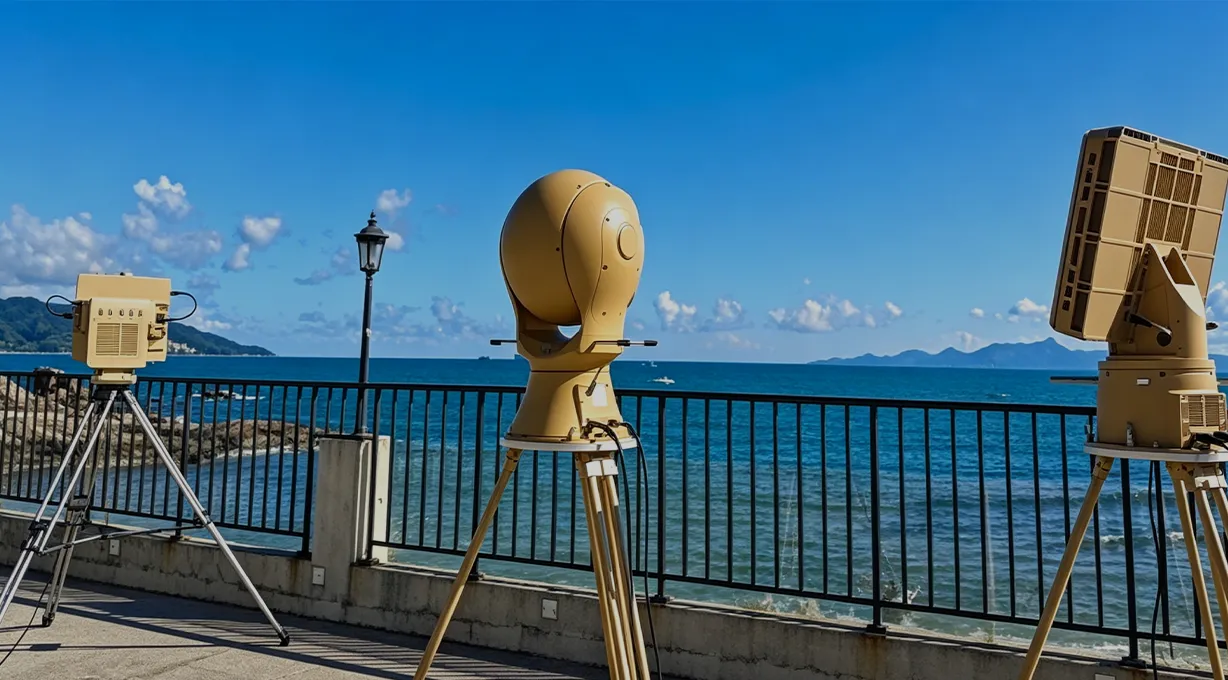
For wide open areas, coastal lines and port boundaries, radar provides long-range moving-target detection, while EO/IR cameras support target confirmation under night-time or low-visibility conditions.

For large warehouses and logistics sites, radar-video fusion helps monitor vehicle movement, personnel activity and boundary intrusion events across open storage and loading areas.
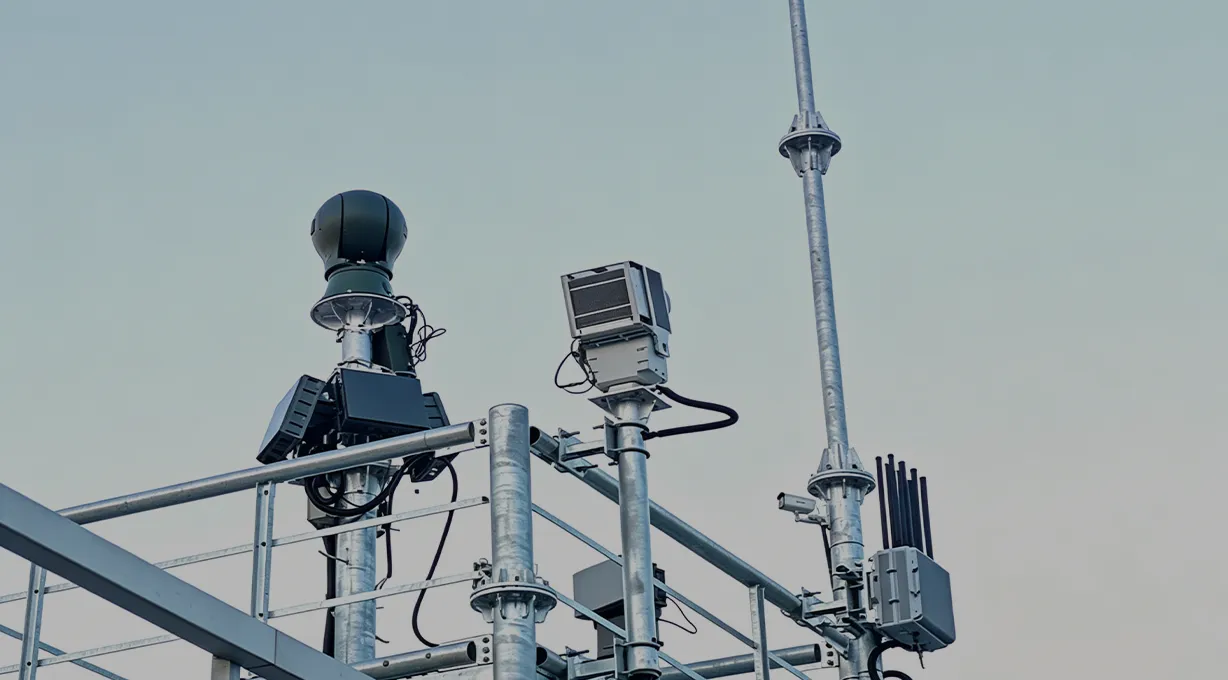
Utility facilities require stable perimeter awareness around key equipment areas and access points. The system helps reduce blind spots and supports alarm recording for later review.
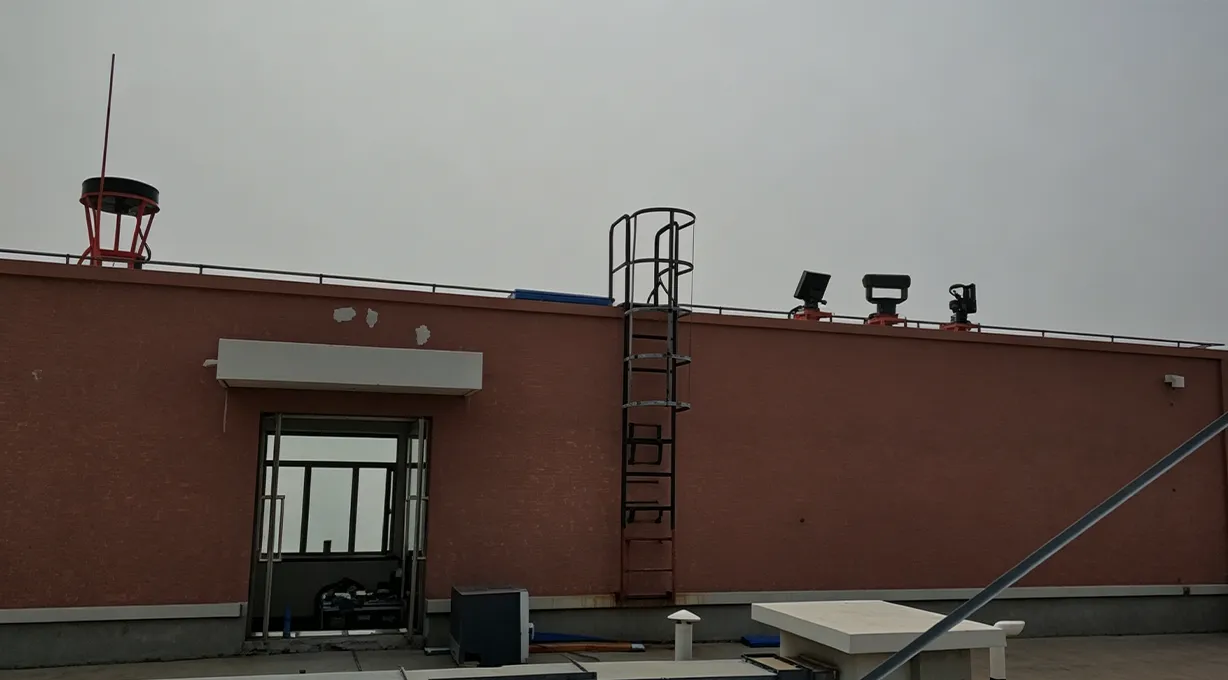
Data centers need continuous monitoring around fences, gates, loading areas, cooling facilities, power rooms and backup generator zones. Radar-video fusion helps detect personnel or vehicle movement early, while EO/IR cameras provide visual verification and event recording for 24/7 perimeter security.


For open boundaries, deploy radar and EO/IR cameras at elevated points to improve line of sight and reduce blind zones.

For long perimeters, divide the boundary into radar coverage sections and use overlapping camera fields of view for verification.

For entrances, loading areas and high-value assets, combine radar-video detection with access control, lighting, speaker warning and manual response procedures.

Sites with hills, dense vegetation, buildings, frequent traffic or complex moving backgrounds should be surveyed before final design. Blind zones can be reduced by adding short-range radar, fixed cameras, thermal cameras, lighting or physical barriers.
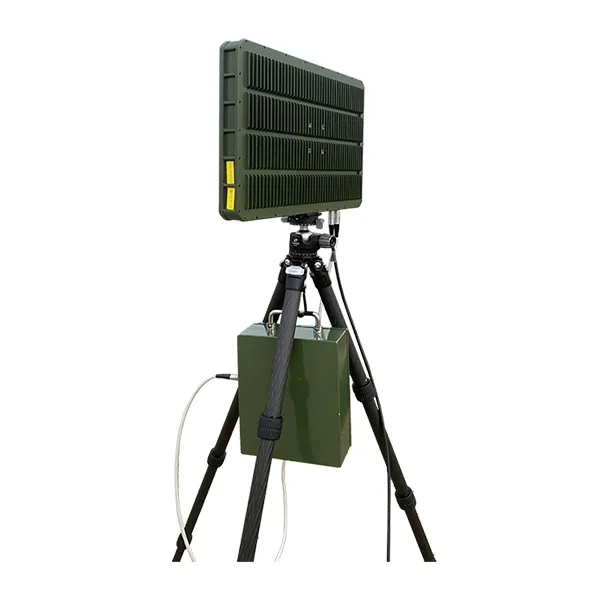
Radar AESA băng tần X tầm xa với khả năng phát hiện được nâng cao lên đến 25 km, dùng để giám sát diện rộng trên đất liền và ven biển.
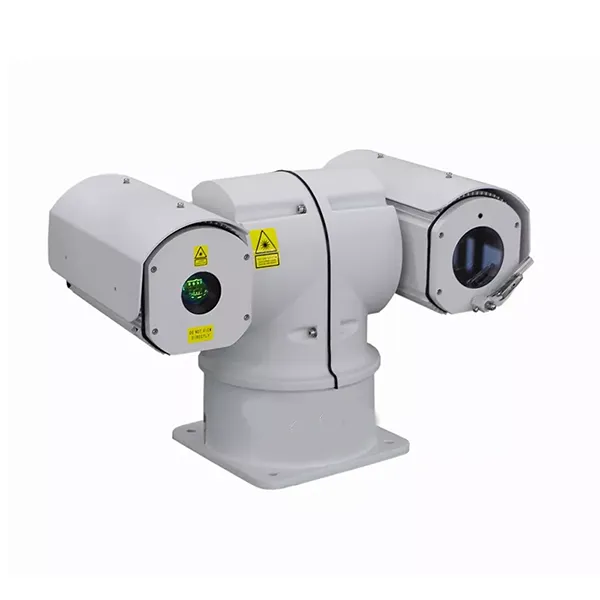
Camera quan sát ban đêm bằng laser gắn trên xe, được thiết kế để giám sát tầm xa 24/7, theo dõi mục tiêu và triển khai an ninh di động.

Thiết bị xoay nghiêng thông minh, thiết kế nhỏ gọn, được phát triển để điều khiển chính xác trên hai trục, hỗ trợ tải trọng trung bình một cách ổn định và có khả năng tùy chỉnh linh hoạt, phù hợp cho các ứng dụng giám sát ngoài trời, theo dõi và tích hợp hệ thống.
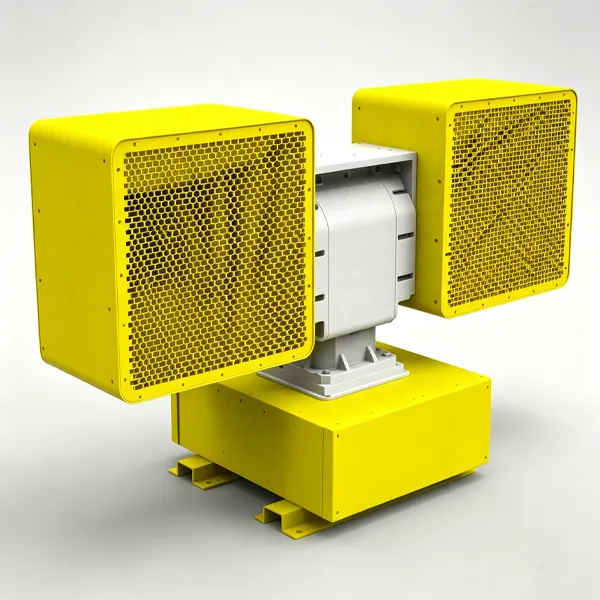
Hệ thống âm thanh định hướng tầm xa dùng cho an ninh, bảo vệ khu vực và kiểm soát đám đông với khả năng phát âm thanh chính xác cao.
Câu hỏi và trả lời về kỹ thuật & Hướng dẫn áp dụng
Radar-video fusion perimeter protection combines radar detection with EO/IR visual verification. Radar detects and tracks moving targets, while visible-light and infrared cameras provide visual evidence for alarm confirmation.
Radar perimeter security detects moving targets by analyzing electromagnetic wave reflections. It measures target distance, azimuth, speed and trajectory, then sends target data to a platform or camera system for tracking and verification.
Yes. Radar perimeter protection works in total darkness. Radar detection does not rely on visible light, but visual verification at night should be paired with infrared thermal imaging, low-light cameras or laser-illuminated cameras.
EO/IR cameras reduce false alarms by providing secondary visual and thermal verification. This allows AI algorithms and operators to classify radar-detected targets as people, vehicles, animals or environmental disturbances.
Yes. Radar-video perimeter protection is suitable for petrochemical plants when site and hazardous-area requirements are engineered correctly. Explosion-proof devices should be used in classified hazardous zones when required.
Radar detects and tracks moving targets; CCTV mainly provides visual monitoring and recording. Radar provides position and trajectory data that can guide cameras for visual confirmation.
A deployment should begin with site survey, coverage simulation and hazardous-area review. Key checks include terrain, fence layout, mounting height, blind zones, power supply, network links and certified equipment requirements.

Request a site assessment to receive a perimeter coverage plan, recommended sensor layout and model-specific configuration for your refinery boundary, tank farm edge, oil depot, airport perimeter or critical infrastructure site.
Chúng tôi sẽ trả lời quý khách trong vòng 24 giờ. Nếu trường hợp khẩn cấp, vui lòng thêm số WhatsApp/WeChat: +86 15954290051. Hoặc gọi trực tiếp đến số +86 15964215221.
*Chúng tôi tôn trọng quyền riêng tư của quý khách và tất cả thông tin đều được bảo mật.
Chúng tôi chỉ sử dụng thông tin của bạn để trả lời câu hỏi của bạn và sẽ không bao giờ gửi email hoặc tin nhắn quảng cáo không được yêu cầu.