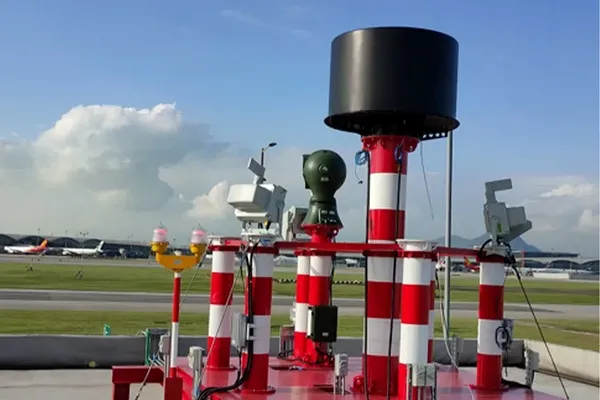
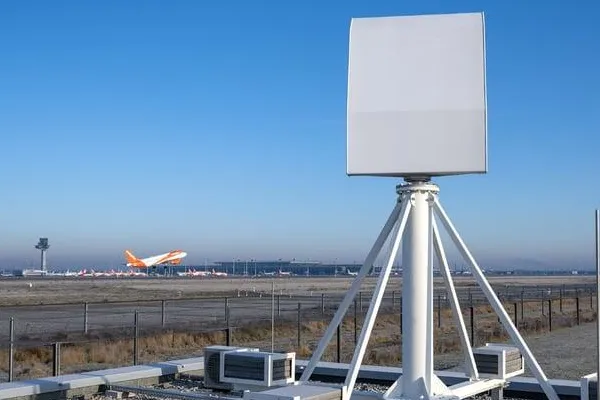
The 6th Radar Future Conference, held in Qingdao in April 2026, brought together a broad range of radar technology companies, component suppliers, system developers, integrators, and application stakeholders. For companies working in surveillance radar, intelligent security systems, radar-vision fusion, and low-altitude monitoring, this event offered a valuable window into where the industry is heading next.
From our perspective, one message was especially clear: radar is no longer viewed as a standalone sensing device. It is increasingly becoming part of a larger intelligent security architecture that connects detection, identification, tracking, data fusion, and real-time decision support.
For manufacturers, system integrators, airport operators, border monitoring authorities, and critical infrastructure security teams, this shift is important. It means future project value will not be defined by detection range alone. Instead, it will be shaped by how well a system performs in complex environments, how effectively it reduces false alarms, how quickly it supports visual verification, and how easily it can be integrated into a wider operational platform.
Below are five major radar industry trends we observed from this conference and why they matter for the years ahead.
1. AI Is Moving from an Added Feature to a Core Radar Capability
One of the strongest signals from this conference was the growing role of artificial intelligence in radar systems. In the past, radar performance was often judged mainly by hardware indicators such as range, accuracy, and antenna architecture. Today, more attention is being placed on how radar systems process data, classify targets, suppress interference, and support operator decisions.
This is especially relevant in environments where multiple target types may appear at the same time and where conventional detection logic can produce unnecessary alarms. AI-supported signal processing, intelligent target classification, and adaptive filtering are becoming more important because they improve practical system usability, not just laboratory performance.
For the market, this means competition is gradually shifting from hardware-only capability to a combination of hardware, algorithms, and software intelligence. In the next stage of the radar industry, buyers will increasingly evaluate whether a system can deliver reliable classification, stable tracking, and more useful operational information in real-world scenarios.
2. Low-Altitude Security Continues to Be a Major Growth Driver
Another clear takeaway was the rapid rise of low-altitude monitoring demand. As low-altitude airspace becomes more active, the need for accurate detection of small, slow, and low-flying targets is growing quickly across airports, urban airspace, industrial sites, and other sensitive areas.
This is not a simple detection problem. Low-altitude environments are often affected by buildings, terrain, clutter, changing background conditions, and overlapping target characteristics. In real deployments, the challenge is not only finding a target, but also distinguishing it quickly and reliably from other moving objects in the environment.
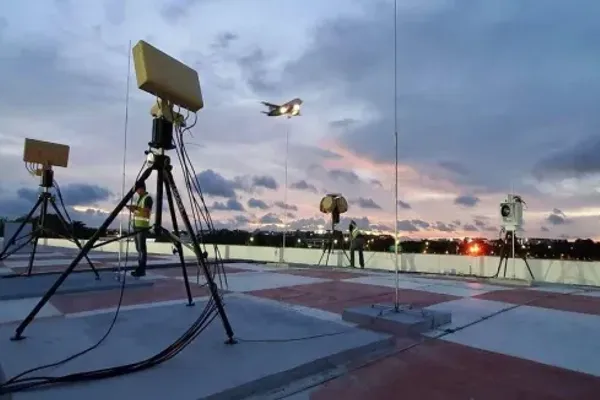
That is why the industry is moving toward integrated solutions built around low-altitude surveillance radar, intelligent classification, and coordinated electro-optical verification. Instead of relying on a single sensor, more projects now require a complete detection-and-confirmation workflow that can improve efficiency for operators and strengthen real-time monitoring performance.
From a business perspective, low-altitude monitoring is no longer a niche application. It is becoming one of the most active growth segments in the broader surveillance radar and intelligent security system market.
3. Distributed Sensing Networks Are Replacing Isolated Radar Deployment
The conference also highlighted an important architectural shift: the future of radar deployment is increasingly networked.
Traditional radar installations often focused on a single device covering a localized area. Today, many security and monitoring projects require multi-node deployment, shared target data, cross-sensor coordination, and centralized management. This is especially true for wide-area environments such as border zones, airports, coastal areas, industrial facilities, and critical infrastructure sites.
In practical terms, this means more projects are moving toward distributed sensing networks in which multiple radar units, cameras, and command platforms work together as one system. This model improves coverage continuity, increases flexibility in deployment, and creates better conditions for real time monitoring system design.
For project owners and integrators, this trend changes how system value is measured. The key question is no longer only “How good is this radar?” but also “How well does this radar perform as part of an integrated security system?”
4. The Radar Industry Chain Is Becoming More Complete and More Collaborative
Another strong impression from the conference was the growing maturity of the radar industry ecosystem. The market is no longer developing in isolated segments. Instead, there is now more visible coordination across core materials, chips, transmit/receive modules, signal processing, AI platforms, complete radar products, and application-layer systems.
This matters because a more complete industry chain helps accelerate innovation, shortens development cycles, and supports better integration between upstream technology and downstream application needs. It also makes it easier for manufacturers and integrators to build complete solutions rather than isolated equipment packages.
For buyers, this ecosystem maturity is also meaningful. A stronger supply and development chain often supports more stable delivery, better customization possibilities, and improved long-term service capabilities. In other words, the market is becoming more solution-oriented and more deployment-driven.
5. Civilian and Commercial Applications Are Expanding Faster
A fifth major trend is the continued expansion of radar into civilian and commercial sectors. While radar has long been valued for all-weather detection and long-range monitoring, more industries are now applying these advantages to everyday operational security and infrastructure management.
At this conference, the momentum behind airport security, smart city monitoring, industrial site protection, low-altitude traffic observation, and other civilian applications was especially noticeable. This reflects a broader market reality: many operators need systems that can work continuously in darkness, glare, fog, rain, or changing outdoor conditions without relying only on visible-light imaging.
As products become more compact, more integrated, and more cost-effective, the use of surveillance radar in non-traditional sectors is likely to expand further. For manufacturers and integrators, this creates more opportunities to deliver scalable systems tailored to different operational scenarios.
What These Trends Mean for Buyers and System Integrators
For system integrators, the conference reinforced the importance of modular architecture, multi-sensor interoperability, and practical deployment capability. Future projects will increasingly require systems that are easy to scale, easy to integrate, and capable of performing well in complex real environments.
For end users such as airports, border monitoring authorities, infrastructure operators, and industrial security contractors, buying decisions are also becoming more experience-driven. Detection range will remain important, but practical concerns such as false alarm control, target verification efficiency, lifecycle support, and deployment flexibility will have a greater impact on project success.
For distributors and global partners, the market direction is also becoming clearer. Customers are increasingly looking for complete security solutions rather than only a single radar device. This creates higher demand for products and partners that can support radar, cameras, software, platform integration, and response coordination within one operational framework.
How Midradar Fits into This Industry Direction
For Midradar, the trends discussed at this conference align closely with the direction of the broader market. As a professional surveillance radar and intelligent security system manufacturer in China, Midradar is positioned around practical project needs such as low-altitude monitoring, all-weather surveillance, rapid deployment, multi-sensor coordination, and system integration.
This is why technologies such as radar-vision fusion, intelligent target classification, and integrated monitoring platforms are becoming increasingly important. In many real projects, users do not simply need detection. They need a complete process that connects radar sensing, visual confirmation, target tracking, and operational awareness.
The conference made it clear that the next phase of competition will favor companies that can combine technical depth with deployment practicality. That means delivering systems that are not only advanced on paper, but also reliable, scalable, and ready for real operational use.
Final Thoughts
The 6th Radar Future Conference showed that the radar industry is entering a new stage of development. The focus is moving away from isolated device performance and toward intelligent, connected, and application-ready systems.
Looking ahead to 2026–2030, the most important themes are likely to remain consistent: AI-enhanced performance, stronger low-altitude monitoring capability, networked sensing architecture, broader ecosystem maturity, and faster adoption in civilian and commercial applications.
For companies and organizations involved in modern security projects, this direction creates both new challenges and new opportunities. The buyers who plan earlier, integrate smarter, and focus on practical deployment outcomes will be in a stronger position to build more effective monitoring and protection systems in the years ahead.


 08:59
08:59